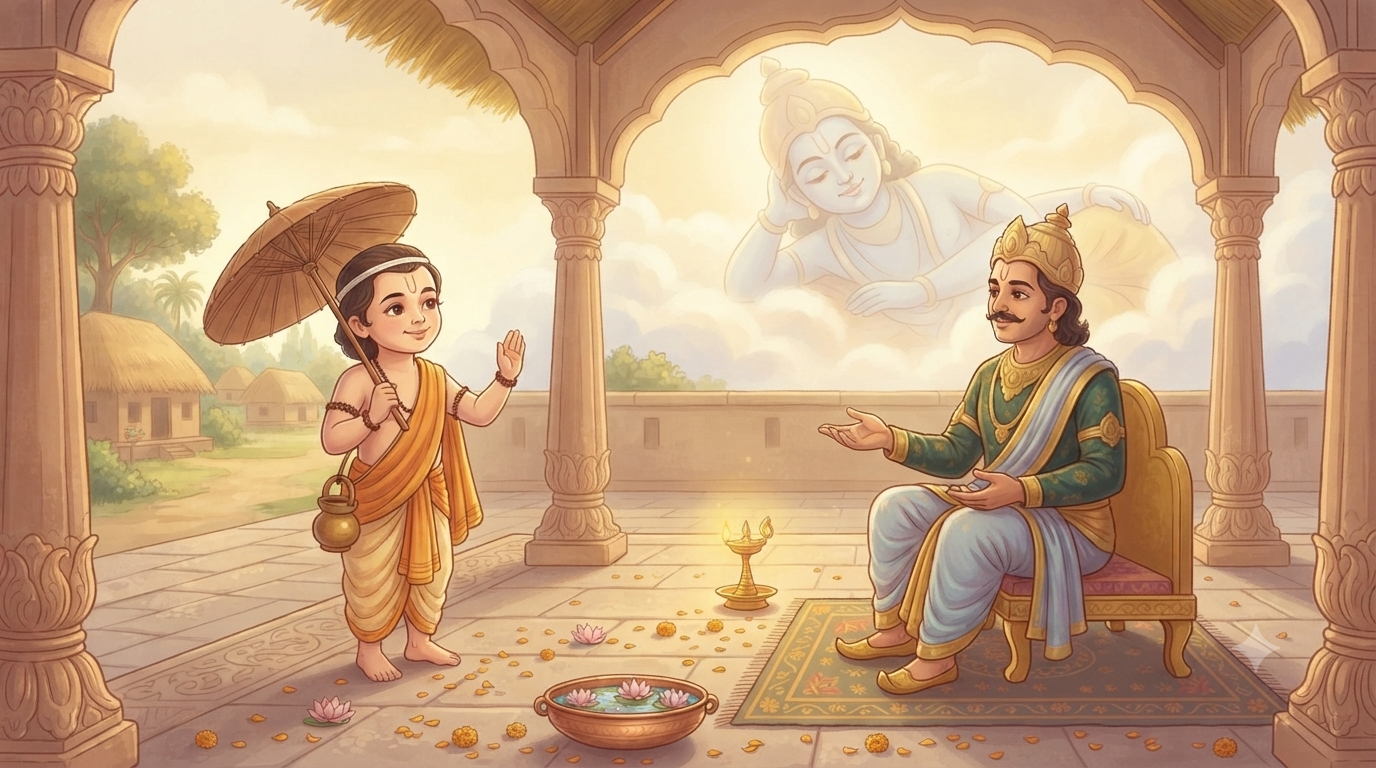
Parsva Ekadashi is a special Ekadashi dedicated to Lord Vishnu. It is also known by names such as Parivartini Ekadashi, Vamana Ekadashi, Padma Ekadashi and Jayanti Ekadashi in different traditions.
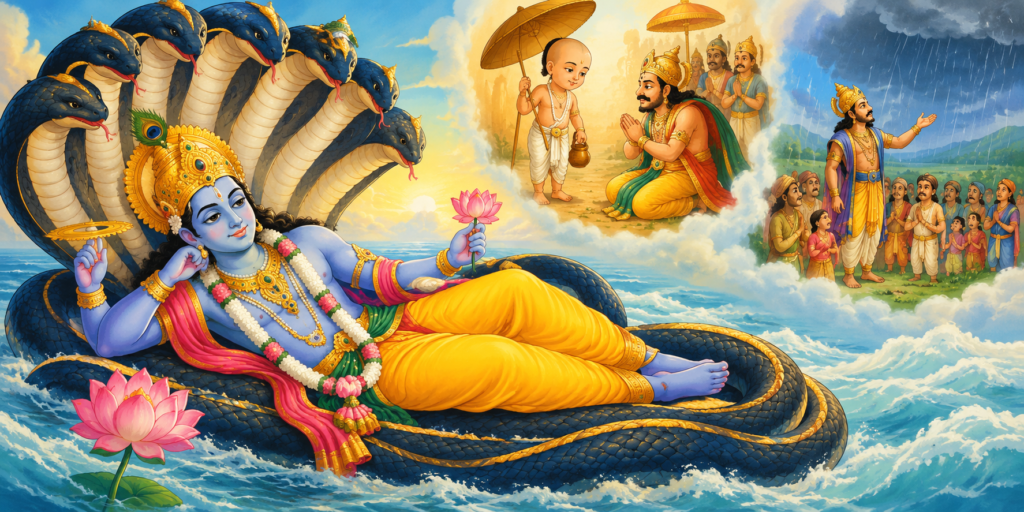
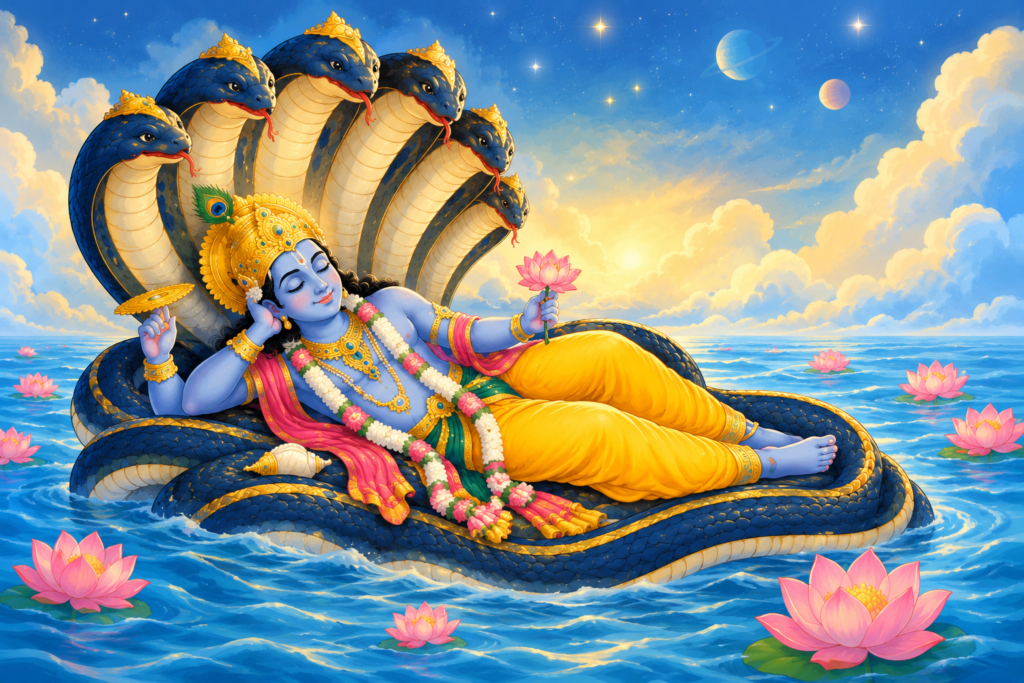
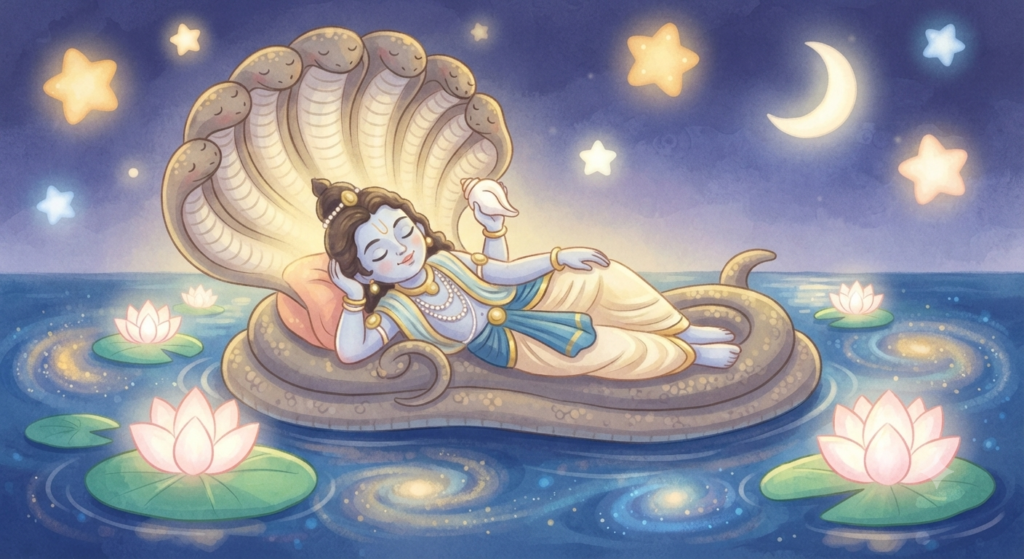
The word Parivartini means turning or changing. According to tradition, this is the time when Lord Vishnu, resting on the cosmic serpent Shesha during His four-month sleep, turns from one side to the other.
But there is more to this special day.
It is also connected with the story of Vamana and King Bali, and with another beautiful story about King Mandhata and a kingdom suffering from drought.
Let’s discover all three stories!
What Is Parsva Ekadashi?
Parsva Ekadashi falls on the Ekadashi, or eleventh lunar day, of the bright half of Bhadrapada.
It comes during Chaturmas, the traditional four-month period associated with Lord Vishnu’s cosmic rest.
At the beginning of this period, on Devshayani Ekadashi, Vishnu is traditionally believed to enter His cosmic sleep.
On Parsva Ekadashi, He is believed to turn to His other side.
Later, on Dev Uthani Ekadashi, He is believed to wake.
So children, remember the journey like this:
🛏️ Devshayani Ekadashi – Vishnu begins His cosmic rest
↪️ Parsva Ekadashi – Vishnu turns to His other side
🌅 Dev Uthani Ekadashi – Vishnu wakes
This turning is why the day is called Parivartini Ekadashi, while Parsva refers to the side.
Story 1: Vamana and King Bali
One of the most important stories connected with Parsva/Vamana Ekadashi is the story of Lord Vishnu and King Bali.
King Bali was a powerful king and was known in traditional stories for his generosity and devotion.
He had become so powerful that he ruled over the three worlds.
The gods became worried about his growing power and approached Lord Vishnu.
Vishnu decided to appear as Vamana, a small Brahmin boy.

👣 Three Little Steps
Vamana asked King Bali for just three steps of land.
Bali agreed.
Then something amazing happened.
Vamana began to grow.
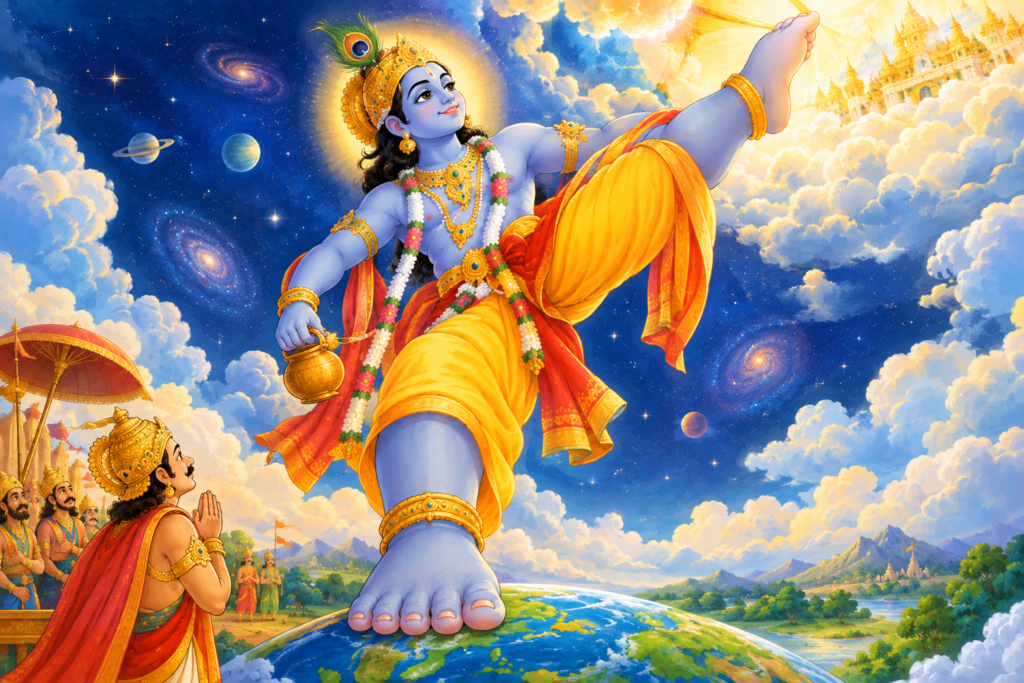
He became enormous – Trivikrama, the cosmic form of Vishnu.
With one step, he covered the earth.
With the second, he covered the heavens.
There was nowhere left for the third step.
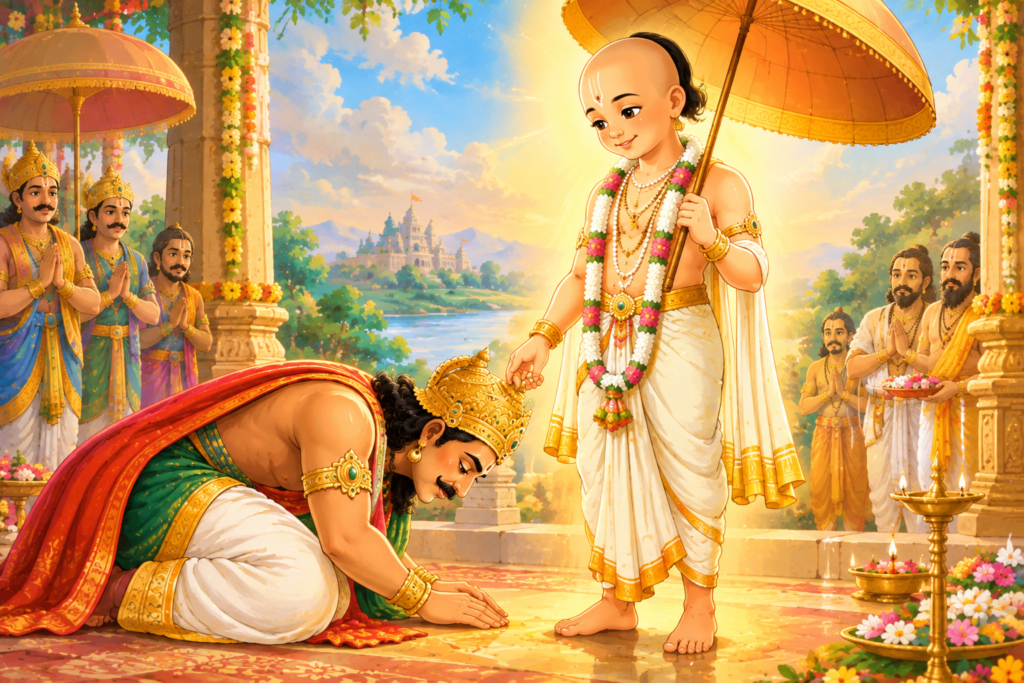
🙏 Bali Offers His Head
Vamana asked where He should place His third step.
Bali had promised three steps.
So Bali bowed his head and offered it.
Vishnu was pleased with Bali’s devotion and his willingness to keep his promise.
In different traditional tellings, Bali is sent to Patala or Sutala, the netherworld, and Vishnu promises to remain with him or protect him there
But What Does This Have to Do With Onam?
This is a very important part of the story!
The Vamana and Mahabali story is also the central traditional legend of Onam in Kerala.
According to the Kerala tradition, after Vishnu blessed Mahabali and sent him to the netherworld, Mahabali asked to be allowed to visit his beloved people once every year.
Vishnu granted his wish.
That annual homecoming is celebrated as Onam.
So when children learn about Vamana and Bali, they may encounter the story in two different festival contexts:
🌿 Parsva/Vamana Ekadashi – the story is connected with Vishnu’s Vamana form and the Ekadashi observance.
🌼 Onam – the Kerala tradition celebrates Mahabali’s yearly return to visit his people.
This is why the Vamana–Mahabali story is especially important in Kerala.
Mahabali Comes Home
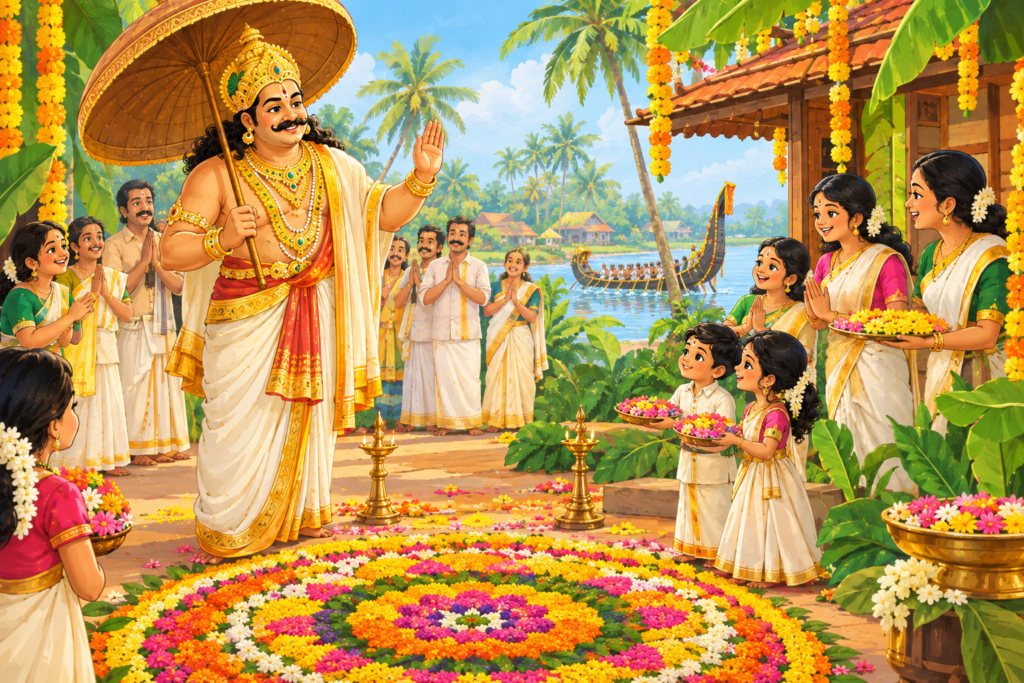
According to the Onam tradition, Mahabali returns to see his people during Thiruvonam.
People welcome him with beautiful pookalams, festive meals, new clothes, games, music and celebrations.
The story says that Mahabali wants to see whether his people are happy and prosperous.
So Onam becomes a joyful welcome-home celebration for Mahabali.
Learn more about the festival of Onam
Story 2: King Mandhata and the Three-Year Drought
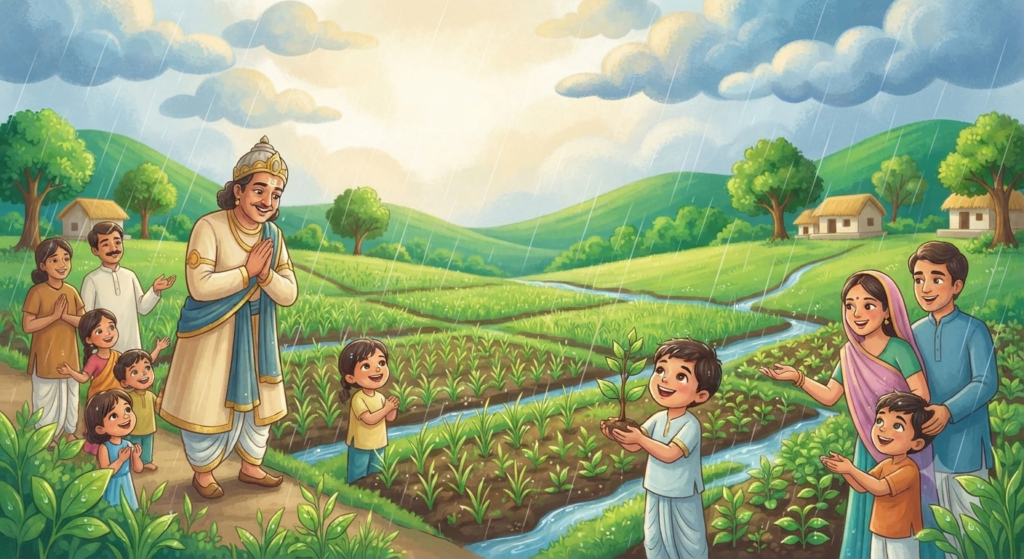
There is another story connected with the Bhadrapada Shukla Ekadashi, found in the Padma Purana tradition.
It is the story of King Mandhata.
Mandhata was known as a righteous king who cared deeply for his people.
His kingdom was peaceful and prosperous.
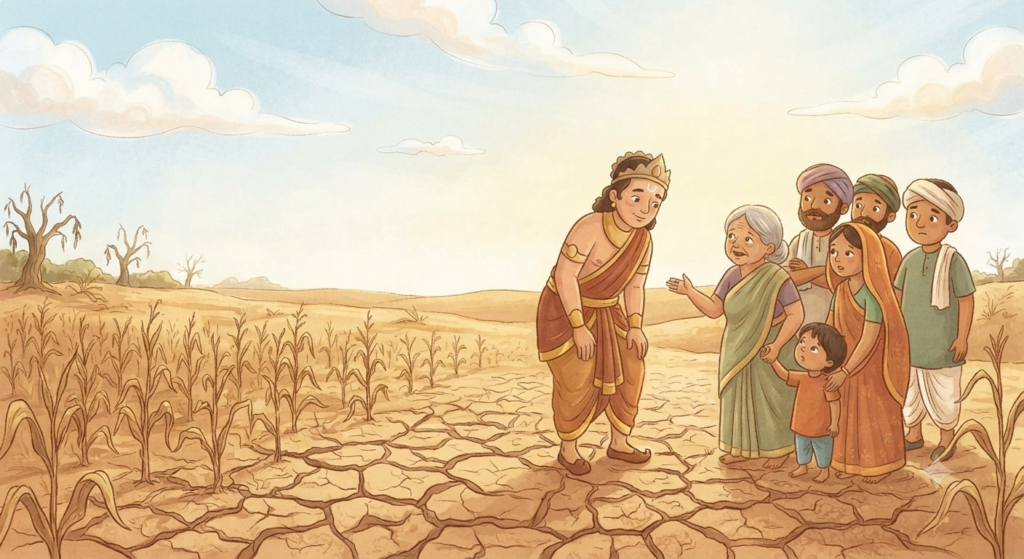
But then something terrible happened.
The rain stopped.
For three years, there was very little rain.
The crops suffered, and the people began to struggle.
Mandhata Searches for an Answer
Mandhata wanted to help his people.
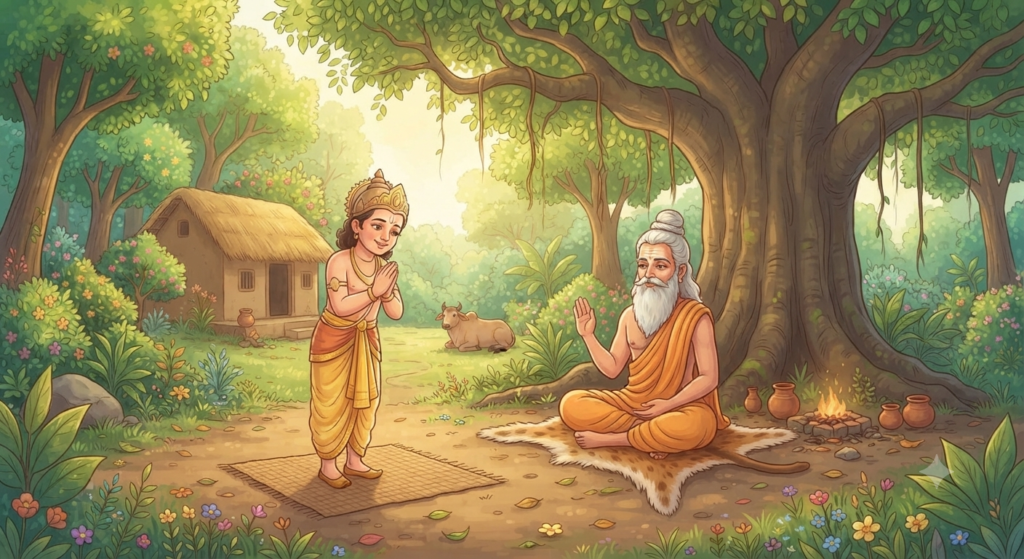
He travelled into the forest and met the sage Angirasa.
The sage told him about the Bhadrapada Shukla Ekadashi, known in this story as Padma Ekadashi.
The sage advised Mandhata to observe the Ekadashi with his people.
Mandhata followed the advice.
The Rain Returns
Mandhata and his people observed the Ekadashi.
According to the traditional story, the clouds finally brought rain.
Water filled the land.
The crops grew again.
The kingdom became green and prosperous, and the people were happy once more.
It is a story about a king who listened to his people and searched for a peaceful way to help them.
Story 3: Why Does Vishnu Turn?
The third story is much simpler.
During Chaturmas, Lord Vishnu is traditionally believed to rest on Shesha, the cosmic serpent, in the ocean of milk.
On this Ekadashi, He turns from one side to the other.
That small movement gives the day its name:
Parivartini = turning or changing
Parsva = side
This is why Parsva Ekadashi is sometimes called the Day of Vishnu’s Turning.
How Do People Observe Parsva Ekadashi?
Observances can differ between families and Vaishnava traditions.
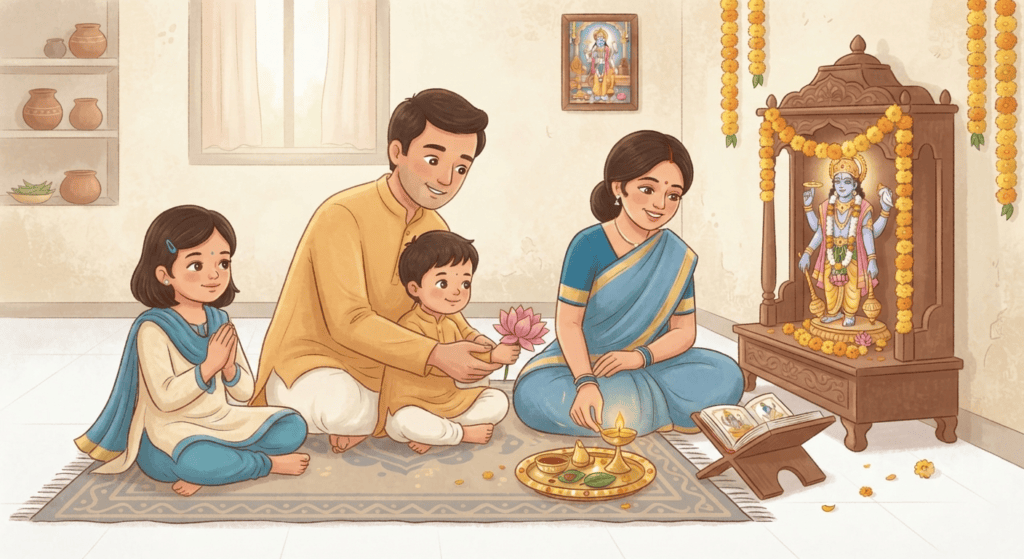
People may:
- Pray to Lord Vishnu
- Offer flowers
- Light diyas
- Read or listen to Vishnu stories
- Sing devotional songs or chant Vishnu’s names
- Spend time in prayer and reflection
- Observe an Ekadashi fast
Some devotees observe a complete fast, while others eat foods permitted by their tradition.
Children do not need to follow an adult fasting routine. They can take part by listening to stories, helping with flowers, praying with their family or making a simple activity.
What Do People Eat?
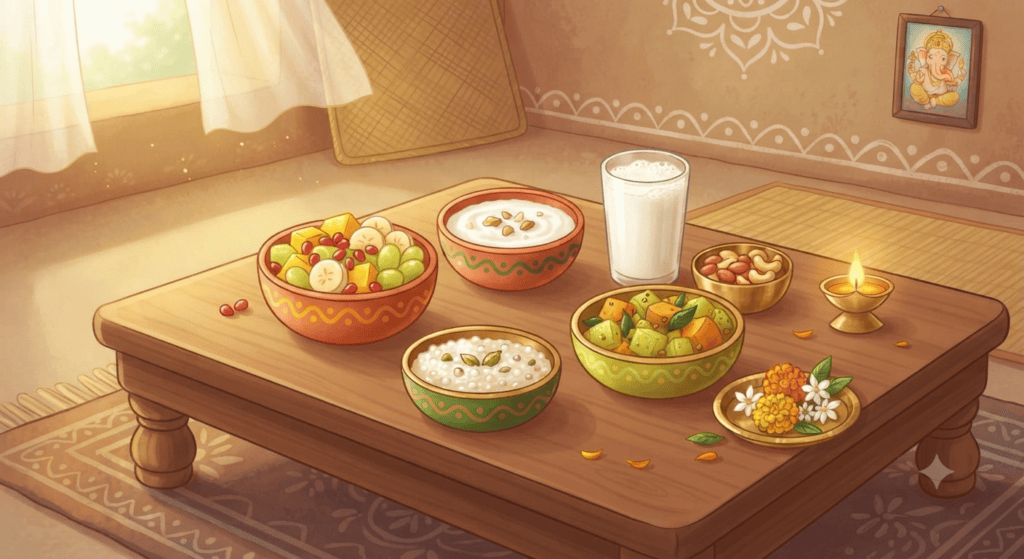
Because Parsva Ekadashi is an Ekadashi observance, many devotees avoid grains and beans during the fast.
The exact food rules vary between families and traditions.
Depending on the tradition, fasting foods may include:
- Fruits
- Milk and dairy
- Nuts
- Potatoes
- Certain vegetables
- Other foods permitted by the family’s Ekadashi practice
So there is no single Parsva Ekadashi menu followed by everyone.
How Is Parsva Ekadashi Celebrated?
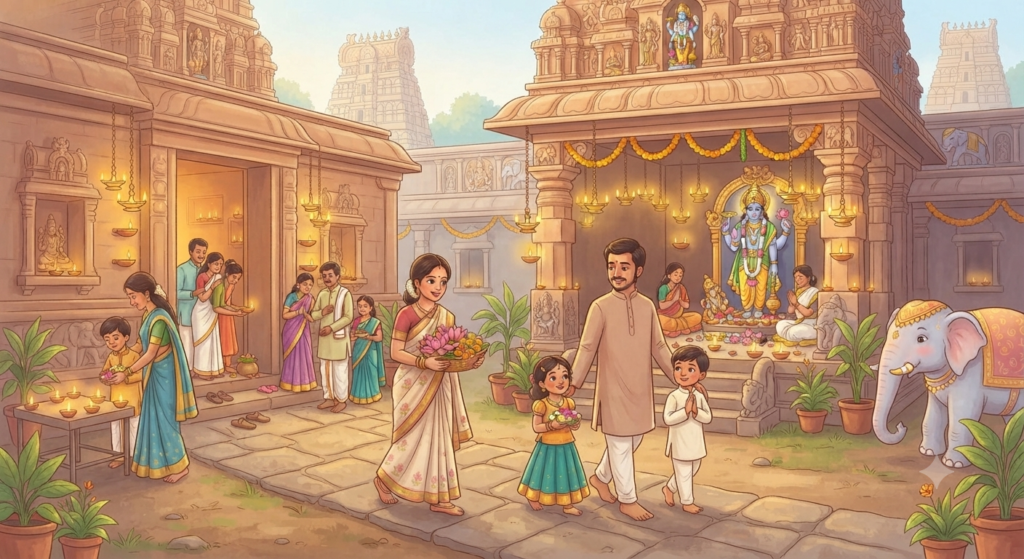
Parsva Ekadashi is primarily observed through home and temple-based Vaishnava traditions.
In India
Families may pray to Vishnu, visit temples, listen to stories, chant devotional names and observe their chosen form of Ekadashi fasting.
The exact customs can differ from one family and region to another.
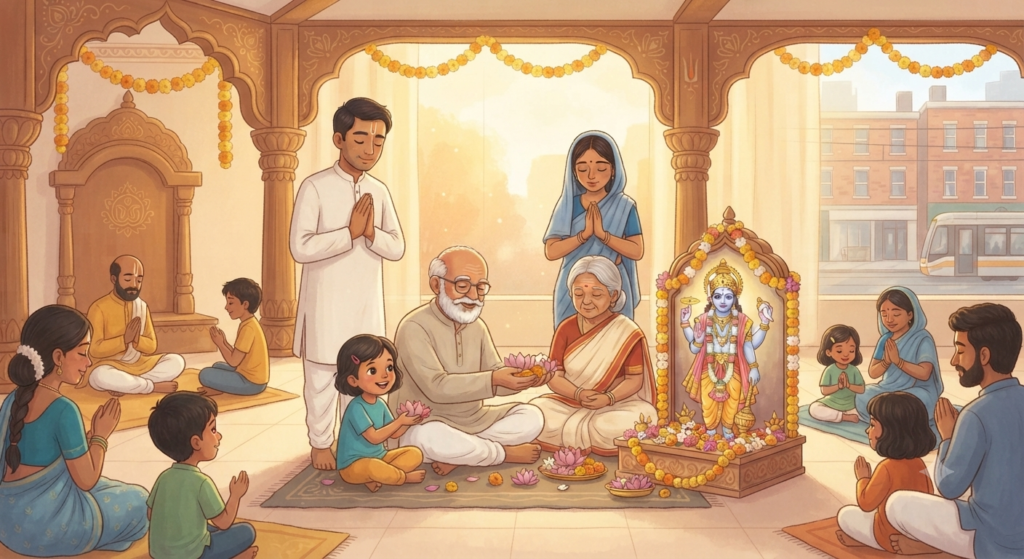
Indian Families Around the World
Indian families living outside India and Vaishnava communities in other countries may continue Ekadashi traditions through home prayers, temple gatherings, devotional singing, storytelling and fasting.
For children growing up far from India, these observances can be a way to stay connected with family traditions and stories.
💡 King Mandhata listened to his people when they needed help.If someone in your family or school needed help, what is one kind thing you could do?
A Simple Parsva Ekadashi Activity
Make Three Steps for Vamana
The story of Vamana and King Bali is perfect for a simple activity.
Draw three large footprints on a sheet of paper.
Inside each footprint, draw or write one thing:
👣 Step 1: One kind thing you can do.
👣 Step 2: One kind thing you can say.
👣 Step 3: One thing you can share.
Then colour your three footprints.
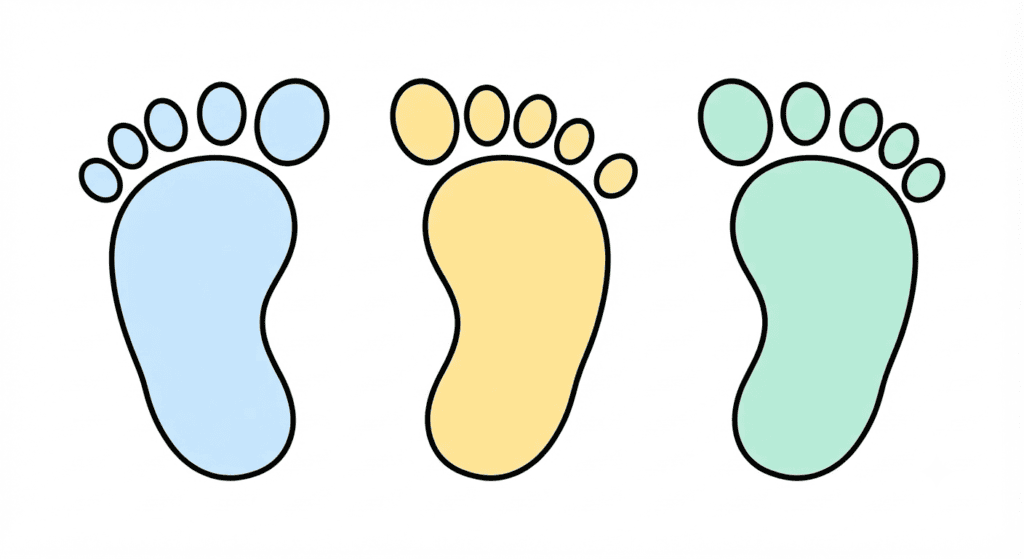
Prefer to colour rather than draw? Download and print this free footprint outline, then colour it your way! 👣🎨
Did You Know?
- Parsva Ekadashi is also called Parivartini Ekadashi.
- It is also known as Vamana Ekadashi and Padma Ekadashi in different traditions.
- Parivartini means turning or changing.
- The day falls during Chaturmas, the traditional period associated with Vishnu’s cosmic sleep.
- The Vamana and King Bali story is connected with this Ekadashi in traditional accounts.
- The same Vamana–Mahabali story is the central traditional legend of Onam in Kerala.
- In the Onam tradition, Vishnu allows Mahabali to return once every year to visit his people.
- Another traditional story associated with this Bhadrapada Ekadashi tells of King Mandhata, whose kingdom receives rain after he observes the Ekadashi with his people