The Story of the Sacred Pot
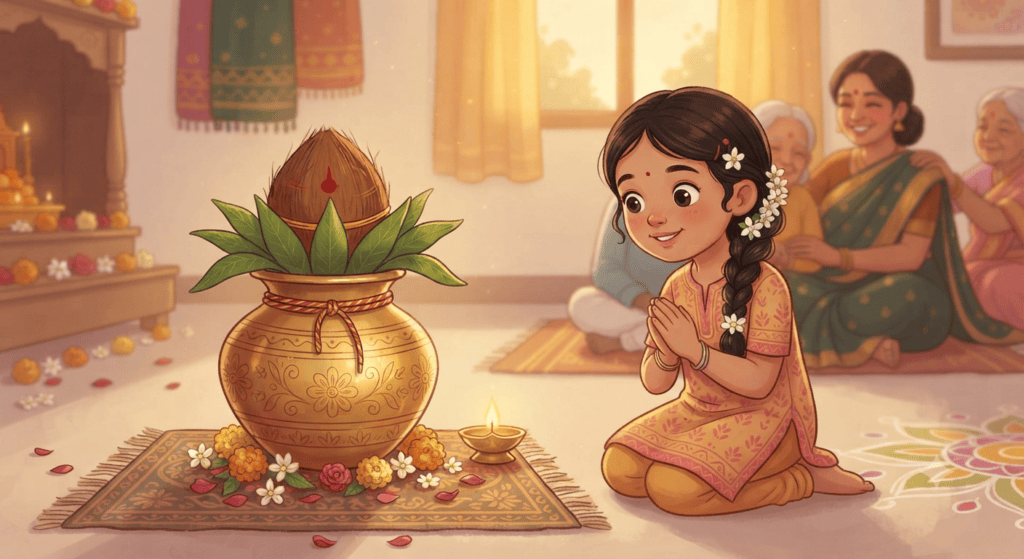
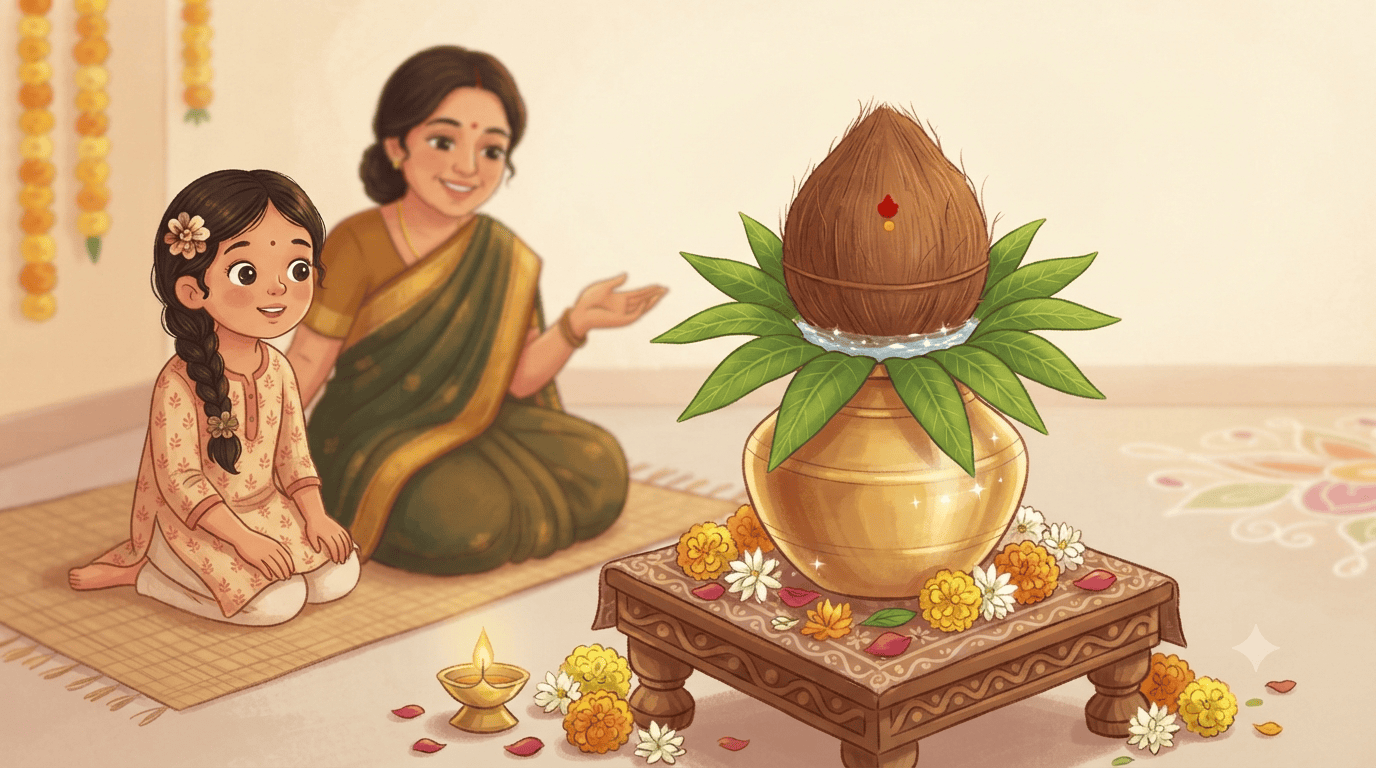
Have you ever seen a beautiful pot decorated with mango leaves, a coconut and flowers during an Indian puja?
That special pot is called a Kalasha.
A Kalasha is used in many Hindu prayers, festivals and ceremonies. It is often filled with water and decorated with leaves, a coconut and flowers.
But why is a simple pot considered so special?
Let’s discover its story!
What Is a Kalasha?
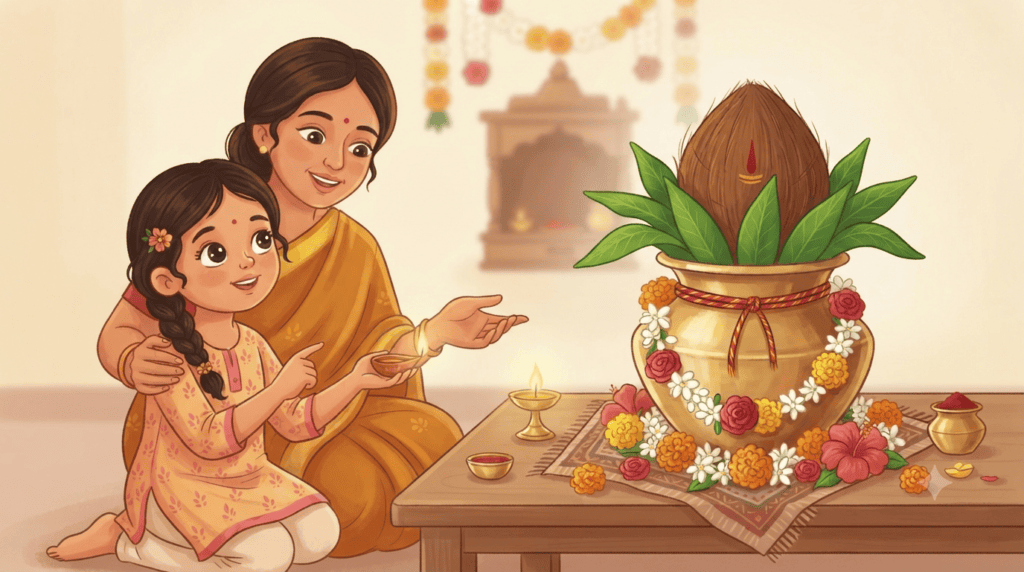
A Kalasha is a special pot or vessel used during many Hindu rituals.
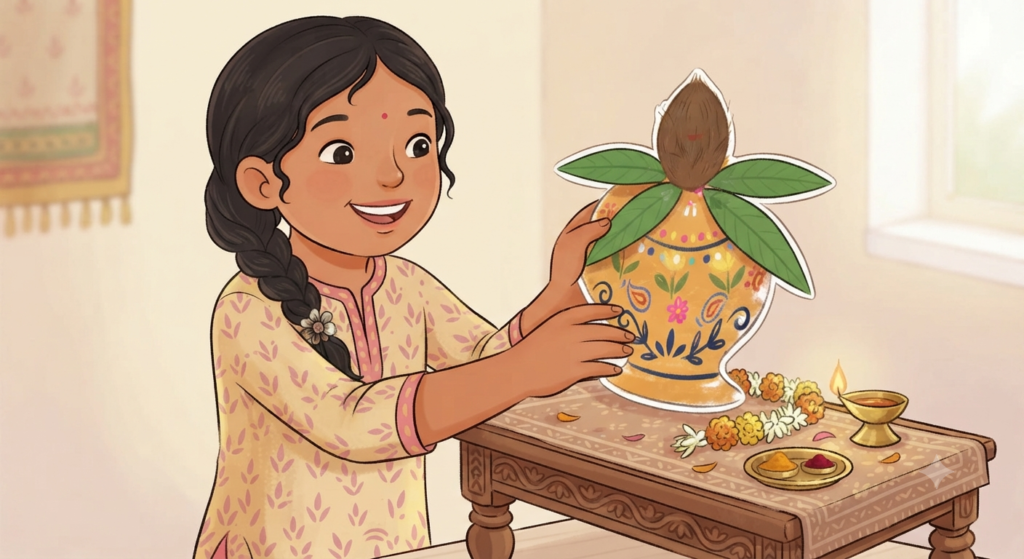
It is usually filled with water. Mango leaves are placed around the top, and a coconut is often placed above them.
The Kalasha may also be decorated with:
- Mango leaves
- A coconut
- Flowers
- Turmeric
- Kumkum
- Traditional designs
Different families and regions may decorate their Kalasha in different ways.
A Story from the Churning of the Ocean
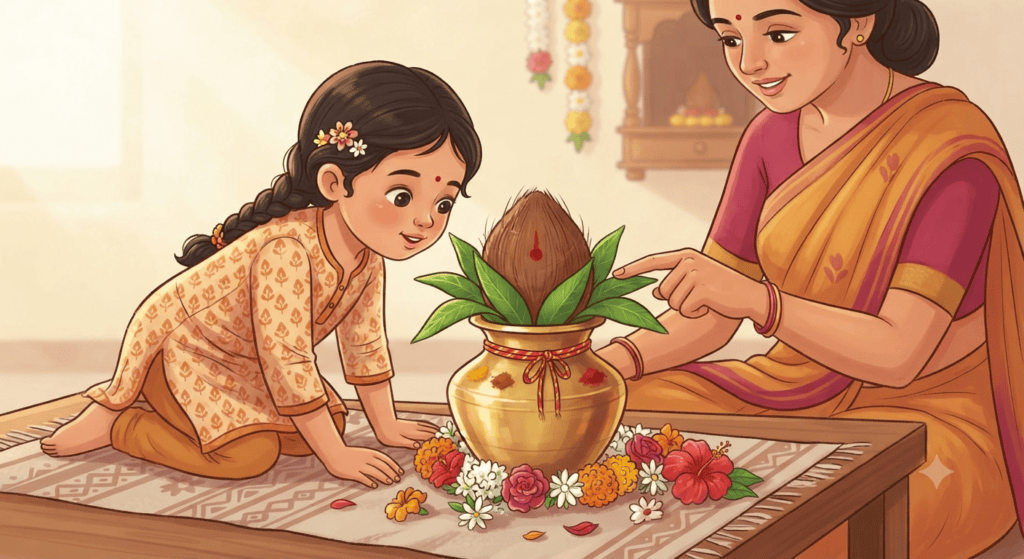
One traditional story that helps explain the special place of the Kalasha comes from the famous story of the Samudra Manthan – the Churning of the Ocean.
Long ago, the Devas and Asuras worked together to churn the great cosmic ocean.
They hoped to find something very precious – Amrita, the nectar of immortality.
After a great deal of churning, the precious nectar appeared.
The nectar was carried in a sacred vessel.
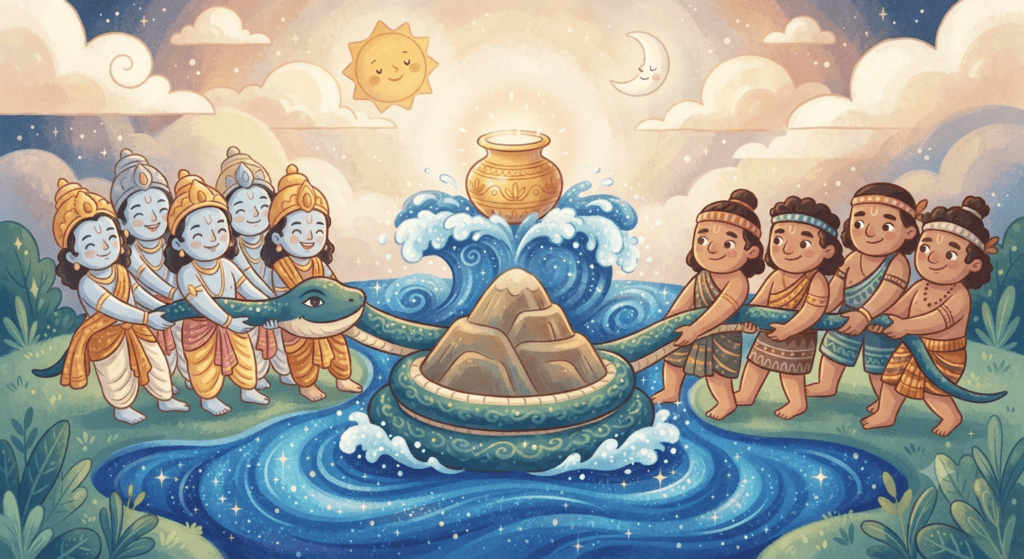
The vessel held something precious that was connected with life and immortality.
This story is one traditional connection between the sacred vessel and the importance given to special pots in Hindu traditions.
The Kalasha itself is used in many different rituals and has a much wider history and meaning.

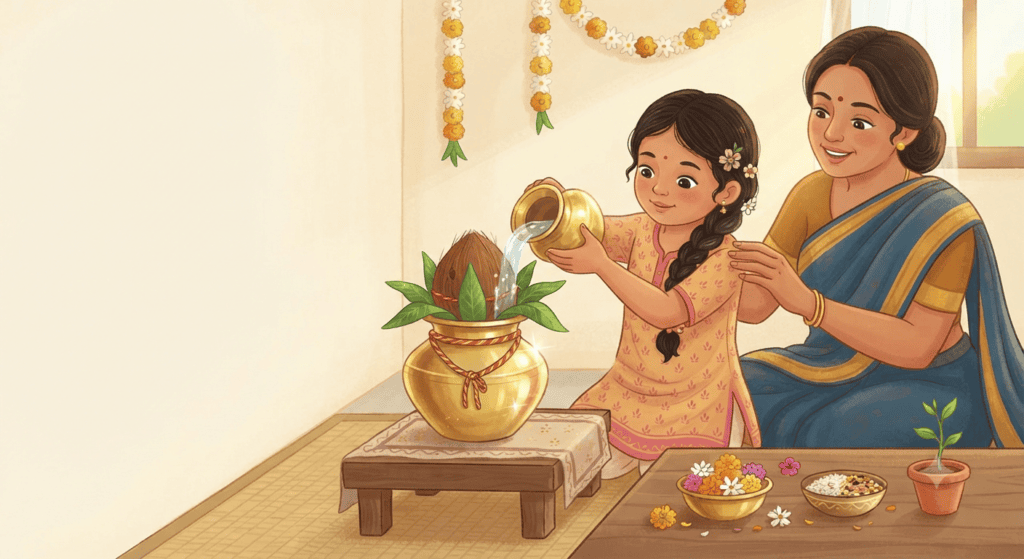
Why Is There Water Inside?
Water is very important in Indian traditions.
We need water to:
- Help plants grow
- Drink and stay healthy
- Grow food
- Support life
Because of this, the water inside a Kalasha can remind people of life, purity and abundance.
Why Are Mango Leaves Used?
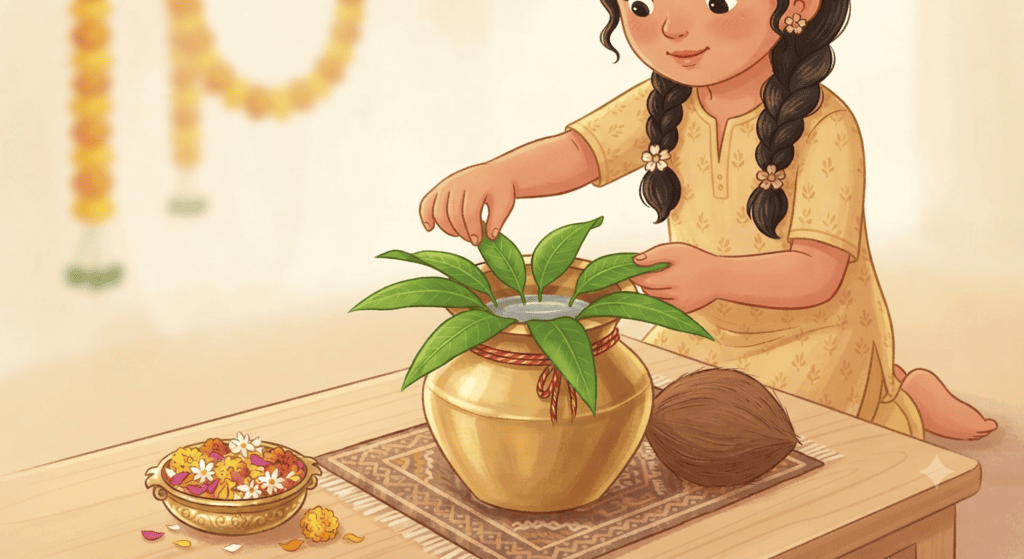
Fresh mango leaves are often placed around the mouth of the Kalasha.
Their green colour reminds us of nature, freshness and new growth.
In some traditions, the leaves are also seen as a sign of auspiciousness and prosperity.
Why Is a Coconut Placed on Top?
A coconut is often placed on top of the Kalasha.
Coconuts are considered auspicious in many Indian traditions and are offered during prayers and ceremonies.
The coconut can also remind us that something precious can be found inside a hard outer shell.

What Does a Kalasha Symbolize?
The exact meaning can vary between traditions, but a Kalasha is often connected with ideas such as:
Water – life and purity
Green leaves – growth and freshness
Coconut – auspiciousness and offering
The pot – abundance and the fullness of life
Together, these make the Kalasha a beautiful symbol used during special occasions.

The Kalasha and Varamahalakshmi
The Kalasha has a special place in Varamahalakshmi celebrations in many South Indian homes.
Families may decorate a Kalasha beautifully and use it as part of their worship of Goddess Lakshmi.
The pot may be dressed and decorated to represent the goddess, with flowers, jewellery, a saree or other traditional decorations.
The exact decoration and customs can differ from family to family and region to region.

Where Else Can You See a Kalasha?
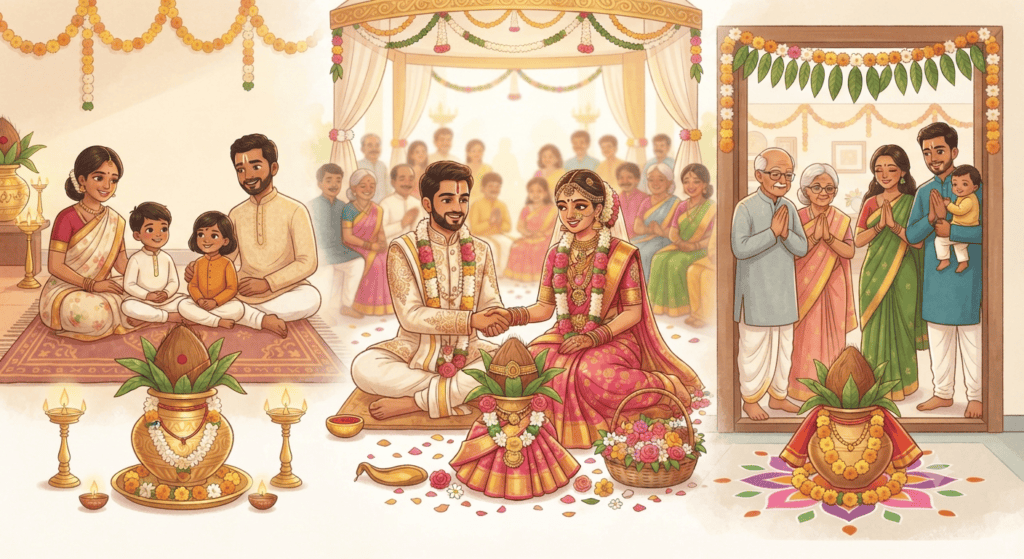
The Kalasha is not used only during Varamahalakshmi.
You may see decorated Kalashas during:
- Puja and prayer ceremonies
- Hindu festivals
- Weddings
- Housewarming ceremonies
- Other special family celebrations
Different communities may have their own ways of preparing and decorating the Kalasha.
💡 If you were decorating a Kalasha for a special celebration, what would you add?🌸 Flowers?
🌿 More leaves? 🎨 A colourful design?
Make Your Own Kalasha Craft
Now that you know what a Kalasha is, why not make your own colourful Kalasha?
This simple craft lets you learn about the pot, water, mango leaves and coconut while creating your own festival decoration.
What You’ll Need
- White paper or cardstock
- Pencil
- Crayons or colour pencils
- Child-safe scissors
- Glue
- Green paper, optional
- Brown paper, optional
Step 1: Draw the Kalasha
Draw a large Kalasha on your paper.
Make a round or slightly curved pot with a wide opening at the top.
Step 2: Colour Your Kalasha
Give your Kalasha a beautiful colour.
You could use gold, yellow, orange, red or any colour you like.
Add simple patterns such as dots, flowers or lines to decorate the pot.
Step 3: Add the Mango Leaves
Draw or cut out several green mango leaves.
Place them around the opening of your Kalasha.
If you are using paper leaves, glue them carefully in place.
Step 4: Add the Coconut
Draw a small coconut on brown paper, colour it, and cut it out with adult help.
Glue the coconut above the mango leaves.
Now your Kalasha is starting to look complete!
Step 5: Decorate Your Kalasha
Add your own special touches!
You can draw:
- Flowers
- Dots and patterns
- Turmeric-coloured designs
- Kumkum dots
- More leaves
Make your Kalasha bright and beautiful.
Step 6: Display Your Kalasha
Your Kalasha is ready!
Place your artwork somewhere special, such as near your festival decorations or on your study table.
Look at each part and remember what you learned:
Water – life
Leaves – growth
Coconut – auspiciousness
Pot – abundance
💡 Which part of your Kalasha did you enjoy making the most — the pot, the leaves, the coconut or the decorations?
Did You Know?
- The word Kalasha refers to a pot or vessel.
- You may also hear it called Kalash or Purna Kalasha in different contexts.
- Purna means full or complete, which is why a full vessel can be used as a beautiful symbol of abundance and auspiciousness.
A Little Pot with a Big Meaning
A Kalasha may look like a simple decorated pot, but it can carry many beautiful ideas – water, life, nature, abundance and auspiciousness.
The next time you see a Kalasha during a celebration, look closely at its water, leaves, coconut and decorations.
Each part has a story to tell. 🏺🌿