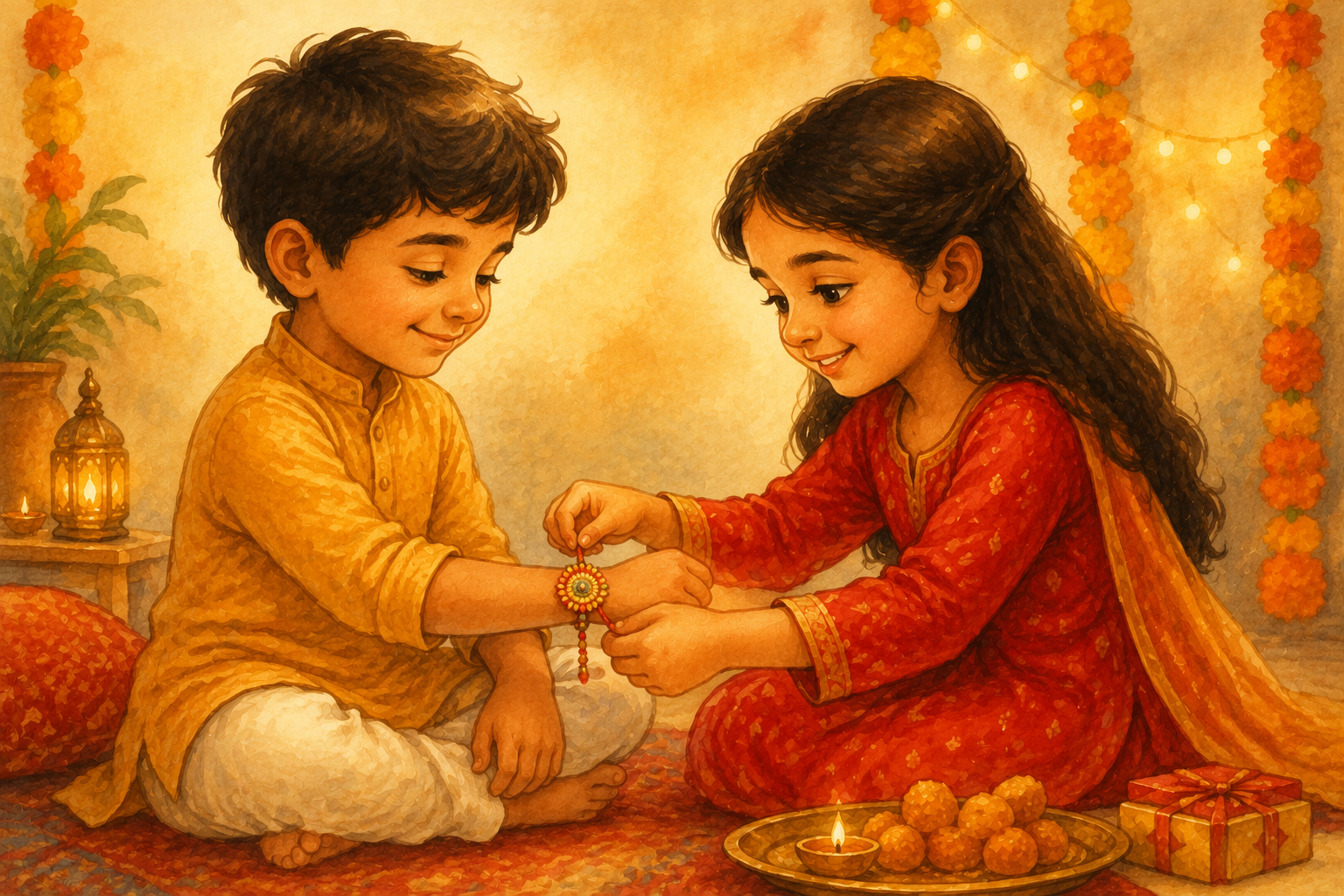
Have you ever tied a simple thread around someone’s wrist and made them a promise? That’s the heart of Raksha Bandhan – a thread, a promise, and a bond that lasts a lifetime.
What Is Raksha Bandhan?
Raksha Bandhan means “the bond of protection.” On this day, sisters tie a sacred thread called a rakhi around their brothers’ wrists, and in return, brothers promise to protect and care for their sisters, always. It’s celebrated on the full moon day of Shravan – the same rainy month as Nag Panchami and Hariyali Teej.
💡 If you tied a rakhi on someone today, who would it be, and what promise would you want from them?
The Story of Krishna and Draupadi
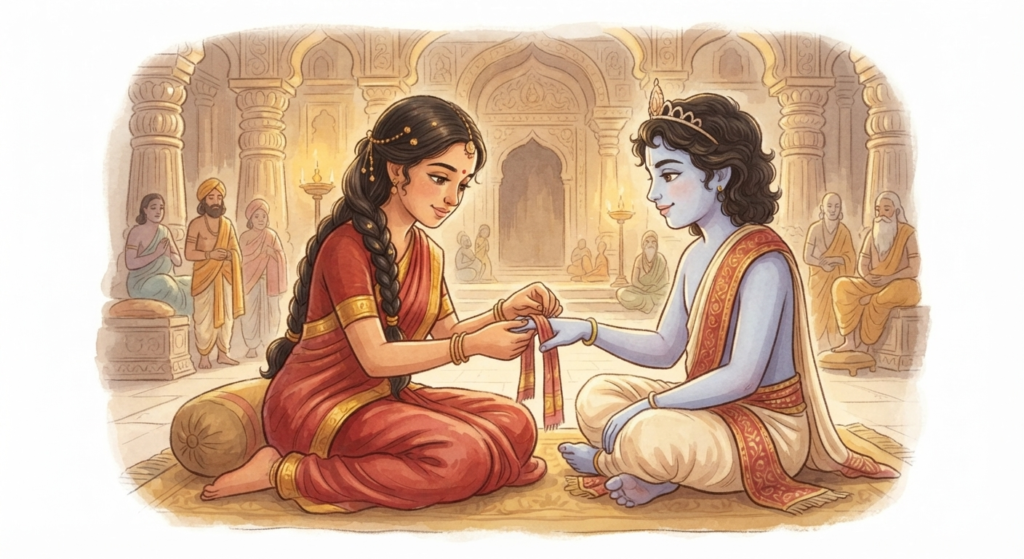
One of the most beloved stories behind Raksha Bandhan comes from the Mahabharata. One day, Krishna accidentally cut his finger, and it began to bleed. Without a second thought, Draupadi tore a strip of cloth from her own saree and tied it around his wound to stop the bleeding.
Krishna was deeply moved by her care – and he made her a quiet promise that day: he would always protect her, no matter what. Years later, when Draupadi needed help more than ever, Krishna kept that very promise.
💡 Draupadi didn’t think twice before helping Krishna. Has someone ever helped you quickly, without even being asked?
The Story of Yama and Yamuna
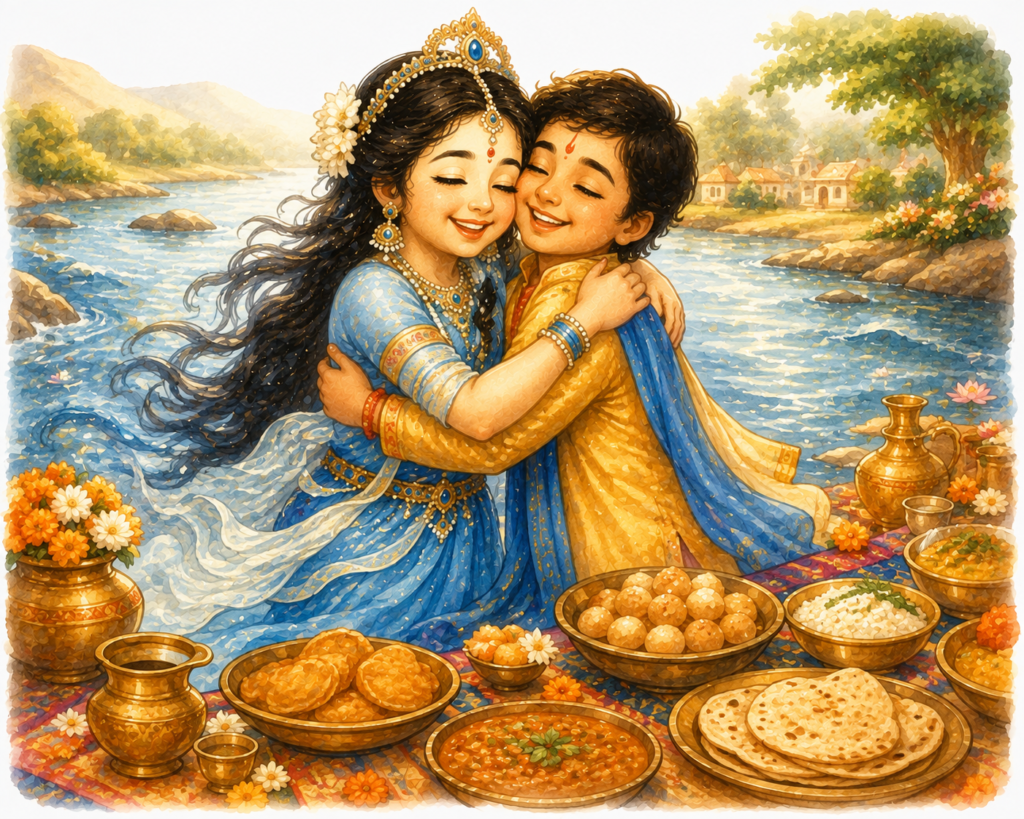
Yama, the god of who watches over life’s journey, hadn’t visited his sister Yamuna in a very long time. Missing her brother, Yamuna waited patiently for years, until he finally came to see her. Overjoyed, she welcomed him with a feast and tied a rakhi on his wrist.
Yama was so touched that he granted her a wonderful gift – the promise that he would return to see her again and again. From that day on, it’s said that any brother who receives a rakhi and promises to protect his sister is blessed in return.
💡 Yamuna waited a long time to see her brother again. What do you do while you wait for something you’re excited about?
For Older Readers (8-12) – More Stories Behind the Thread
There are even more stories tied to this festival’s ancient roots. In one from the Bhavishya Purana, the gods were losing a fierce battle against powerful demons. Indra, king of the gods, feared defeat – until his wife Sachi (also called Indrani) prepared a sacred thread, filled it with her prayers, and tied it to his wrist. Strengthened, Indra returned to the battle and led the gods to victory.
Another legend tells of Goddess Lakshmi and a generous demon king named Bali. When Lord Vishnu chose to stay in Bali’s kingdom to protect him, Lakshmi missed her husband deeply. She disguised herself, visited Bali, and tied a rakhi on his wrist. Touched by her devotion, Bali granted her a wish – and she asked for Vishnu to return home with her. Bali agreed, honouring the bond of the rakhi even though it meant letting go of something he cherished.
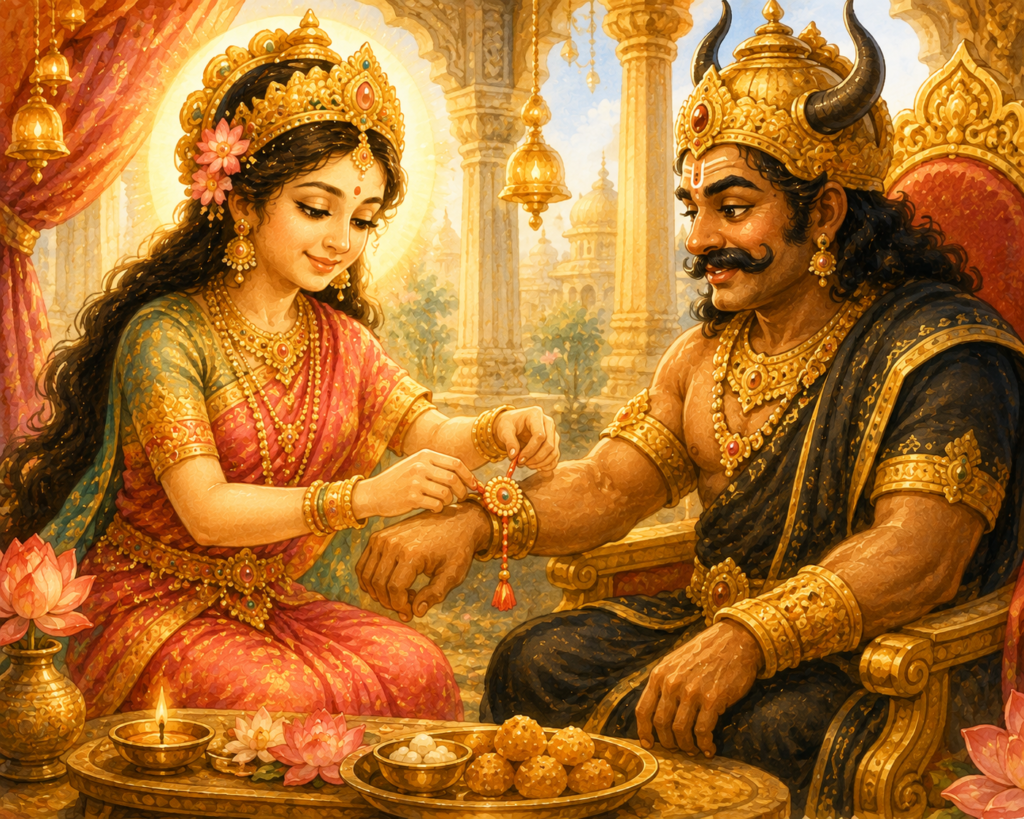
These stories show that Raksha Bandhan was never only about brothers and sisters by blood – it’s about a bond of protection and trust that can form between anyone.
💡 Bali kept his promise even when it was hard for him. Why do you think keeping a promise matters, even when it’s difficult?
A Real Story From History
Not every Raksha Bandhan story is a myth! In the 16th century, a real queen named Rani Karnavati of Mewar sent a rakhi to the Mughal Emperor Humayun, asking for his protection when her kingdom faced an attack. Even though they came from very different worlds, Humayun is said to have honoured the bond of the rakhi and moved to help her.
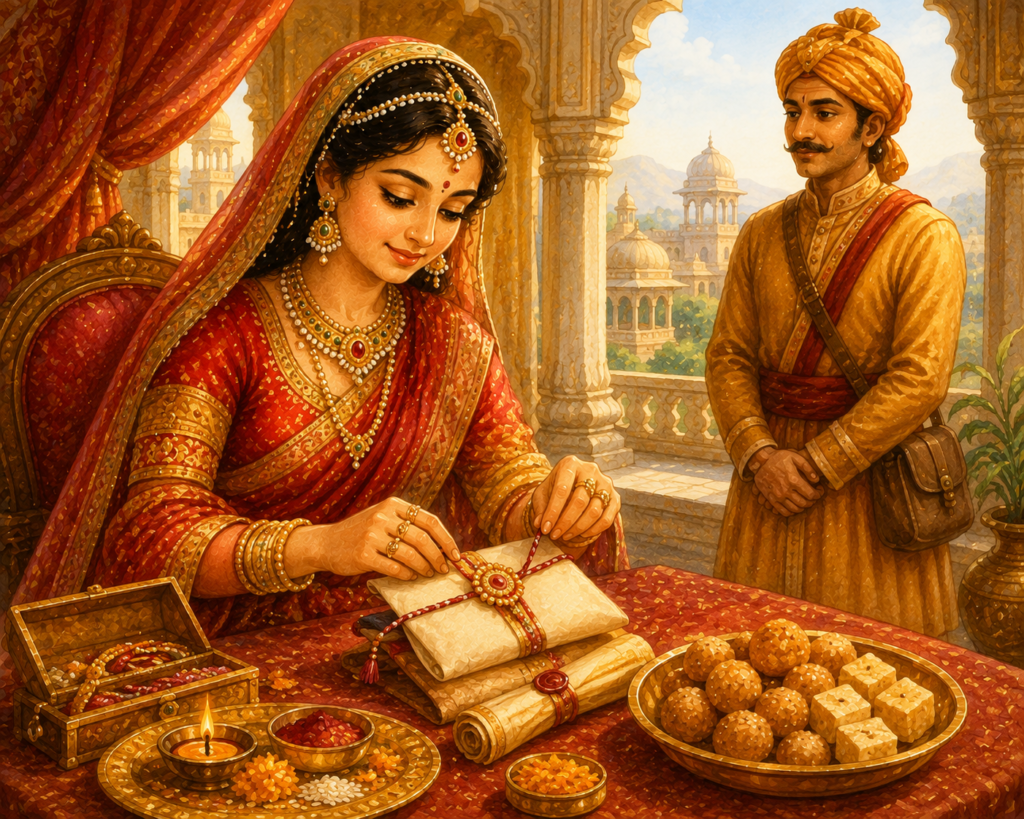
💡 Rani Karnavati asked for help from someone very different from her. Have you ever asked someone new for help, and been surprised by their kindness?
How It’s Celebrated
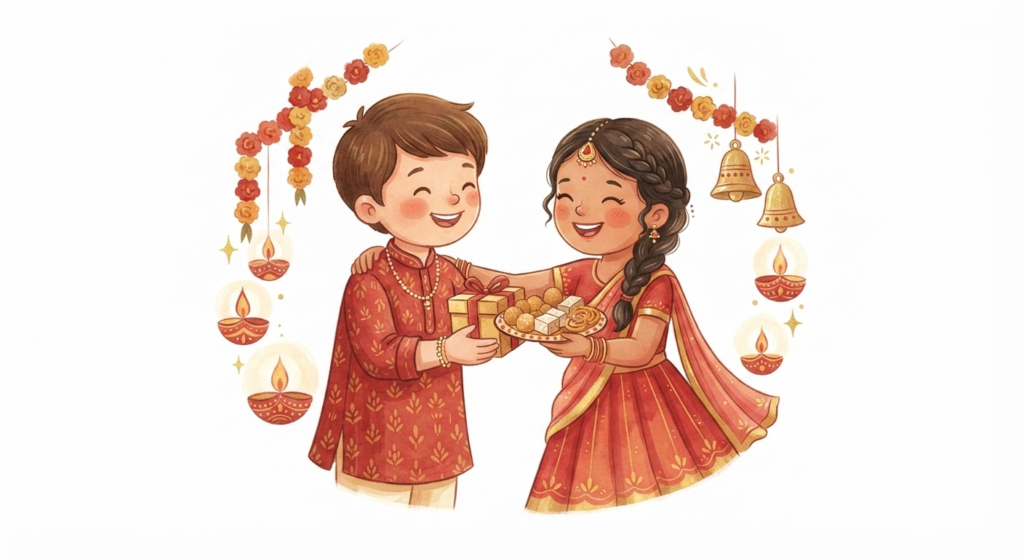
- Sisters tie a rakhi on their brothers’ wrists, often prepared with love, sometimes handmade
- Brothers give gifts – sweets, money, or small presents – as a token of their promise
- Sweets are shared between siblings, a moment of warmth and celebration
- The bond extends beyond family – many people tie rakhis to close friends, cousins, or even soldiers and teachers, as a mark of respect and protection
Did You Know?
- Rakhis aren’t only tied to brothers – some people tie them to trees, rivers, or even soldiers protecting the country, as a way of honouring anyone or anything that protects and nurtures us.
- In some Indian communities, Raksha Bandhan is also linked to Rishi Tarpan, a day priests change their sacred thread and pay respects to sages.
- The word “Raksha” means protection, and “Bandhan” means bond – together, the name itself is the whole meaning of the festival.
Make Coconut Ladoo Together
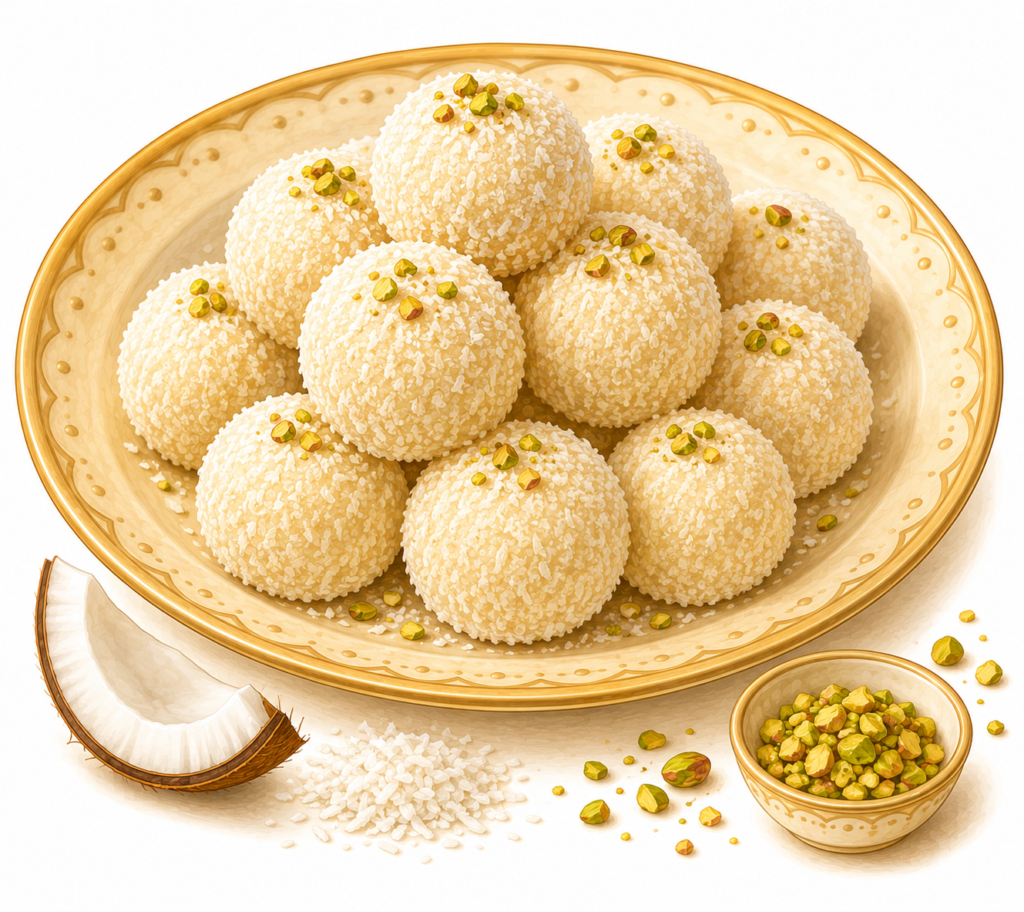
Raksha Bandhan isn’t complete without sharing something sweet! A soft, simple treat perfect for the occasion is Coconut Ladoo – quick to make, and needs very little cooking.
What You’ll Need
- 2 cups desiccated coconut (plus extra for rolling)
- 1 cup condensed milk
- 1/2 tsp cardamom powder
- A few chopped pistachios, for garnish (optional)
Steps
Step 1: Mix the coconut and condensed milk together in a pan on low heat, stirring gently until it comes together, about 5-7 minutes.
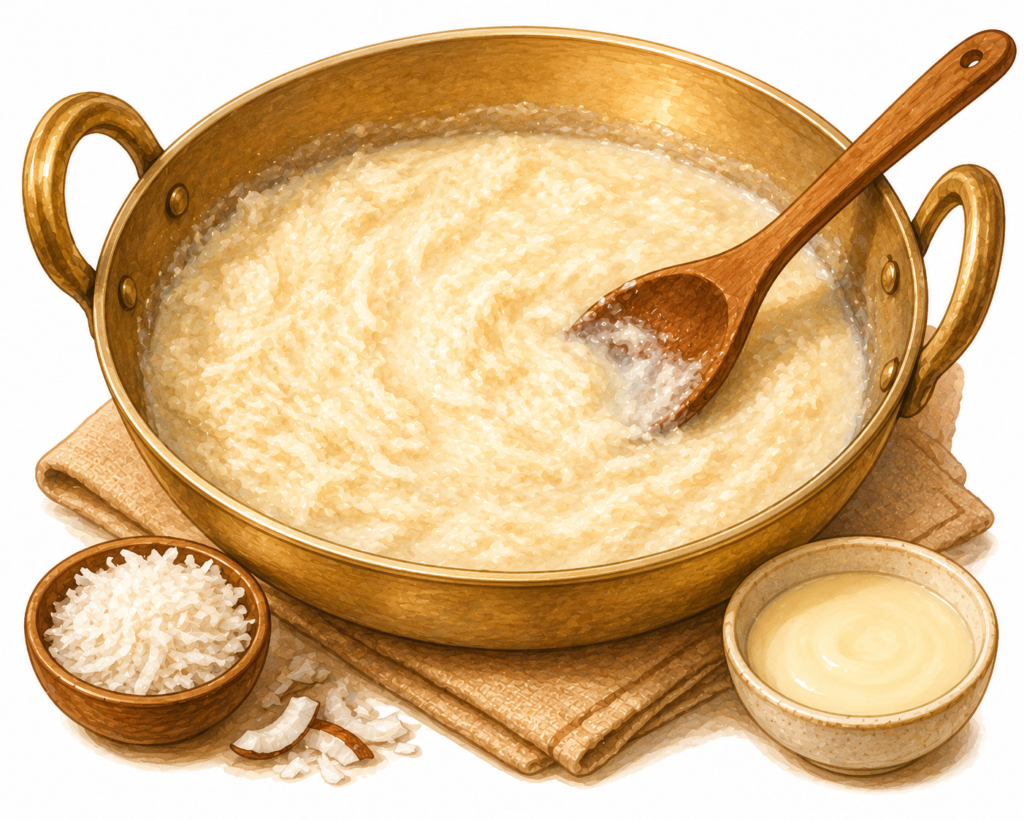
Step 2: Add the cardamom and let the mixture cool slightly.
Step 3: Shape into balls once cool enough to handle.
Step 4: Roll in coconut for a light, snowy coating.
Step 5: Garnish and serve with chopped pistachios if you like.
💡 Coconut is often used in celebrations across India because it’s considered a symbol of purity and good fortune.
Fun Activity – Make Your Own Rakhi
What You’ll Need
- Colourful thread or embroidery floss
- Beads, small pom-poms, or sequins
- Glue
- A small piece of cardboard (optional, for a sturdier base)
Steps
Step 1: Cut a length of thread, long enough to comfortably tie around a wrist.
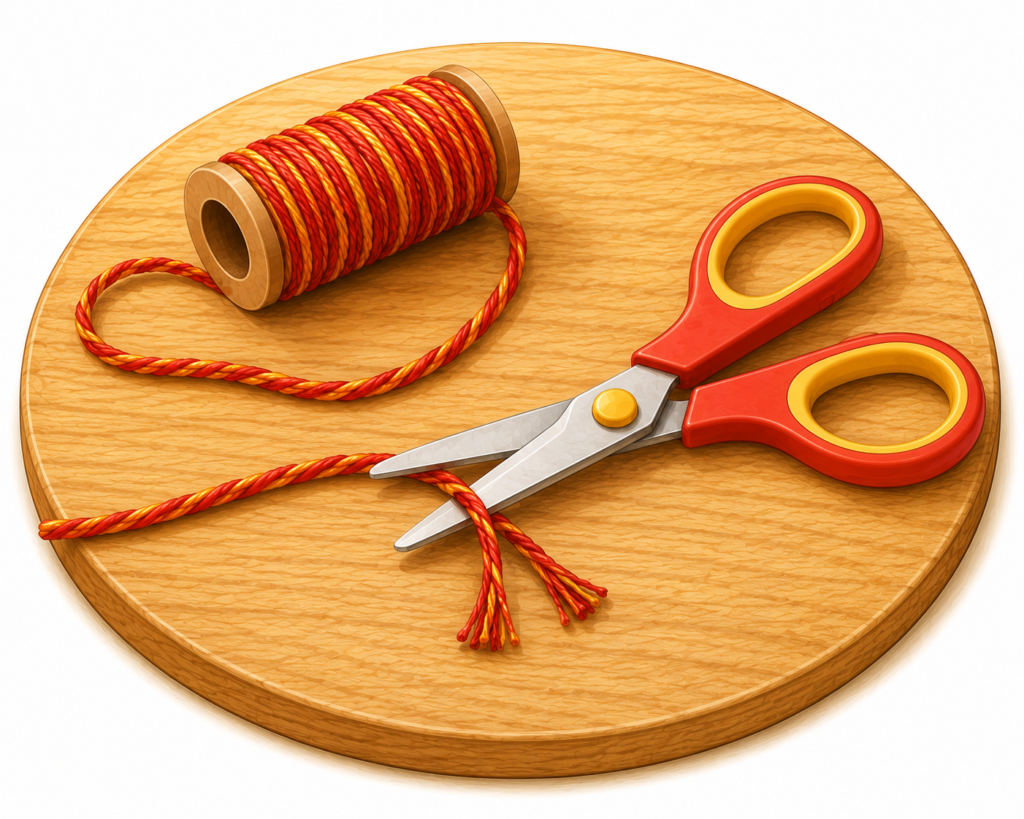
Step 2: Decorate a small bead or pom-pom as the centerpiece of your rakhi.
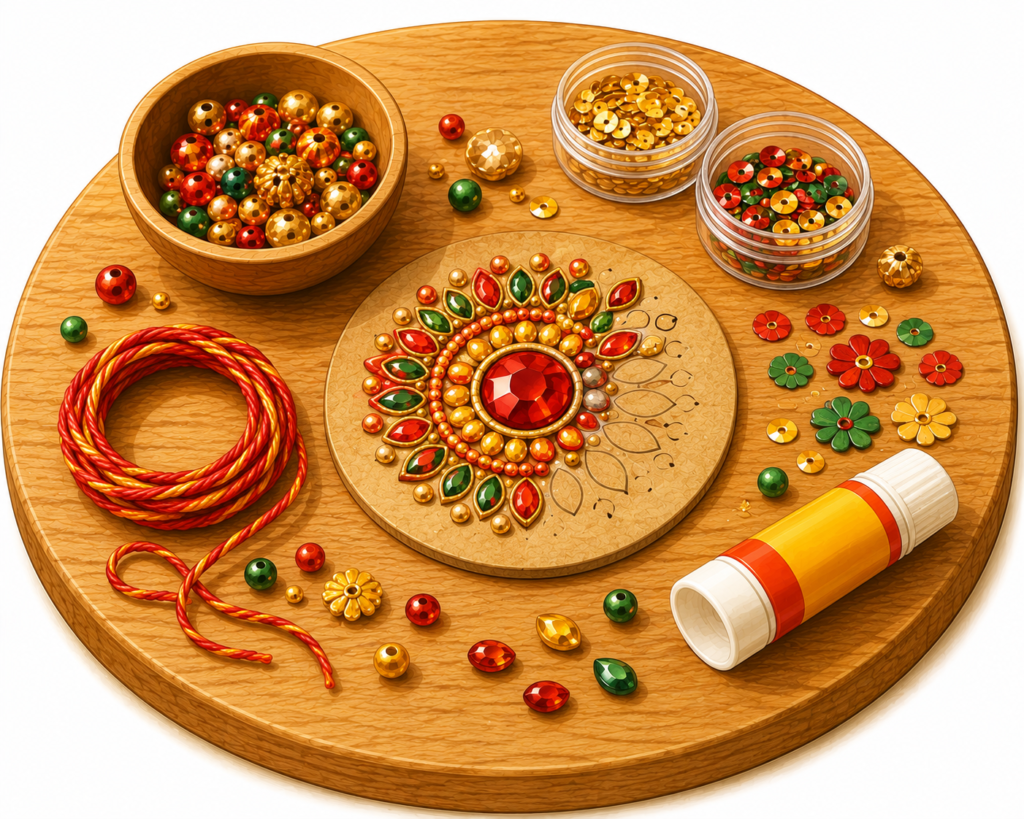
Step 3: Glue your decoration onto the middle of the thread.
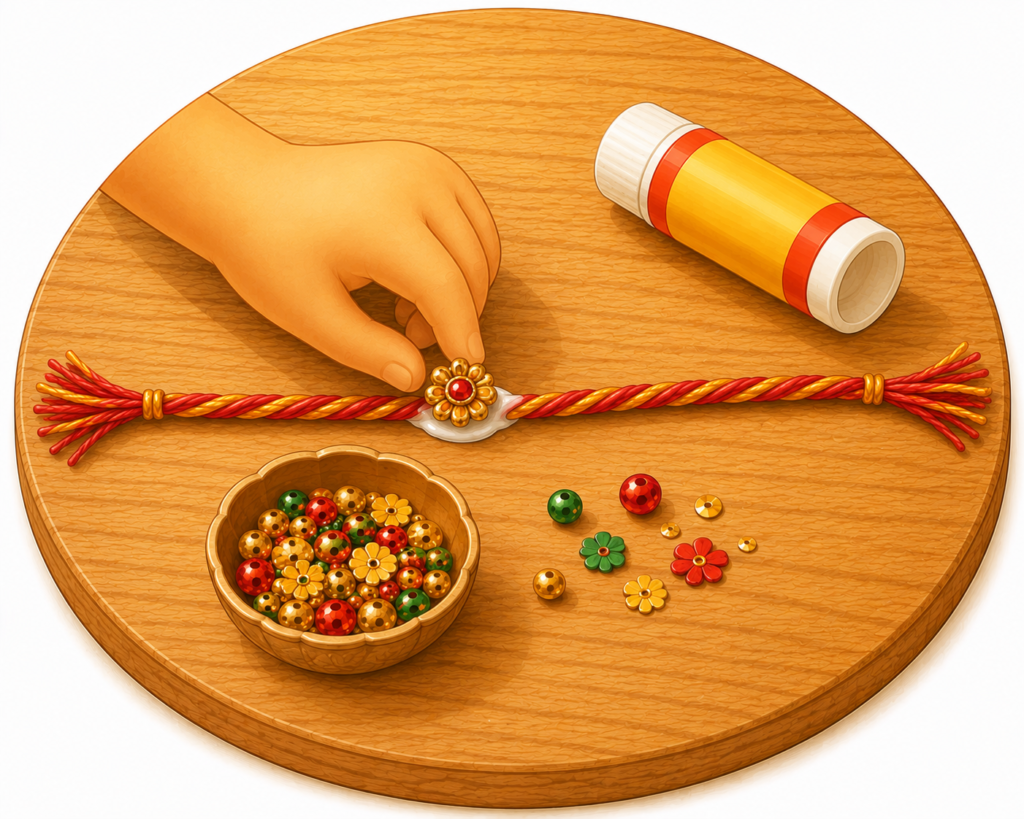
Step 4: Let it dry completely, then it’s ready to tie!
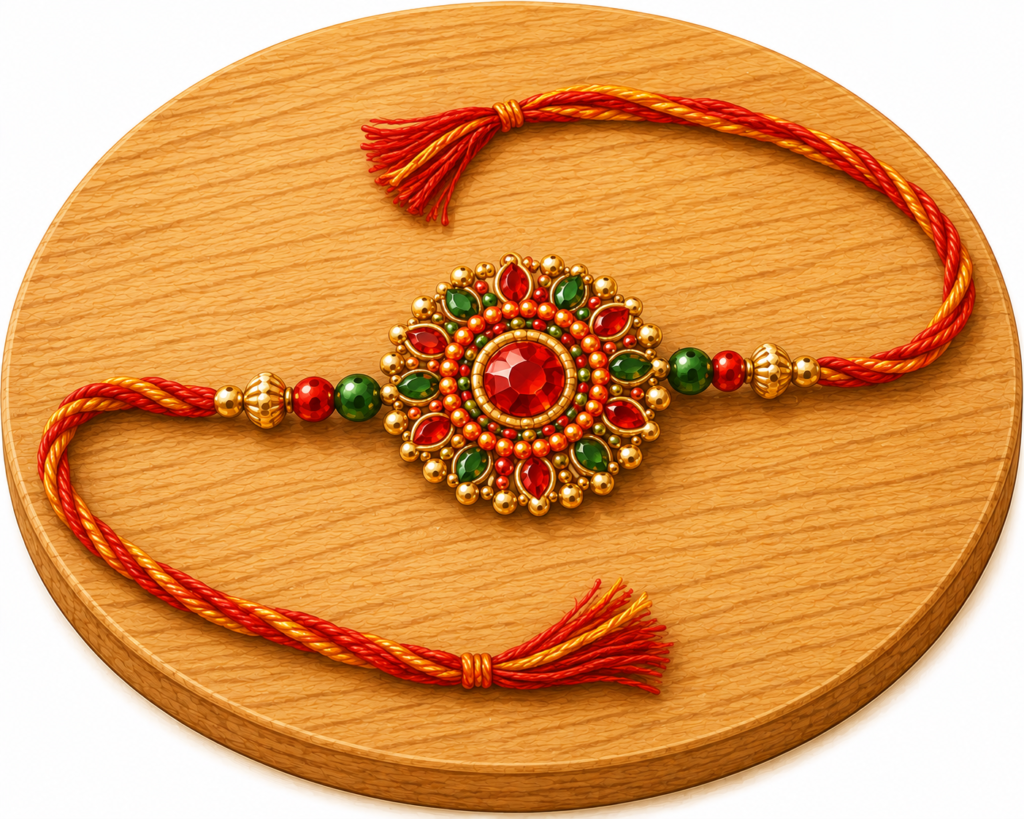
💡 What colours would you choose for a rakhi made especially for someone you love?
A Closing Thought
Raksha Bandhan reminds us that a simple thread can carry a big promise – to protect, to care, and to always be there for one another, no matter how far apart we may be.