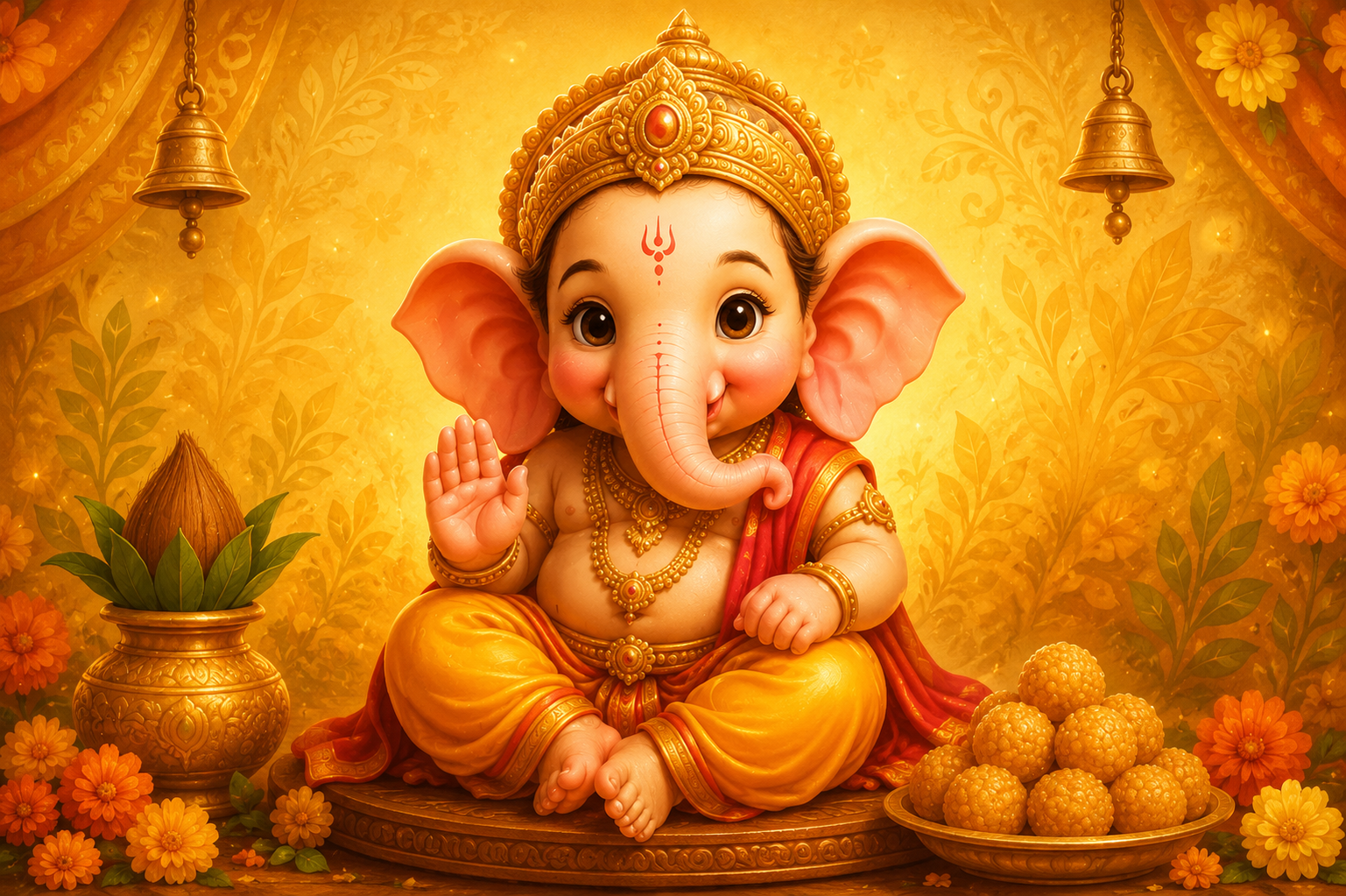
Have you ever noticed how Ganesh Chaturthi turns an entire street into a celebration? From colourful idols, lights, and people dancing with joy, it is the festival to celebrate the birthday of Ganesha, the elephant-headed god loved by children and grown-ups alike
The Story of Ganesha’s Birth
Once, Goddess Parvati created a little boy out of sandalwood paste to guard her while she bathed. That boy was Ganesha. When Lord Shiva came home, he didn’t know who the boy was. Ganesha didn’t allow him to enter, so Shiva became angry and cut off his head. When Parvati was upset, Shiva promised to bring him back to life. The head of a baby elephant was placed on the boy, and that’s how Ganesha became the elephant-headed god.

💡 If you had to give Ganesha a new toy after he came back to life, what would you choose?
Want to read more about Ganesha? The 365 Tales of Ganesha is a beautifully illustrated storybook perfect for bedtime reading.
Modaks – Ganesha’s Favorite Sweet
Ganesha is fondly called “Modakpriya” – which means “the one who loves modaks.” That’s how much he loves these little sweet dumplings!
Modaks are made of rice flour, coconut, and jaggery and during Ganesh Chaturthi, families prepare them in big batches to share with everyone who visits.

💡 How many modaks do you think you could eat in one go?
The Moon and the Laughing Tale
There’s a funny story linked to Ganesh Chaturthi! One night, after eating too many modaks, Ganesha was riding on his tiny mouse when he tripped. The moon saw this and laughed loudly. Angry, Ganesha cursed the moon, saying anyone who looks at it on Ganesh Chaturthi would face trouble. That’s why many people avoid looking at the moon on this day.
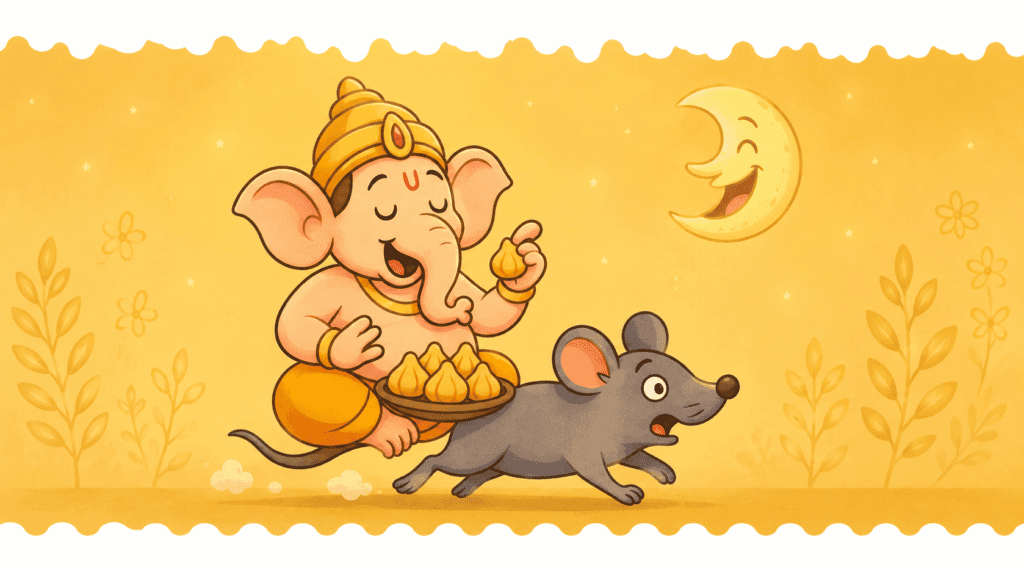
💡 Would you have laughed at Ganesha, or helped him up?
How It’s Celebrated Across India
Ganesh Chaturthi is celebrated all across India – from the northernmost cities to the southernmost tip, in big loud streets and quiet cozy homes. Every state has its own special way of celebrating. Here are some of our favourites!
Mumbai – The Grandest Celebration
Mumbai is famous for the biggest Ganesh Chaturthi celebrations in the world. Giant idols – some taller than a two-storey building – are installed in decorated pandals across the city. Thousands of people visit every day for 10 days. On the last day, the idol is carried through the streets in a massive procession before being immersed in the sea. The whole city comes alive with drums, dancing, and the chant of “Ganpati Bappa Morya!”

Hyderabad – Khairatabad Ganesh
Hyderabad is home to one of the tallest Ganesha idols in the world – sometimes standing over 60 feet high. The city’s celebrations are known for their scale and colour, drawing visitors from all over the country.

Goa – A Quiet Family Tradition
In Goa, Ganesh Chaturthi is a quieter, more intimate celebration. Families bring their own small Ganesha idol home, worship together for a day or two, and then gently immerse it in a nearby river or the sea as a family.

Chennai and Tamil Nadu – Vinayagar Chaturthi
In Tamil Nadu, the festival is called Vinayagar Chaturthi. Kolam, beautiful patterns drawn with rice flour decorate doorsteps. Families make kozhukattai, the Tamil version of the modak, shaped slightly differently and filled with sweet coconut.

💡 Would you like to dance in front of the dhol (drums) during a Ganesh procession?
Make Modaks at Home – Simple Recipe
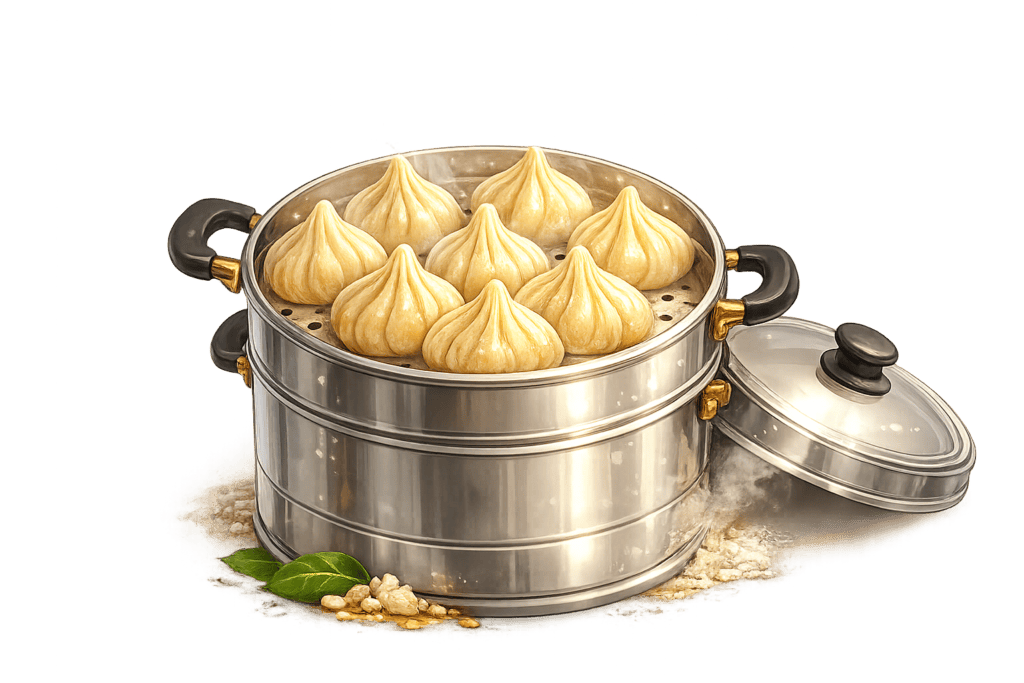
Modaks are easier to make than you think. Here’s a simple version you can try with a grown-up.
What you need:
- 1 cup rice flour
- ¾ cup water
- A pinch of salt
- ½ cup grated coconut
- 3 tablespoons jaggery (or brown sugar)
- A small pinch of cardamom powder
What to do:
Step 1: Make the filling Mix the grated coconut and jaggery in a pan on low heat for 2-3 minutes until it comes together. Add the cardamom. Let it cool.
Step 2: Make the dough Boil the water with a pinch of salt. Slowly add the rice flour and stir quickly. Take it off the heat and knead it gently into a soft dough.
Step 3: Shape the modaks Take a small ball of dough, flatten it in your palm, place a little filling in the centre, and bring the edges together to form a little dumpling shape. If you have a modak mould, even better , it makes them look perfect!
Step 4: Steam them Place the modaks in a steamer for about 10 minutes. They’re ready when they look slightly shiny.
Step 5: Offer and eat! In many homes, the first modak is offered to Ganesha before everyone eats. Then – enjoy!
💡 Ganesha is said to love modaks so much that he once ate so many he fell off his mouse. Now you know why!
If you’d like to make modaks like the ones Ganesha loves, here’s a simple mould we could use at home to shape them neatly.
Fun Activity – Make Your Own Ganesha!
You don’t need clay or paint for this one. All you need is a pencil and some colours!
Draw Ganesha using shapes:
- Start with a big circle for his tummy
- Add a smaller circle on top for his head
- Draw two big fan-shaped ears on the sides
- Add a long curved trunk pointing downward
- Give him four arms – two on each side
- In one hand, draw a round modak
- Don’t forget his little crown on top!

Once you’re done, colour him in. Ganesha is often shown in gold, orange, or yellow. There are no rules – make him as bright and colourful as you like!
Want to print and colour a full Ganesha? Download your free colouring page here.
💡 Hey!!! Can you also draw the little mouse that Ganesha rides on? He’s very tiny compared to Ganesha – that’s what makes it funny!
Did You Know?
- Ganesha is called “Vighnaharta”, the remover of obstacles.
- He is worshipped before starting anything new, from exams to weddings.
- In some places, people make eco-friendly clay Ganeshas that dissolve safely in water.
- Ganesha has 108 different names – including Vighnaharta (remover of obstacles), Gajanana (elephant-faced), and Lambodara (the one with a big belly). Each name describes a different quality he is loved for.
- The largest Ganesha idol in the world was built in Hyderabad – it stood over 70 feet tall, taller than a seven-storey building!
- Ganesha’s big ears are not just for decoration it is said they help him listen to all the prayers of his devotees, no matter how quietly they are spoken.
- His broken tusk has a story too. Ganesha broke it off himself to use as a pen when he was writing down the great Indian epic, the Mahabharata, because he didn’t want to stop writing even for a moment
Ganesh Chaturthi is about fun, sweets, songs, and togetherness. But most importantly, it reminds us to start new things with faith and courage -because Ganesha is always there to guide us.