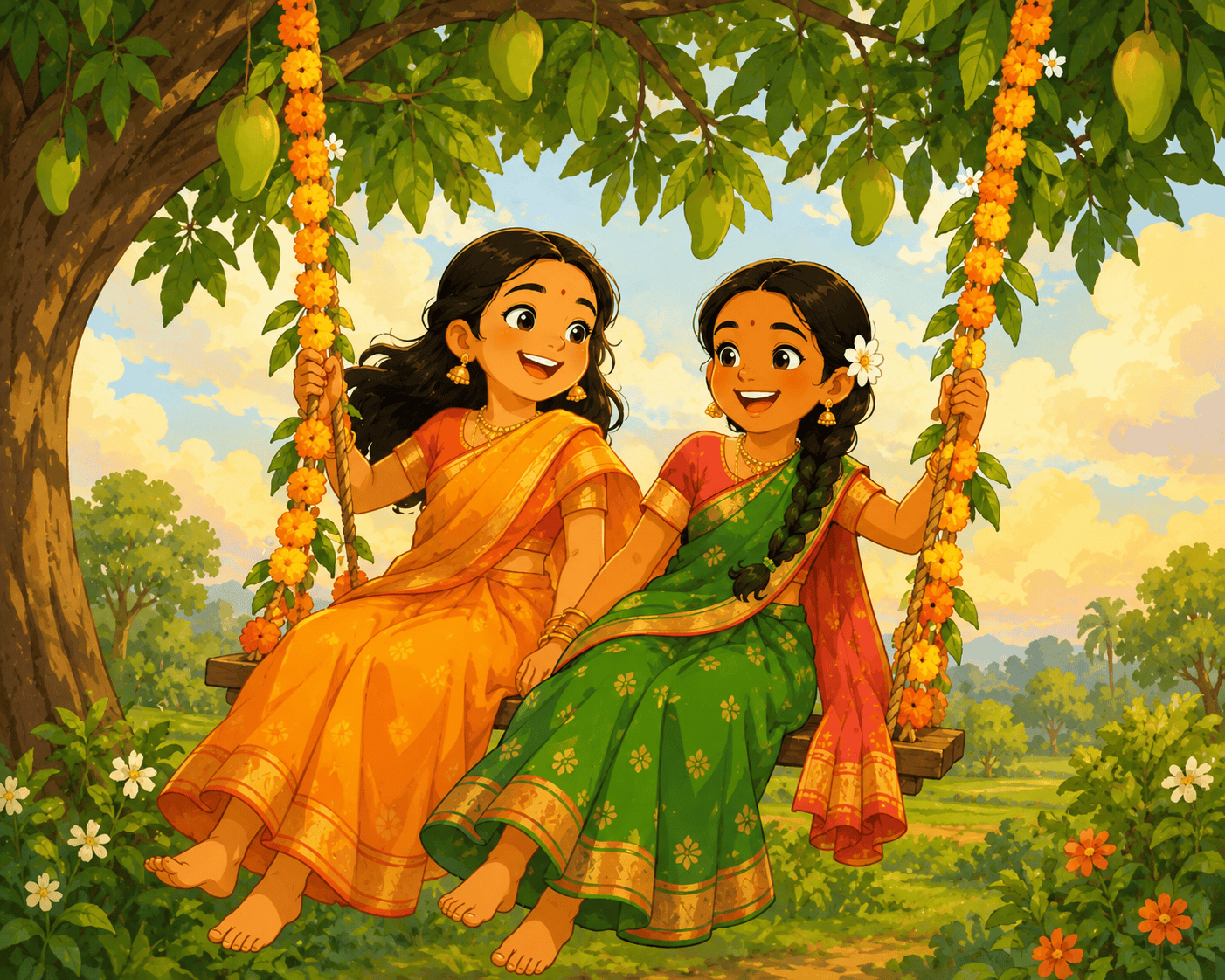
The swing festival of Odisha that celebrates nature, womanhood, and joy
🧒 For Little Ones
Ask a grown-up to read this with you!
Have you ever seen someone swing really high on a swing decorated with flowers? That is what Raja feels like – a festival full of swings, sweets, and smiles!
Raja is a special festival from Odisha – a beautiful state on the east coast of India. It lasts for three whole days every June, just when the rains are about to arrive.
During Raja, people celebrate the Earth – they call her Mother Earth, and they believe she needs a rest too! So for three days, no one digs the soil or ploughs the fields. The Earth gets to sleep and get ready for the rains.

And while the Earth rests – everyone else celebrates! Girls wear beautiful new clothes and put red alta on their feet. Swings are hung from mango trees and decorated with marigold flowers. Everyone eats delicious sweet cakes called Poda Pitha – made from rice, coconut, and jaggery.

💡 Ask someone at home – “Have you ever celebrated Raja?” You might hear a lovely memory!
Try This!
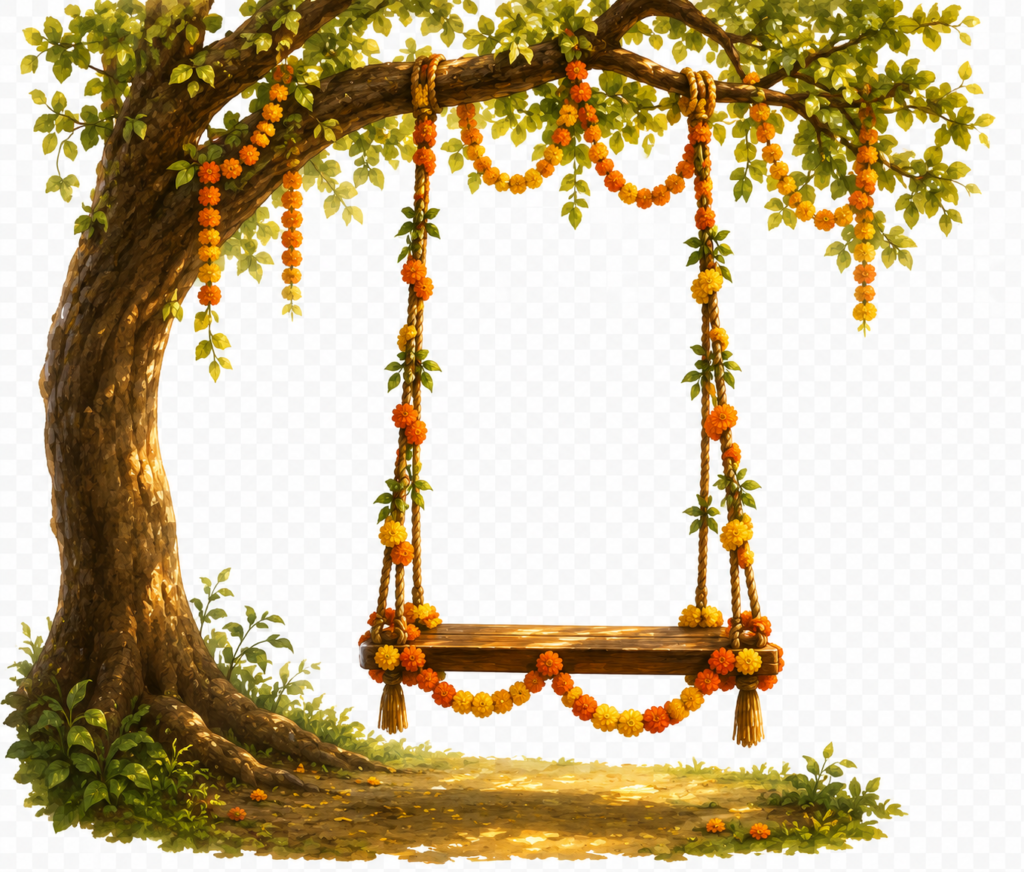
Draw a swing hanging from a big mango tree and decorate it with flowers. That is your Raja swing!

Colour the ropes with marigold orange and yellow – just like a real Raja swing!
📖 For Older Readers -The Full Story
For curious minds aged 8 and above – and for parents who want to know more.
A Festival Unlike Any Other
Most Indian festivals celebrate gods, heroes, or harvests. Raja is different. It celebrates the Earth herself – and the women who nurture life.
It is one of the very few festivals in the world where menstruation is not a taboo but a reason to celebrate. The word Raja comes from the Sanskrit word Rajas – which means menstruation. During Raja, Mother Earth is believed to be menstruating – resting, renewing, and preparing for a fertile season ahead.
Traditionally, Raja called for a complete pause in agricultural work. No digging, ploughing, or tampering with the soil was allowed. Women too were excused from household chores. Men stepped in to cook and manage the home.
💡 Think about that – a festival from hundreds of years ago that said women deserve rest, and the Earth deserves respect. That is remarkable.
The Four Days of Raja
Raja Festival is celebrated in mid-June, marking the start of the monsoon season, and spans four days, each with its own meaning.
- Sajabaja – the day before, when homes are cleaned and kitchen tools are washed and set aside
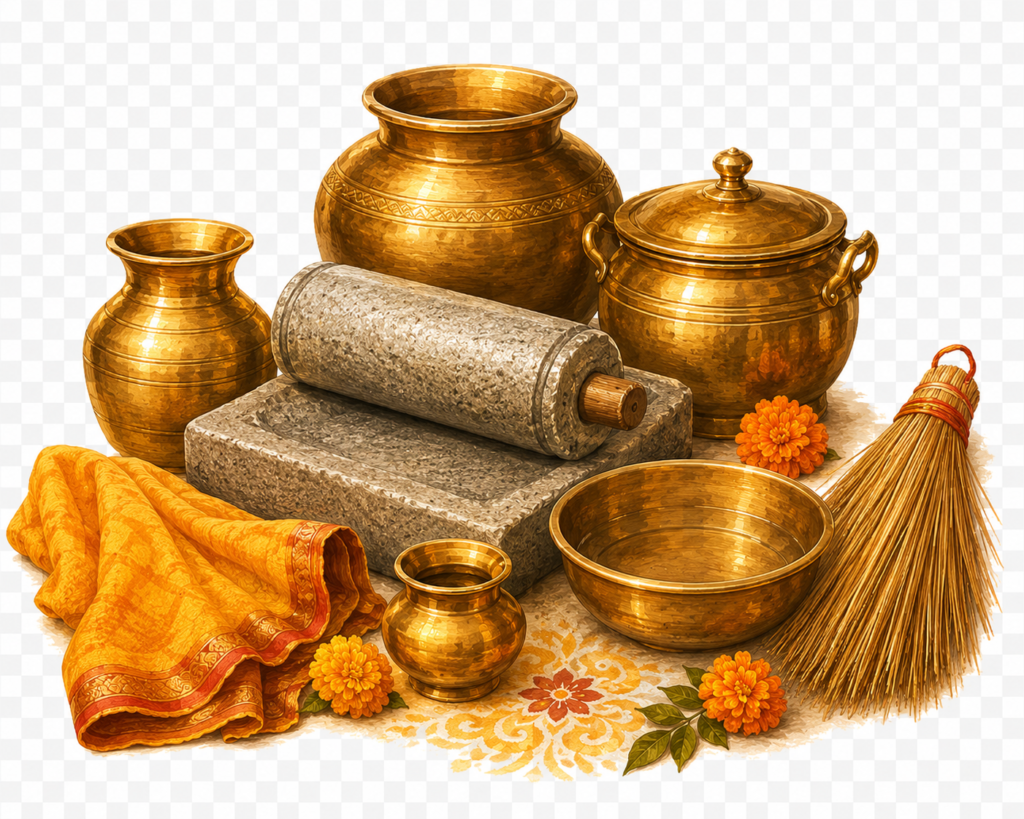
- Pahili Raja – the first day, when the celebrations begin
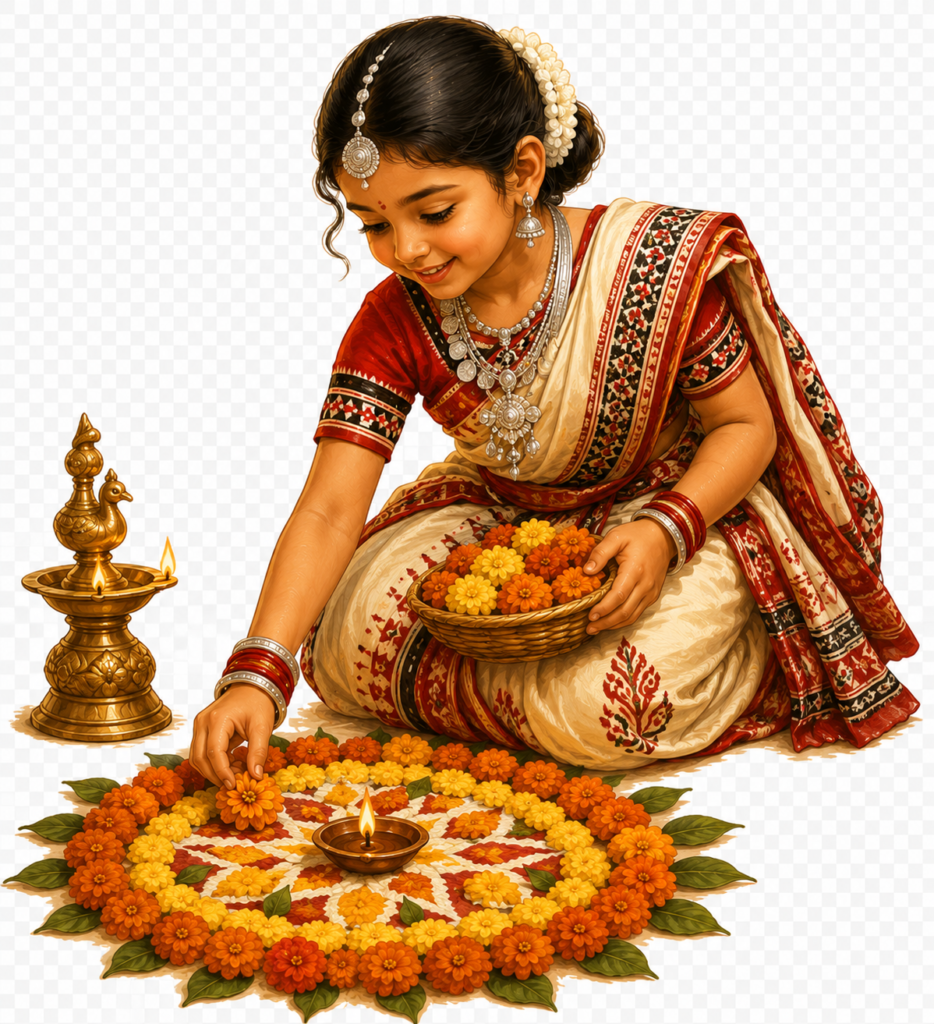
- Raja Sankranti – the main day, marking the sun’s movement into the rainy season
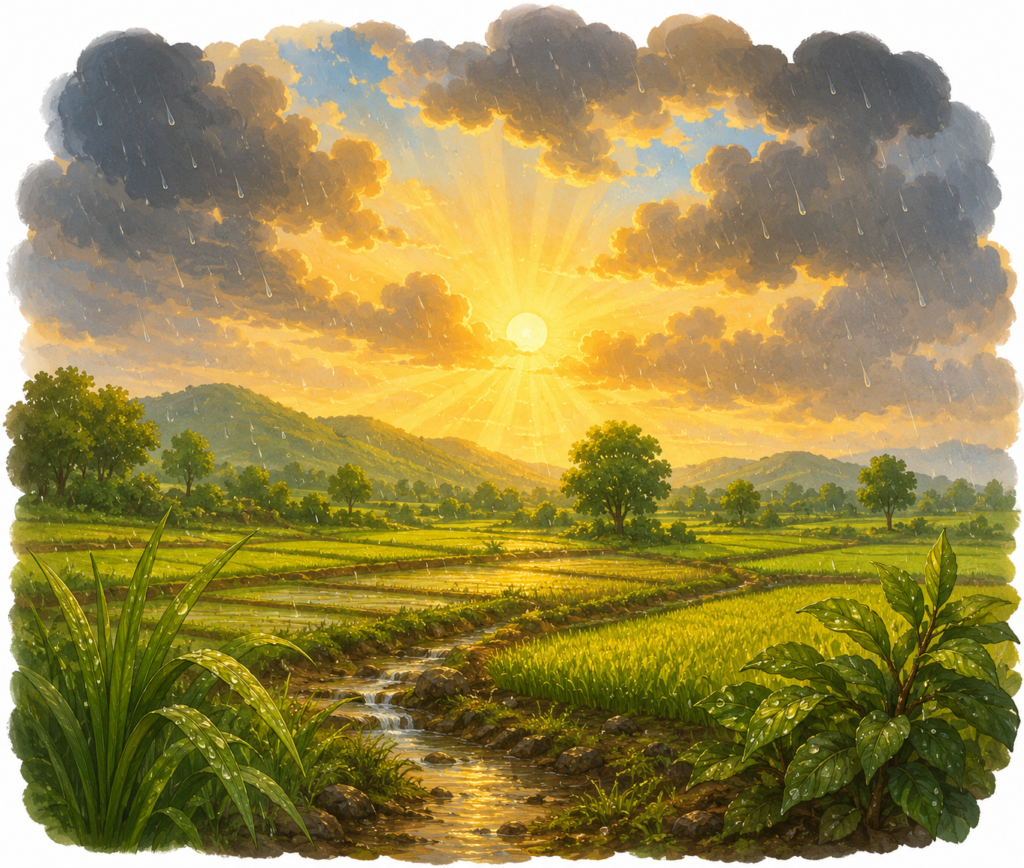
- Basi Raja (Bhu Daha) – a day of rest, when farming pauses so the earth can “rest,” just like everyone else
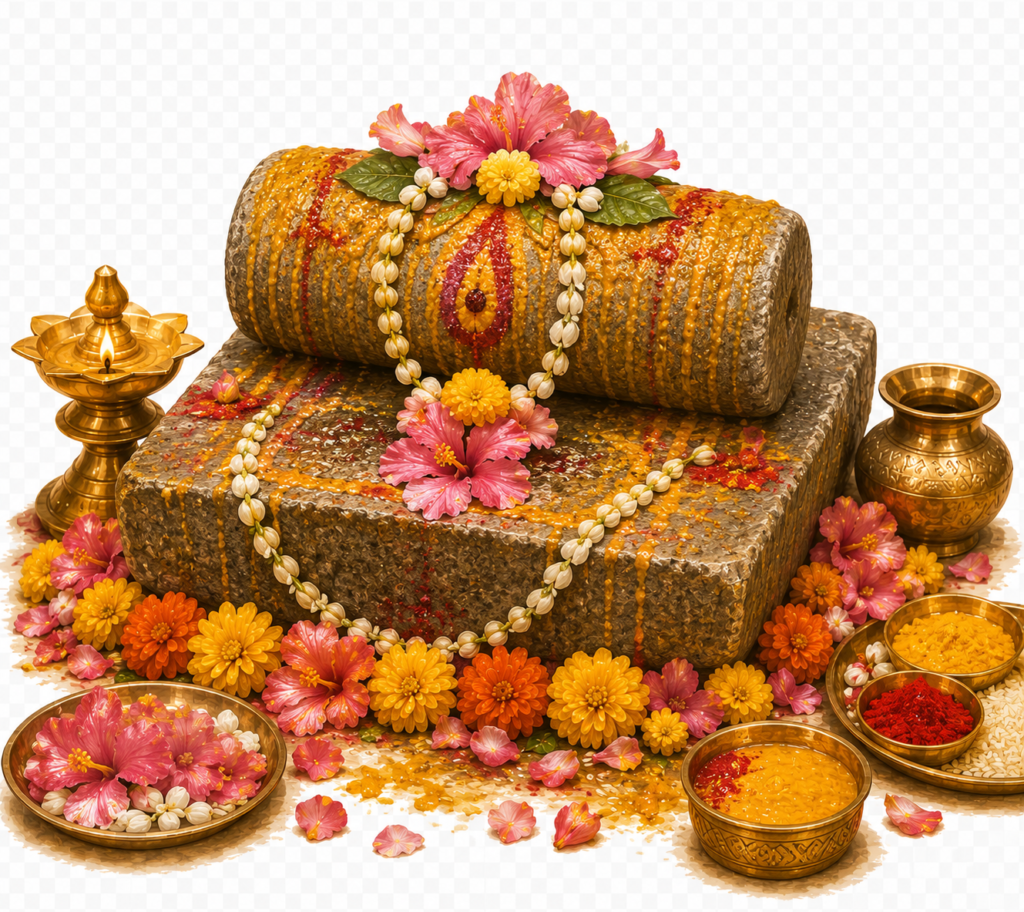
- Basumati Snana – the final day, when a stone representing Mother Earth is gently bathed with turmeric and flowers, welcoming her back
Why June? Why the Rains?
Raja marks the beginning of the monsoon in Odisha. For a farming community, the arrival of rain is everything – it means the crops will grow, the rivers will fill, and the year will be prosperous.
The parched fields were ploughed making use of occasional summer showers and paddy seeds were broadcast. This marks the herald of the rainy season. To celebrate the advent of rains, this joyous festival is observed for four consecutive days.
So Raja is both a thanksgiving for the rain that is coming and a prayer asking Mother Earth to be fertile and kind.
💡 In India, farmers make up a huge part of the population. A festival that celebrates rain and the Earth is a festival that celebrates life itself.

The Swing -Heart of the Festival
One of the main attractions of Raja festival is the doli – the swing. Because of this, it is also called the swing festival. Dolis are fixed to the branches of mango or banyan trees and are decorated with flower garlands. They are of different types – Ram doli, Charki doli, Pata doli and Dandi doli – depending upon their construction and seating arrangements.
Girls and young women spend hours on these swings, singing traditional Raja songs called Raja Geeta – folk songs that have been passed down for generations. The swinging is not just play – it is a symbol of freedom, joy, and the celebration of womanhood.

How People Celebrate
Women wear vibrant sarees adorned with jewellery and flowers in their hair. Girls put alta – a beautiful red dye – on their feet. Everyone wears their finest clothes.

Families visit each other, exchange homemade sweets, and spend long evenings together. Girls play indoor games like cards, ludo, and pasha. They sing Raja Geeta – ancient Odia folk songs – together under the mango trees.
It is one of the warmest community festivals in India – not loud and grand like Diwali, but deeply personal and joyful.
💡 Have you ever taken a day to do absolutely nothing useful – and felt better for it? That is the wisdom of Raja.
Poda Pitha – The Cake of Raja
No Raja is complete without Poda Pitha. The Odia word Poda means burnt and Pitha means cake. It is a slow-baked rice and coconut cake with a slightly charred top – smoky, sweet, and deeply delicious.
Poda Pitha is basically a rice and coconut cake in caramelised jaggery with a slightly burnt top, with lots of coconuts, nuts and spices. It is said Poda Pitha is the essence of Raja Festival – and without it, the festival is tasteless and colourless.
Traditionally it was cooked overnight in an earthen pot over charcoal – the whole house would smell of sweet smoke by morning. Today most families use a pressure cooker or oven, but the recipe and the love remain the same.
Make a Simple Poda Pitha at Home
Try this with a grown-up! 🧑🍳

What you need
- 2 cups rice flour
- 1 cup grated coconut
- ¾ cup jaggery or brown sugar
- ½ cup curd (yogurt)
- ¼ cup water
- ½ teaspoon cardamom powder
- A pinch of salt
- 1 tablespoon ghee
- A handful of cashews and raisins.
What to do
- Mix the rice flour, coconut, jaggery, curd, cardamom, and salt together in a bowl. Add water slowly and mix into a thick smooth batter – not too runny.
- Add the cashews and raisins and stir gently.
- Grease a small baking tin with ghee. Pour the batter in.
- Bake in an oven at 180°C for 45–50 minutes until the top turns golden brown and slightly dark. That dark top is the poda – the beautiful burnt bit!
- Let it cool completely before cutting. Serve at room temperature.

💡 The slightly burnt top is not a mistake – it is the whole point! Poda means burnt. That caramelised smoky top is what makes it special.
Did You Know?
- Raja is also called the Swing Festival – because decorated swings hung from mango and banyan trees are one of the main joys of the celebration.
- The word Raja comes from the Sanskrit word Rajas – meaning menstruation. This is one of the very few festivals in the world that celebrates this openly and joyfully.
- Poda Pitha is also the favourite food of Lord Jagannath – it is offered to him at the famous Puri temple.
- Alta – the red dye applied to the feet during Raja – is a symbol of celebration and beauty worn by women across eastern India during festivals.
- For three days during Raja, no agricultural work is allowed. The Earth gets complete rest – no digging, no ploughing, nothing.
- The swing songs sung during Raja – called Raja Geeta – are ancient Odia folk poems passed down through generations of women.
Activity – Design Your Raja Festival Swing!
In Odisha, every family decorates their swing differently – with different flowers, colours, and patterns. Now it is your turn!
Here is what to do:
- Print the swing outline below
- Draw your own flower patterns on the ropes – marigolds, jasmine, hibiscus – whatever you like!
- Colour the tree with greens and browns
- Add mangoes hanging from the branches – it is a mango tree after all!
- Draw yourself or a friend sitting on the swing
- Write one word on the swing seat that describes how Raja makes you feel

Closing Thought
Raja teaches children something quietly powerful – that rest is sacred. That the Earth needs care. That women deserve celebration. And that a sweet cake shared with family on a rainy afternoon is one of the best things in the world.
Not every festival needs fireworks. Some just need a swing, a slice of Poda Pitha, and the people you love.