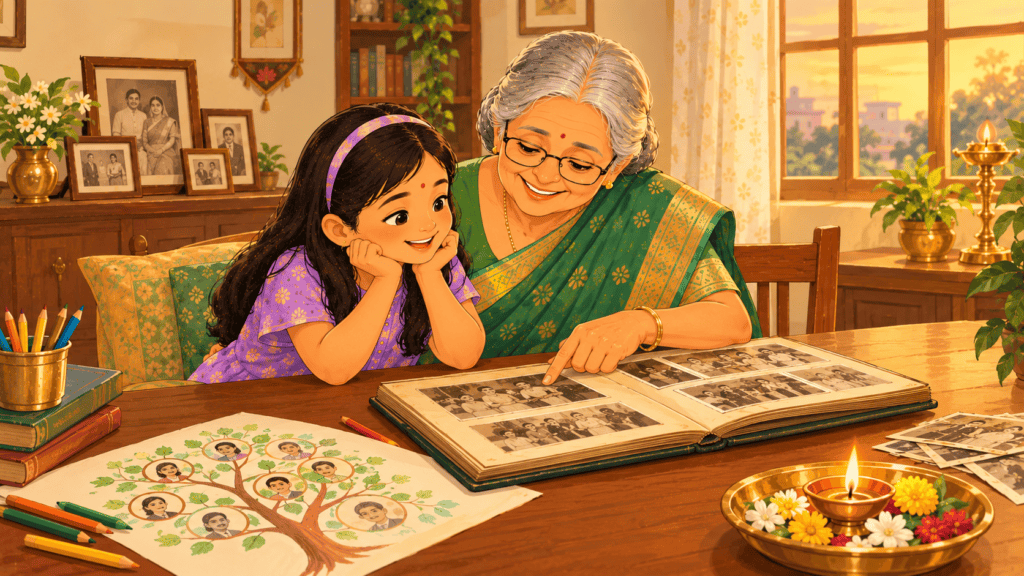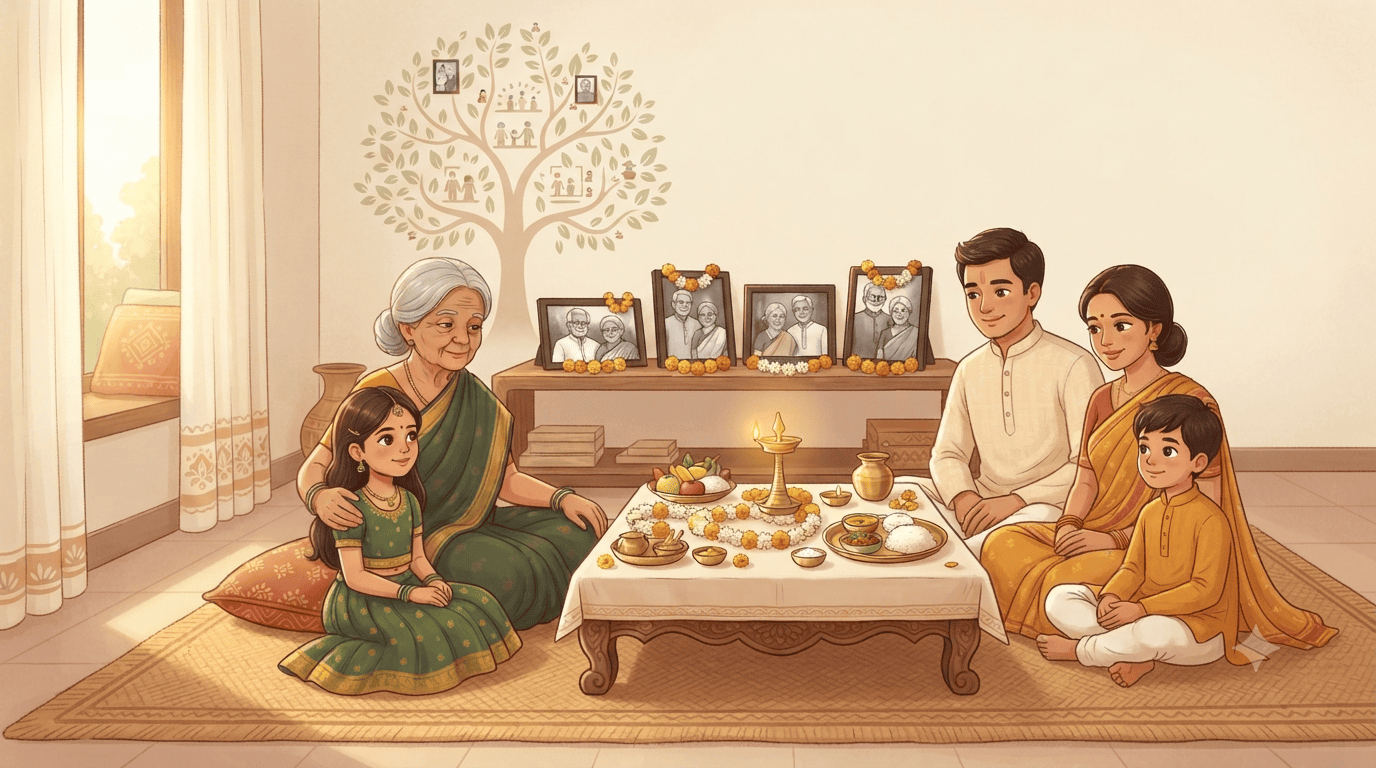
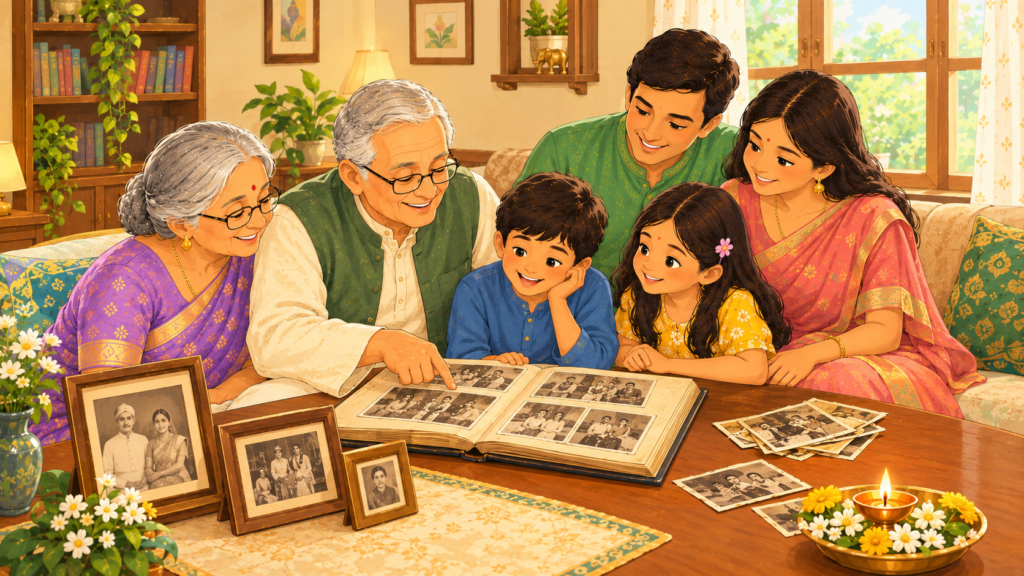
Have you ever looked at an old photograph of your great grandparents or heard a story about someone from your family who lived many years ago?
Pitru Paksha is a special time when many Hindu families remember the people who came before them.
During this period, families offer prayers, water and food in memory of their ancestors. They may also visit temples or holy places, perform special rituals, give food to others and spend quiet time remembering their family members.
It is a time to say:
“Thank you to the people who came before us.” 💛
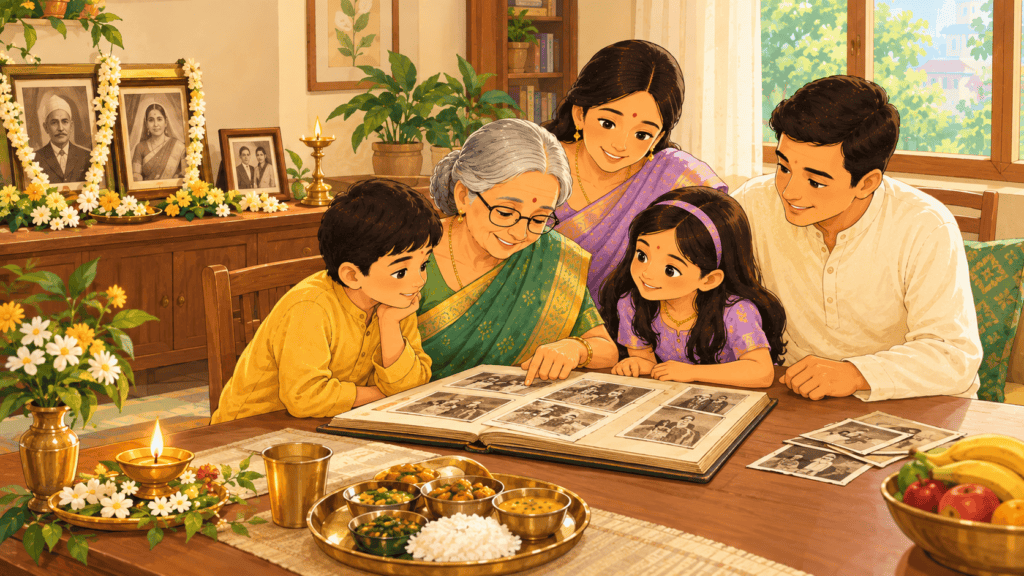
What Is Pitru Paksha?
Pitru Paksha is a special period in the Hindu calendar dedicated to remembering and honouring ancestors.
The word Pitru means ancestors, and Paksha means a part or fortnight of the lunar month.
It is also called Shraddha Paksha or simply Shraddha in many families.
During Pitru Paksha, families remember parents, grandparents, great-grandparents and other family members who have passed away.
Families may perform a ceremony called Shraddha on the lunar day, or tithi, connected with the death of an ancestor.
The final day is called Sarva Pitru Amavasya, also known as Mahalaya Amavasya. This day is especially important for remembering ancestors when their particular death tithi is not known or when families wish to honour all their ancestors together.
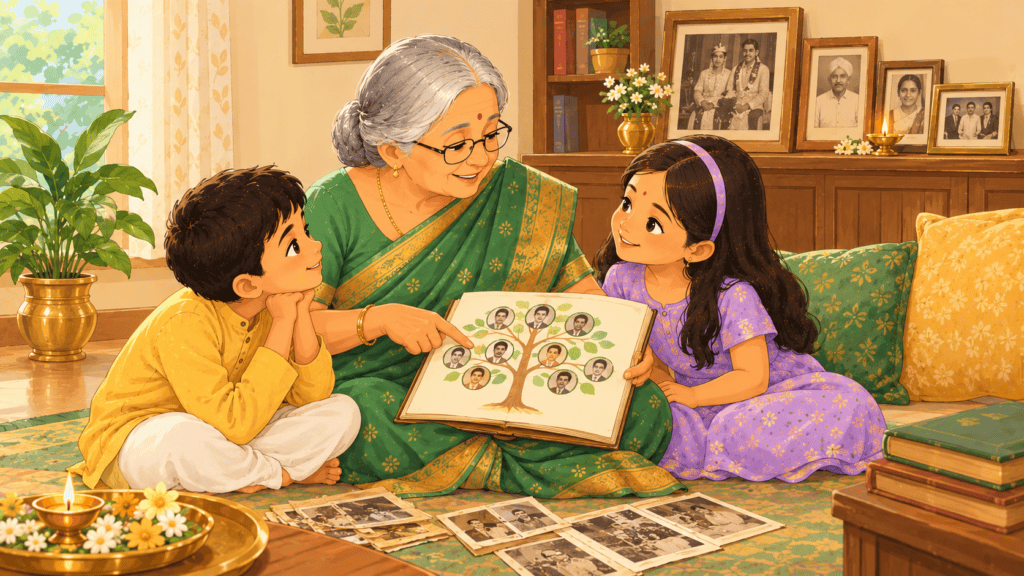
💡 Imagine that you could meet one of your ancestors from many years ago.What would you like to ask them?
Why Do People Observe Pitru Paksha?
Pitru Paksha is a time for remembrance, respect and gratitude.
Our parents, grandparents and earlier generations helped shape our families. They passed down stories, traditions, recipes, names, skills and ways of life.
Many families believe that remembering ancestors and performing Shraddha helps bring peace to them and blessings to the family.
But there is also a simple way for children to understand it:
We remember the people who came before us because they are an important part of our family story.
It is a little like looking at a family tree and remembering that every branch began with someone who lived before us.
The Story of Karna and Pitru Paksha
One of the best-known stories connected with Pitru Paksha is about Karna, a famous warrior from the Mahabharata.
This is a traditional story told to explain why food and water offerings are important during Pitru Paksha.
Karna Was a Great Giver
Karna was famous for his generosity.
He gave gold, jewels and other valuable things to people who needed them.
People called him a great giver because he was always ready to share what he had.
But there was something Karna had not done.
He had not offered food and water in memory of his ancestors.
What Happened After Karna Died?
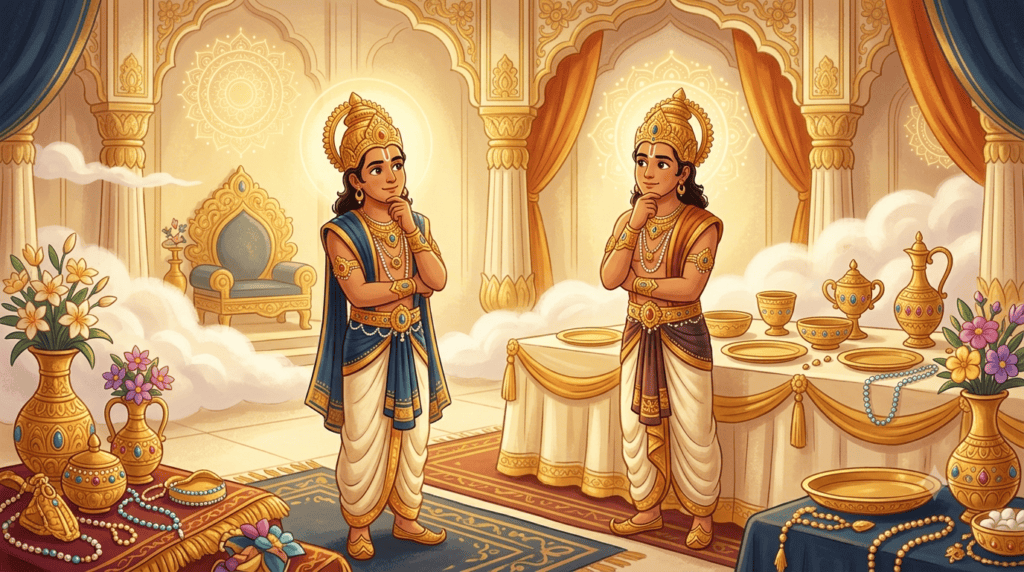
According to the traditional story, after Karna died, he reached the heavenly world.
He was given gold and precious things.
But Karna was hungry.
He wondered:
“Why do I have so much gold but no food?”
He learned that although he had given away many valuable things during his life, he had not given food in remembrance of his ancestors.
Karna then understood that giving food and caring for others was also an important kind of generosity.
He was allowed to return to Earth for a period of time.
During that time, he remembered his ancestors and offered food and water.
The story is traditionally connected with the importance of Shraddha and food offerings during Pitru Paksha.
What Can Children Learn From Karna’s Story?
The story gives us a simple message:
Giving is not only about giving valuable things. Food, water and care are also precious gifts.
What Do People Do During Pitru Paksha?
The customs are different from family to family and from region to region.
Some families perform a detailed Shraddha ceremony with the help of a priest. Others follow simpler family traditions.
Here are some common practices.
1. Tarpan – Offering Water
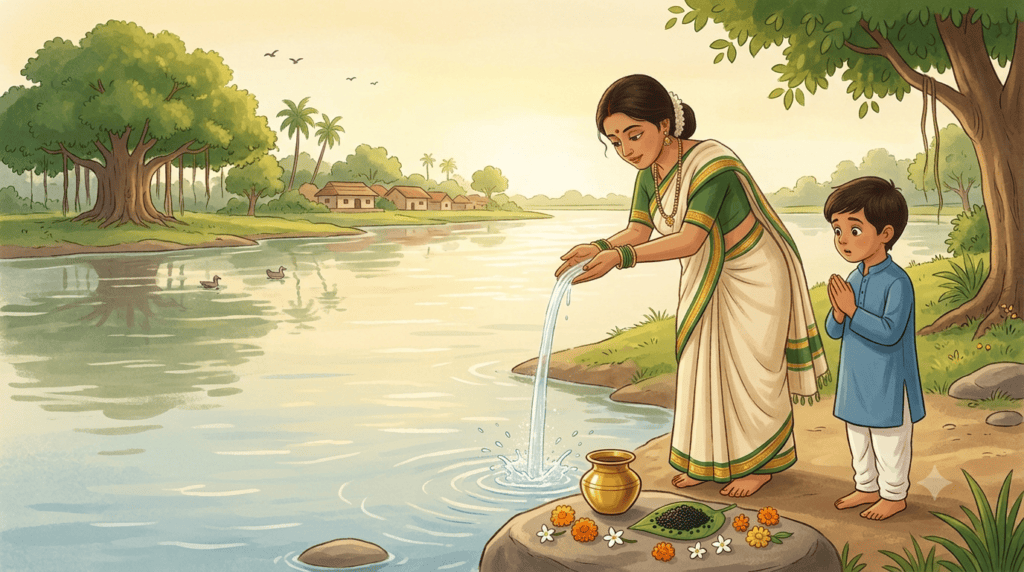
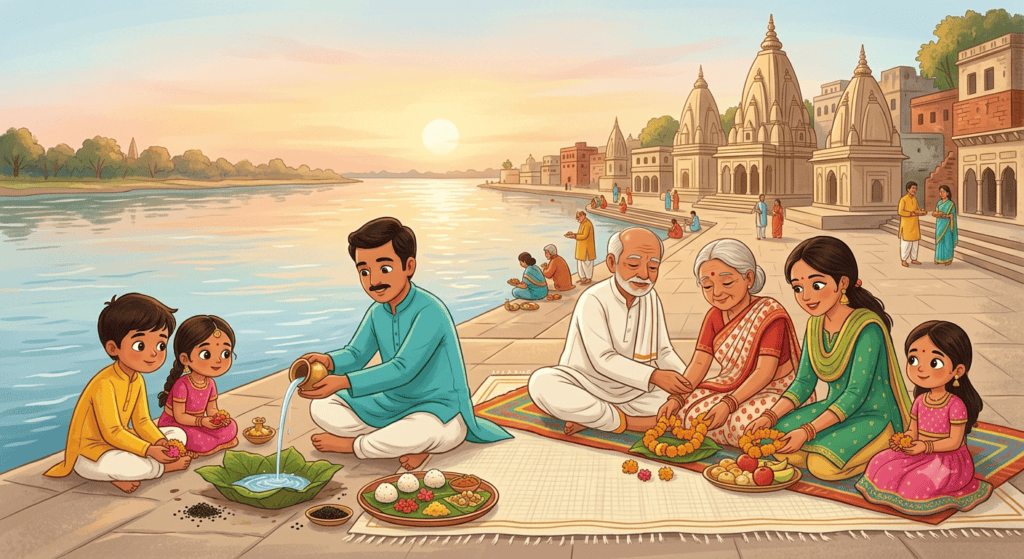
Tarpan is a ritual in which water is offered while remembering one’s ancestors.
In some traditions, water is offered together with black sesame seeds and other sacred items.
The offering is a way of showing respect and remembering those who have passed away.
2. Shraddha – Remembering an Ancestor
A Shraddha ceremony may be performed on the particular lunar day connected with an ancestor’s death.
Families may offer prayers and prepare food as part of the ceremony.
The exact rituals can be different in different families.
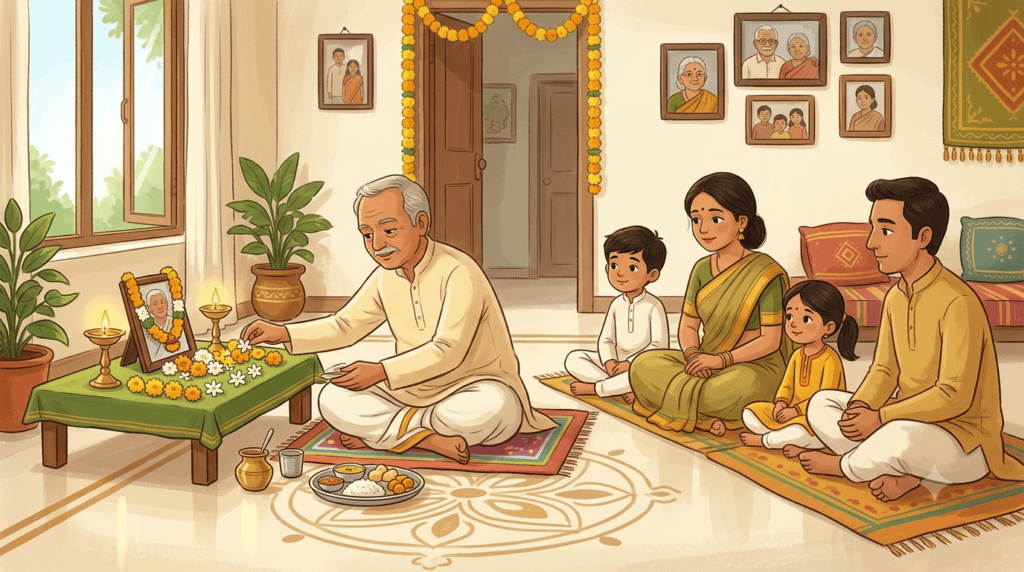
3. Pind Daan
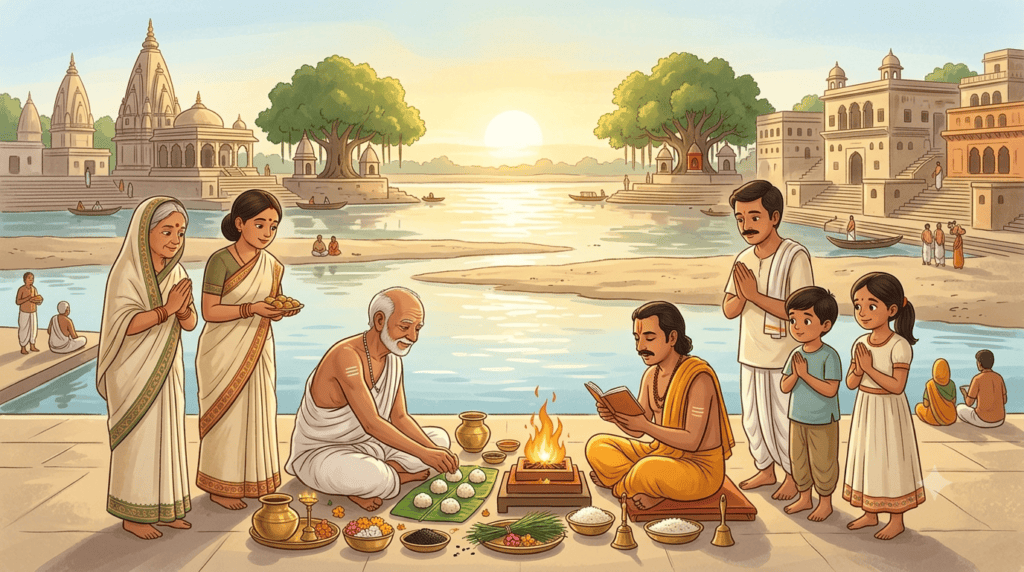
Some families make small offerings called pinda using ingredients such as rice and sesame.
These are offered as part of ancestral rituals.
Gaya in Bihar is one of the most famous places associated with Pind Daan. Many families travel there to perform these rituals for their ancestors.
4. Sharing Food
Food is an important part of Pitru Paksha traditions.
Depending on the family custom, food may be offered during the Shraddha ceremony and shared with priests, relatives or people in need.
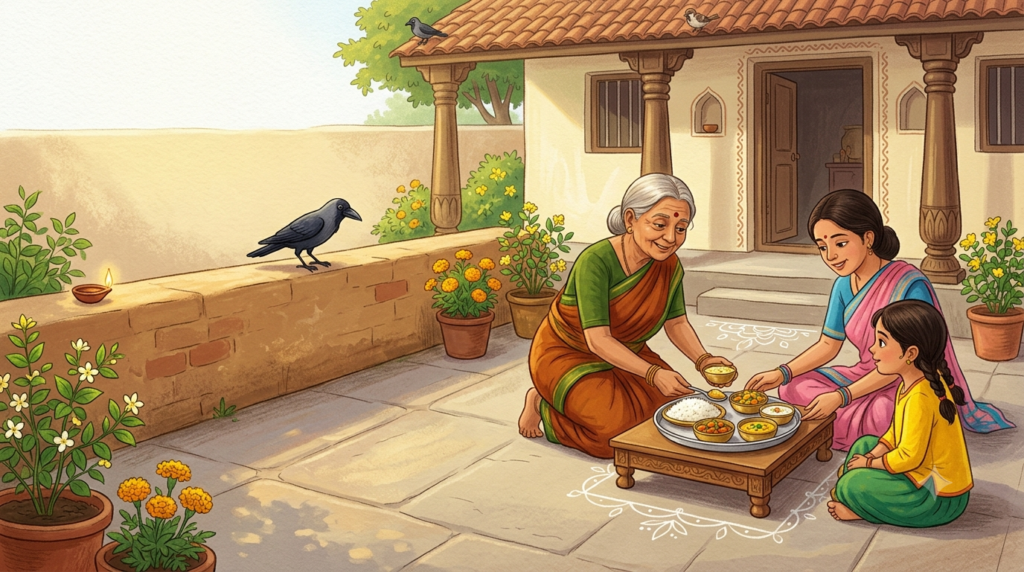
Some traditions also include offering food to animals and birds.
Crows have a special place in some ancestral traditions and are sometimes offered food as part of the ceremony.
5. Giving to Others
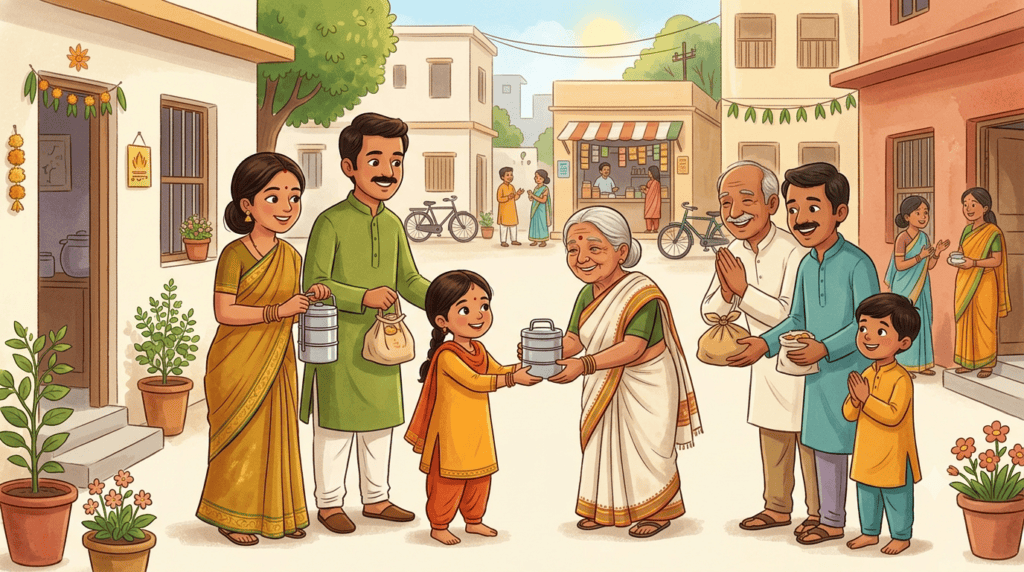
Many families also choose to donate food, clothes or useful things during this period.
The idea is simple:
Remember those who came before us by doing something kind for someone today.
What Food Is Made During Pitru Paksha?
There isn’t one special Pitru Paksha dish that every family makes.
Food traditions can change from one family and region to another.
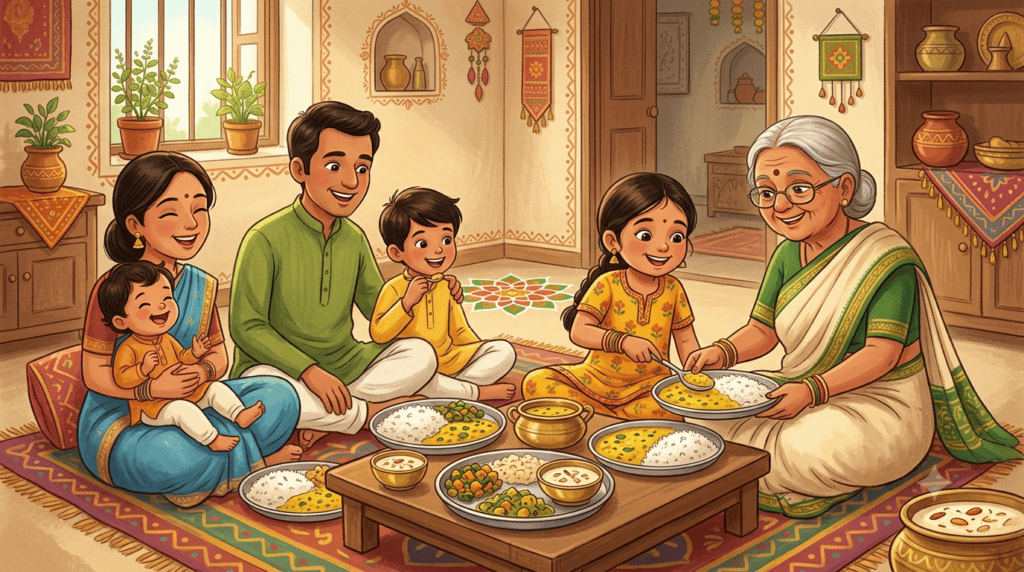
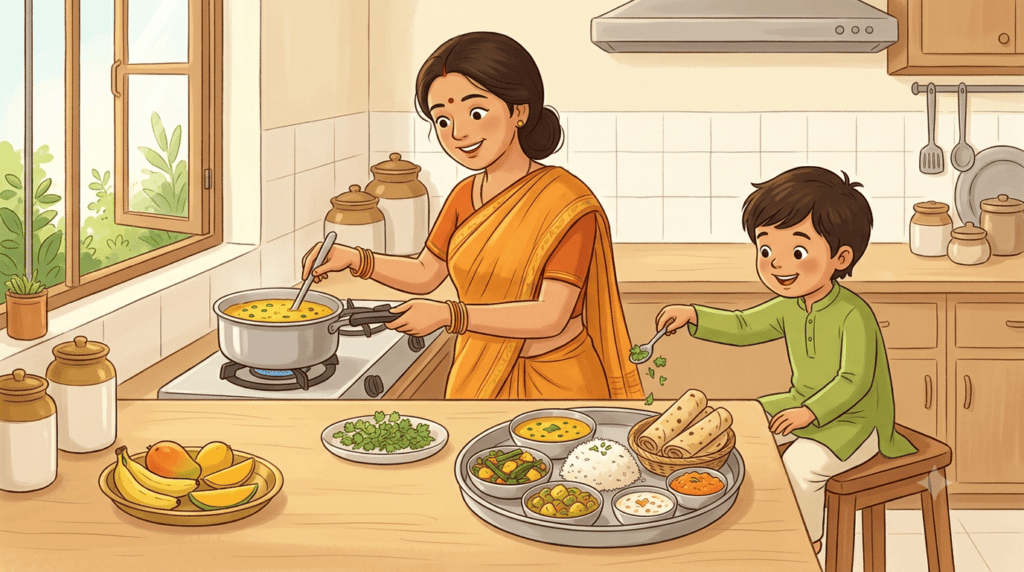
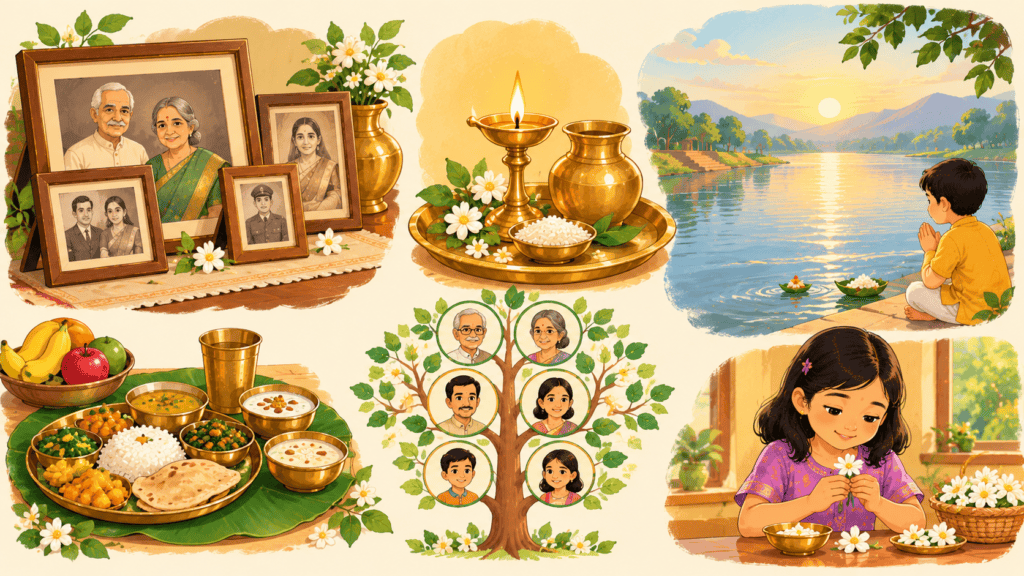
Many families prepare simple sattvik vegetarian food for Shraddha. Depending on family tradition, foods such as rice, dal, vegetables, roti, kheer and other homemade dishes may be prepared.
Some families avoid foods such as onion, garlic and non-vegetarian food during their observance. However, these rules are not exactly the same for every family, so children may see different foods being prepared in different homes.
🍚 Foods You May See
Some traditional meals can include:
- Rice
- Dal
- Roti or puri
- Seasonal vegetables
- Kheer
- Halwa
- Fruits
- Simple homemade sweets
The important part is not making an elaborate feast.
It is the thought and remembrance behind the offering.
How Is Pitru Paksha Celebrated in Different Places?
Pitru Paksha is observed by Hindu families in many parts of India, but the customs can look quite different.
Indian families living in other countries may also continue these traditions at home or visit a Hindu temple or community centre.
The place may change, but the idea of remembering those who came before us remains.
🇮🇳 North India
Families may perform Shraddha and Tarpan at home, near rivers or at pilgrimage places.
Gaya in Bihar is particularly well known for Pind Daan.
West Bengal
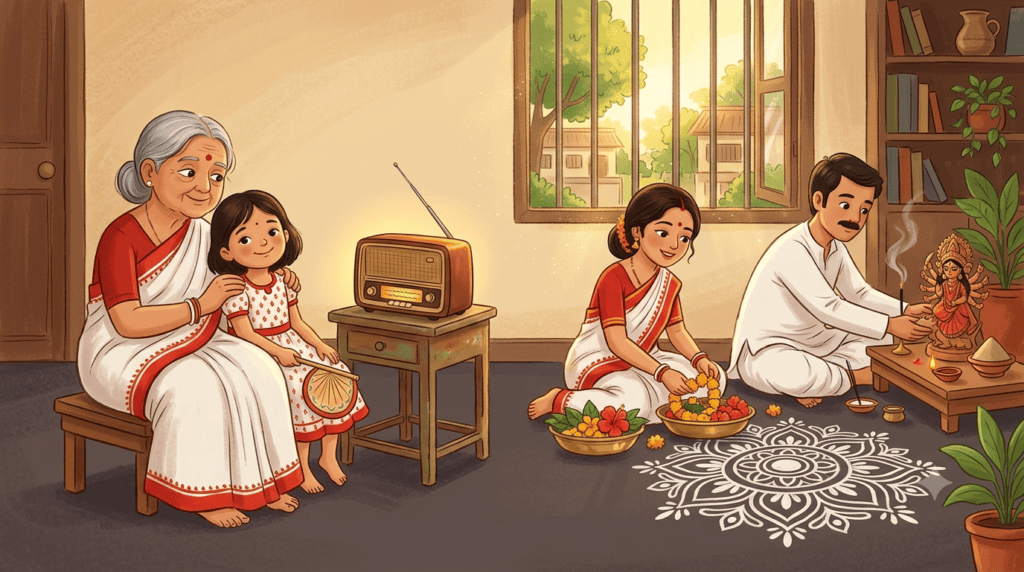
The final day is closely associated with Mahalaya.
Mahalaya has a special cultural connection with the beginning of the Durga Puja season in Bengal.
Karnataka and South India
In many South Indian traditions, ancestral rituals are known as Pitru Karma or related names.
Families may perform Shraddha according to their own family customs.
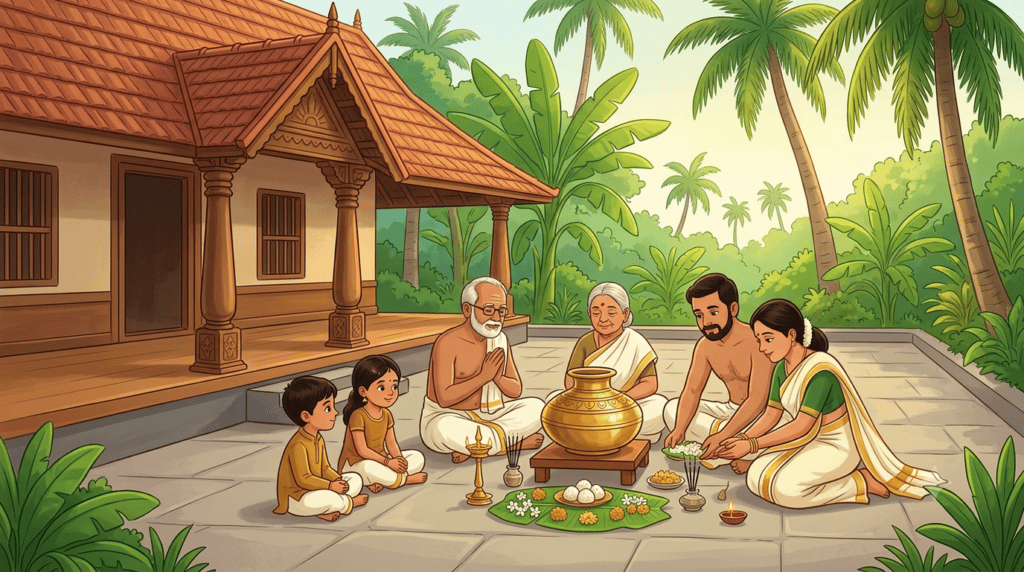
Kerala
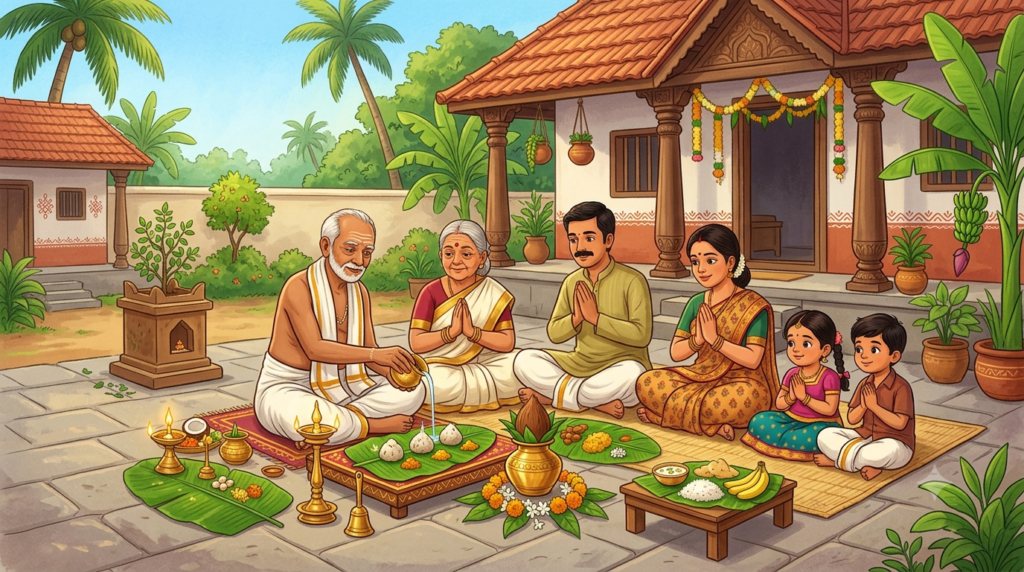
Ancestor remembrance is also part of local traditions, with rituals known as Bali observed in some communities.
Indian Families Around the World
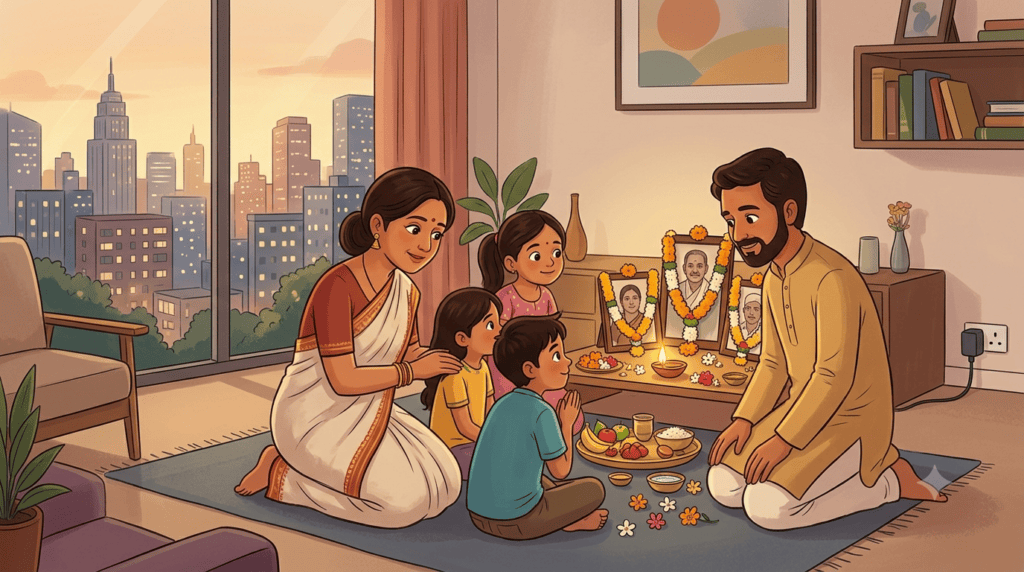
Indian families living outside India may observe Pitru Paksha in different ways.
Some perform prayers at home.
Some visit a nearby Hindu temple.
Some speak to a priest in India and arrange rituals there.
Others may simply prepare a traditional meal, remember their ancestors and teach their children about their family history.
The place may change, but the idea of remembering those who came before us remains.
Sarva Pitru Amavasya – Remembering All Ancestors
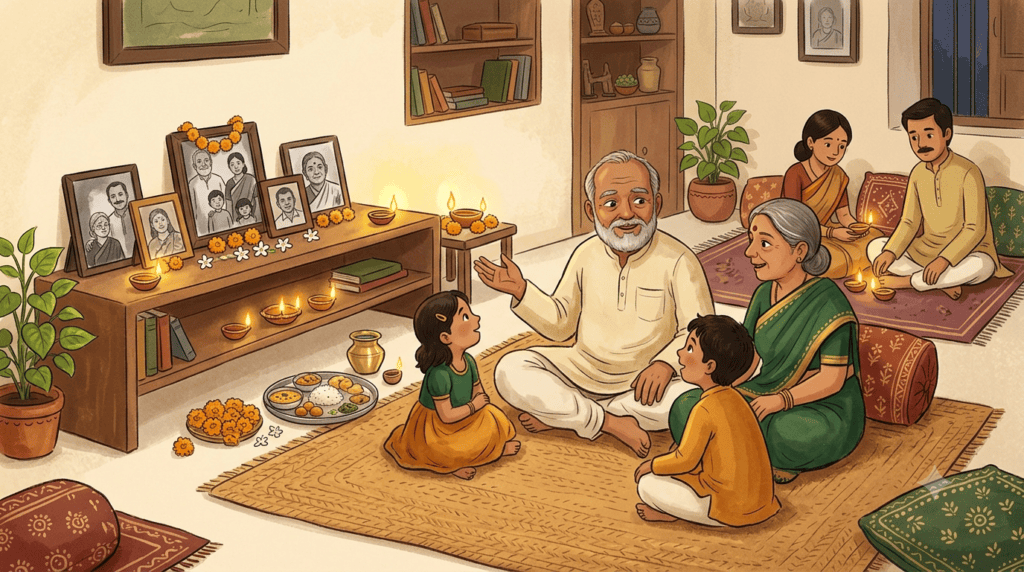
The last day of Pitru Paksha is called Sarva Pitru Amavasya.
It is also known as Mahalaya Amavasya.
This is an especially important day for remembering ancestors.
For families who do not know the exact lunar date of an ancestor’s death, this day can be used to honour them.
It can also be a day when families remember several ancestors together.
In some parts of India, Mahalaya also marks an important cultural moment before the Durga Puja celebrations begin.
What Can Families Do Together?
Pitru Paksha does not have to be something children only watch adults doing.
Parents can help children understand their family history in simple ways.
Families can:
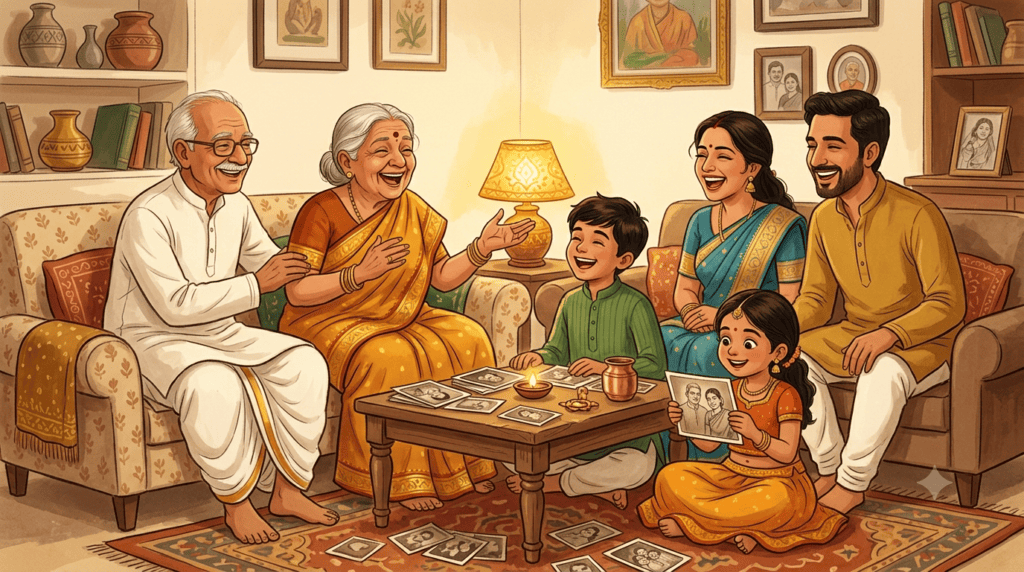
- Look at old family photographs.
- Talk about grandparents and great-grandparents.
- Share funny or happy stories about family members who have passed away.
- Cook a recipe that belonged to a grandparent.
- Tell children where their family came from.
- Visit an elder in the family.
- Donate food to someone who needs it.
- Say a quiet prayer in memory of loved ones.
These simple activities can help children understand that families are connected across generations.
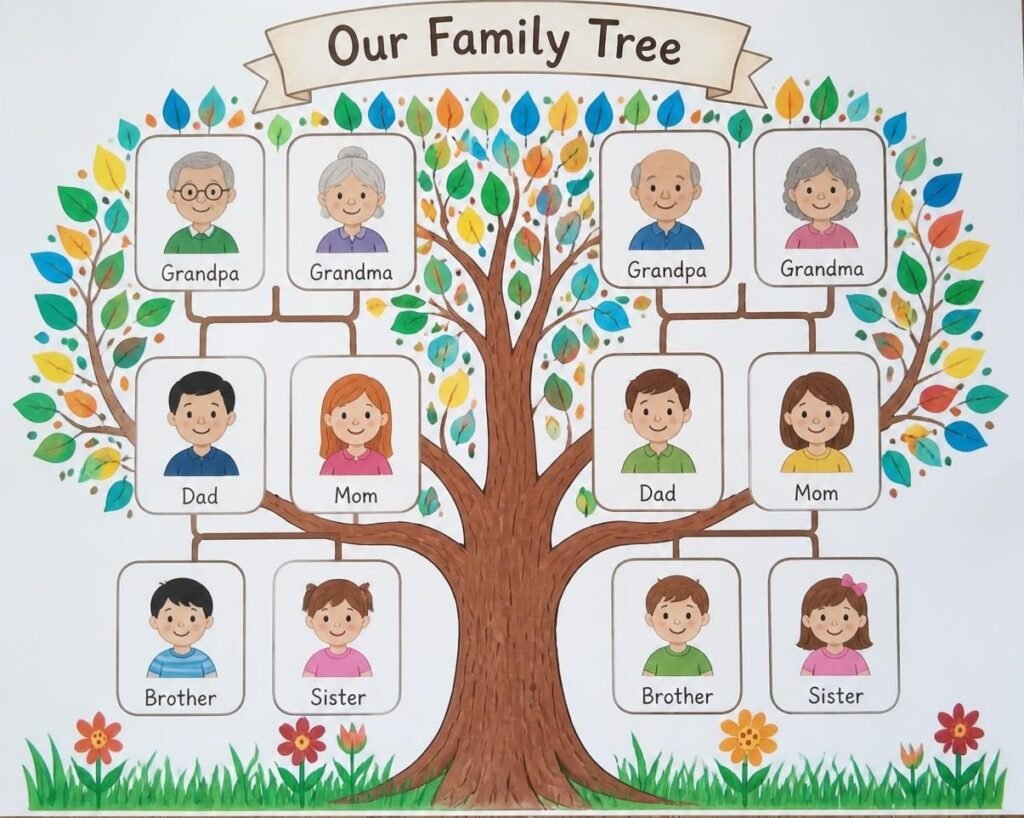
Fun Activity – Make a Family Memory Tree
Let’s make a simple Family Memory Tree!
You don’t need to perform any religious ritual for this activity.
It is simply a way for children to learn about the people who came before them.
✏️ What You Need
- One sheet of paper
- Pencil
- Crayons or colour pencils
- A family photograph, if you have one
Step 1: Draw a Tree
Draw a big tree with branches.
Make the branches large enough to add names.
Step 2: Add Family Members
With help from a parent or grandparent, write the names of some family members from older generations.
You could include:
Grandparents → Great-grandparents → Earlier generations
You don’t need to know everyone’s name.
Step 3: Add a Memory
Choose one person and write or draw something you remember about them.
For example:
“Grandpa loved gardening.”
Or:
Draw the mango tree they loved.
Step 4: Add a Thank-You
At the bottom of the tree, write:
“Thank you to the people who came before us.”
Decorate your tree with leaves, flowers or little family symbols.
💡 What is one thing your family has passed down to you?It could be a recipe, a story, a name, a tradition, a language, a song or even a favourite family game.
Did You Know?
- Pitru means ancestors.
- Pitru Paksha is a period dedicated to remembering ancestors.
- Shraddha refers to traditional rites performed in honour of ancestors.
- Tarpan involves offering water as part of ancestral remembrance.
- Pind Daan is another traditional ancestral offering.
- Gaya in Bihar is one of the best-known places for Pind Daan.
- Sarva Pitru Amavasya is the final day of Pitru Paksha.
- Pitru Paksha traditions can be different from one family and region to another.
- Food and water have an important place in many ancestral traditions.
- Indian families living outside India may also continue these traditions in their homes and communities.
Remembering Those Who Came Before Us
Pitru Paksha is a time to pause and remember.
We remember our grandparents.
We remember our great-grandparents.
We remember the people whose names we may not even know.
Their lives helped shape the families we have today.
And when we learn their stories, cook their recipes, keep their traditions alive or simply say “thank you,” we keep a little piece of their story with us.
That is the beautiful idea behind Pitru Paksha – remembering where we came from and carrying those memories forward. 🙏🌿