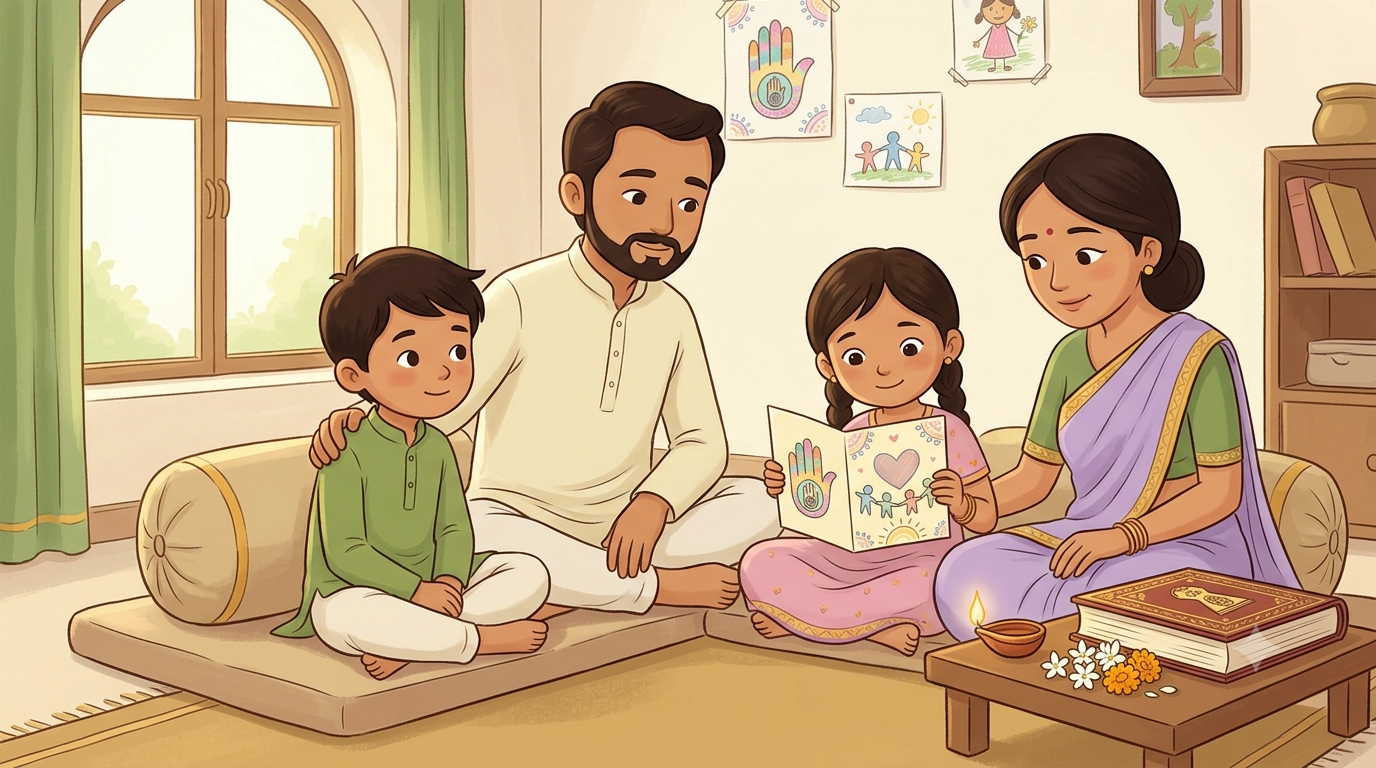
Some festivals are celebrated with music, colourful decorations and big gatherings.
Paryushana is different.
It is an important Jain festival that gives families time for prayer, learning, self-discipline, reflection and forgiveness. For many Jain families, it is a special time to spend more time at temples, listen to religious teachings, reflect on their actions and ask for forgiveness.
Think About It:
💡 Have you ever made a mistake and wished you could say sorry?
What Is Paryushana?
Paryushana is one of the most important annual observances in the Jain community.
For Shvetambara Jains, Paryushana is traditionally observed for eight days. The final day is called Samvatsari, an especially important day for reflection and forgiveness.
Digambara Jains observe a related ten-day festival called Das Lakshana Parva, which focuses on ten important virtues.
During Paryushana, people may spend more time:
🙏 Praying
📖 Listening to religious teachings
🪷 Visiting a Jain temple or place of worship
🧘 Practising meditation and reflection
🍚 Following special food or fasting practices
💛 Asking for and offering forgiveness
Why Do People Celebrate Paryushana?
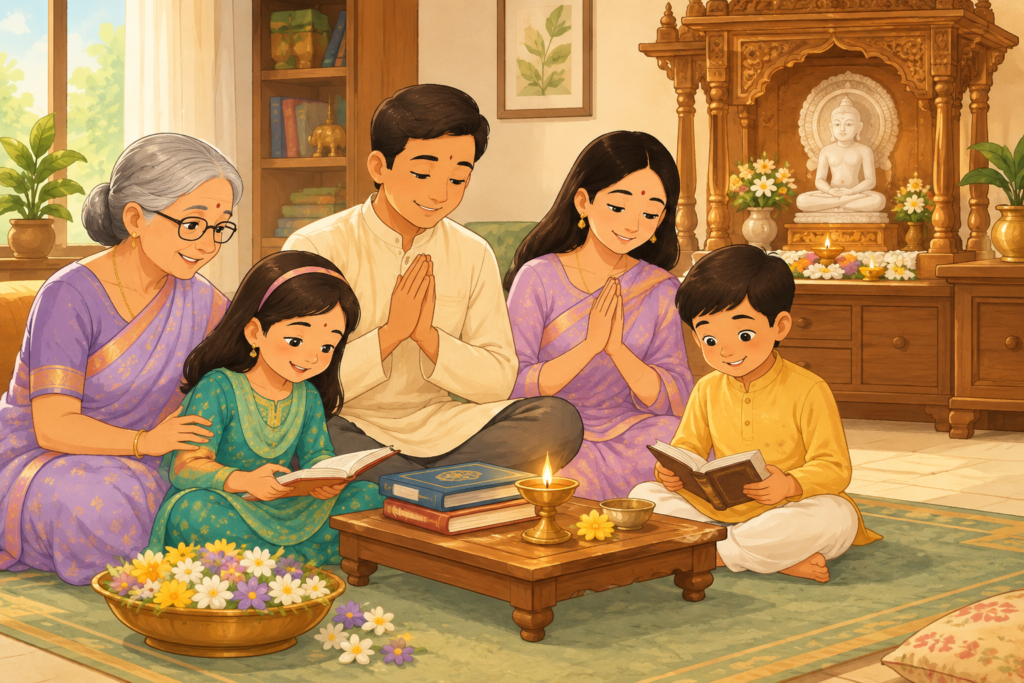
Paryushana is a time for people to pause from their usual routines and focus on spiritual practice.
People reflect on their thoughts, words and actions and try to recognise mistakes they may have made.
One of the most important parts of the festival is forgiveness.
People ask forgiveness from those they may have hurt and also try to forgive others.
This tradition is especially important on Samvatsari, the final day of Paryushana in the Shvetambara tradition.
It is a beautiful reminder that saying “I’m sorry” and forgiving someone can help repair relationships.
What Do People Do During Paryushana?
Paryushana is observed in different ways by different Jain families and communities.
Some common practices include:
Visiting the Temple
Families may visit Jain temples or other places of worship during the festival.
They may take part in prayers, rituals and religious gatherings.
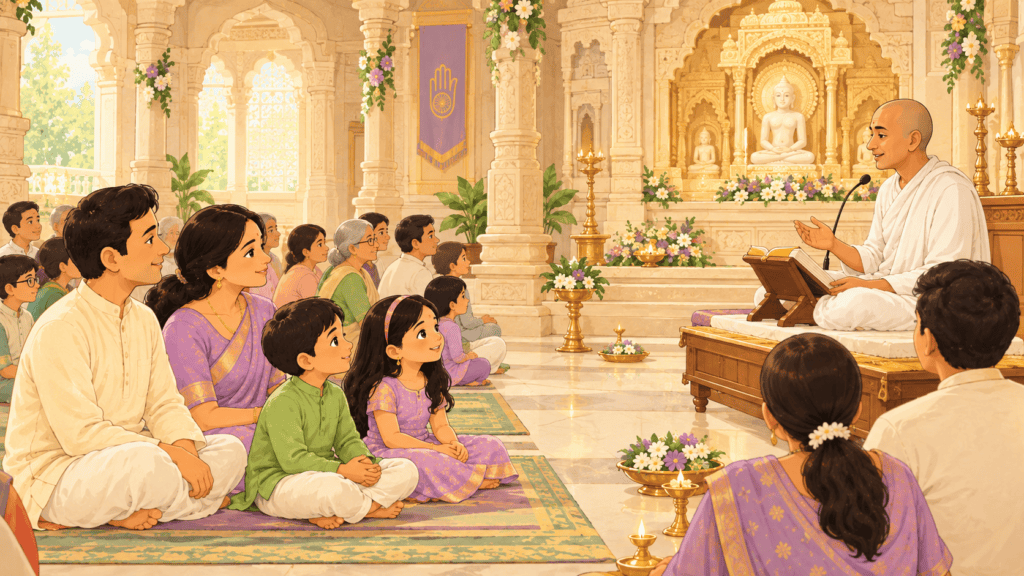
Listening to Religious Teachings
People may listen to talks, stories and readings about Jain teachings.
In the Shvetambara tradition, Kalpa Sutra readings are an important part of Paryushana, including accounts connected with the life of Lord Mahavira.
Pratikraman
Pratikraman is a practice of looking back at one’s actions, recognising mistakes and seeking forgiveness.
It has an especially important place during the final day of Paryushana.
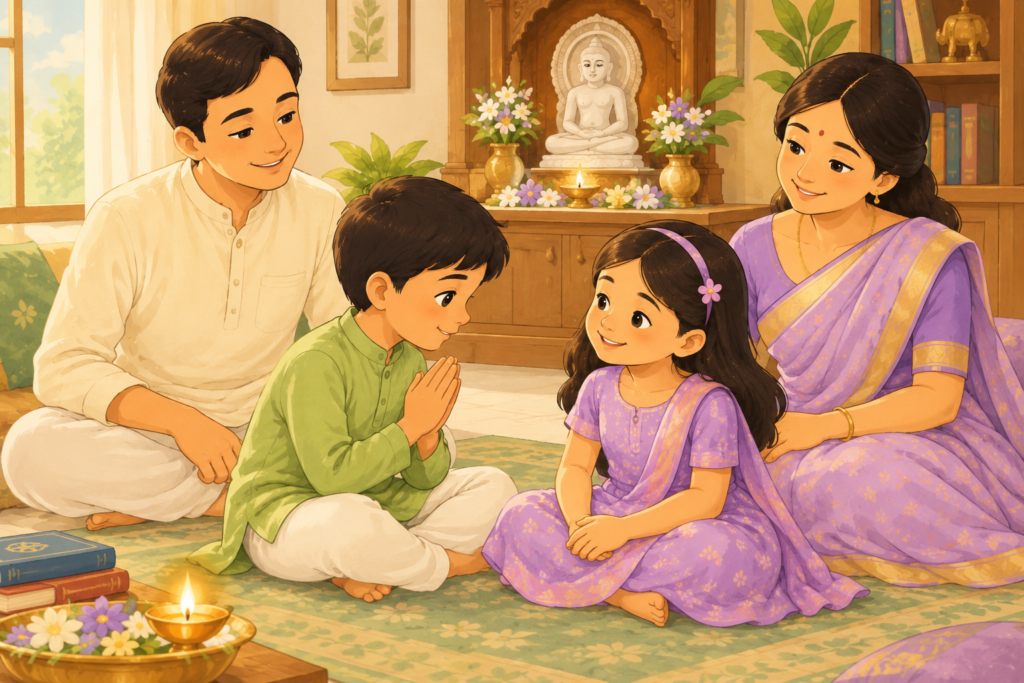
Asking for Forgiveness
People may ask forgiveness from family members, friends and others they may have hurt.
They may also offer forgiveness to people who have hurt them.
A traditional phrase associated with this practice is:
Micchami Dukkadam 🙏
It is used to ask forgiveness for mistakes or harm caused knowingly or unknowingly.
Think About It:
💡 Is there someone you could say sorry to if you made a mistake?
Learning During Paryushana
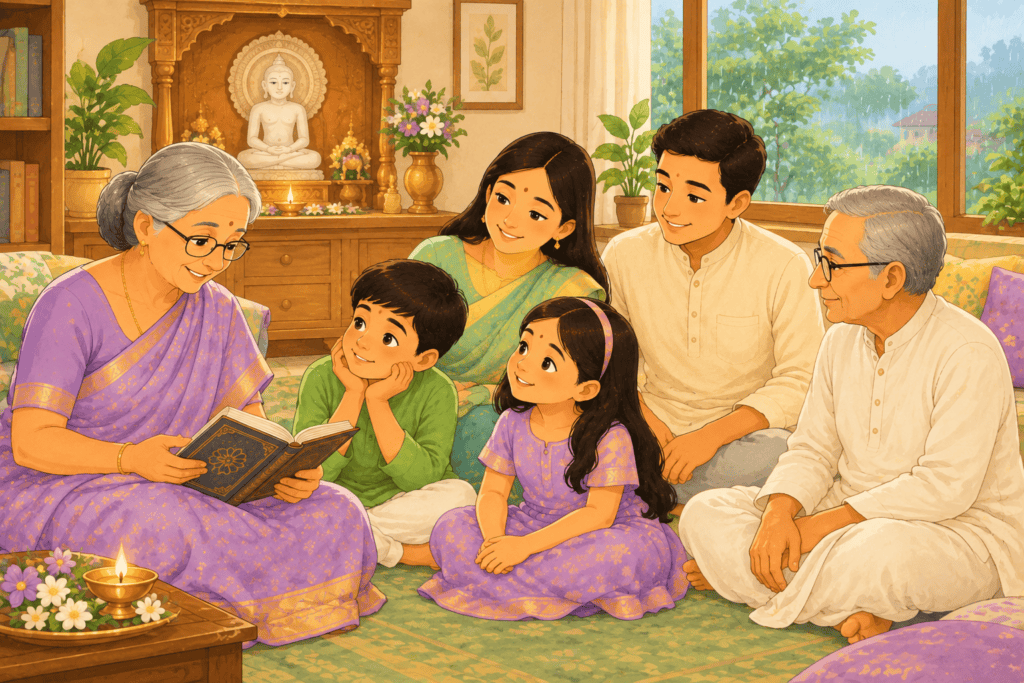
Learning is an important part of Paryushana.
Families may spend time reading or listening to Jain religious stories and teachings.
For Shvetambara communities, readings from the Kalpa Sutra are traditionally associated with Paryushana. The text includes accounts of the lives of Jain Tirthankaras, including Lord Mahavira.
Children may hear stories about Jain values, Tirthankaras and the importance of living with care and self-discipline.
What About Food During Paryushana?
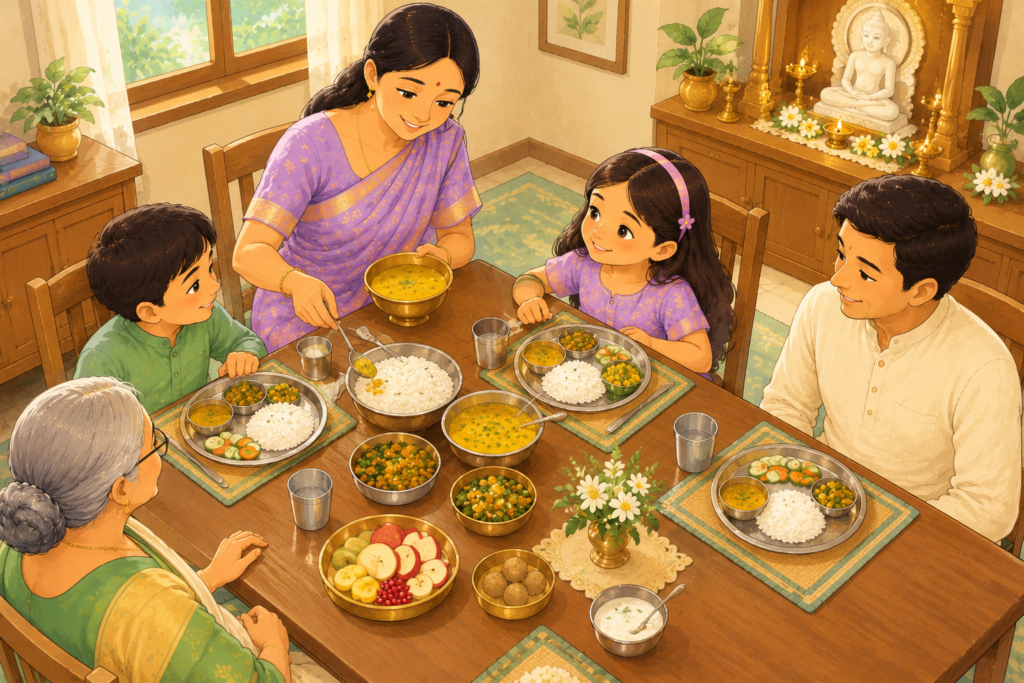
Food is an important part of Paryushana for many families because fasting and special food practices are traditionally associated with the festival.
However, practices can be very different from one person or family to another.
Some people may fast, while others may follow simpler or restricted meals.
The type and length of fasting can also vary.
Children do not need to follow adult fasting practices. Families decide what is appropriate for children based on their age and circumstances.
For children, Paryushana can instead be a chance to learn about mindful eating, avoiding food waste and appreciating the food their family prepares.
Samvatsari – The Special Day of Forgiveness
For Shvetambara Jains, the final day of Paryushana is called Samvatsari.
It is one of the most important days of the festival.
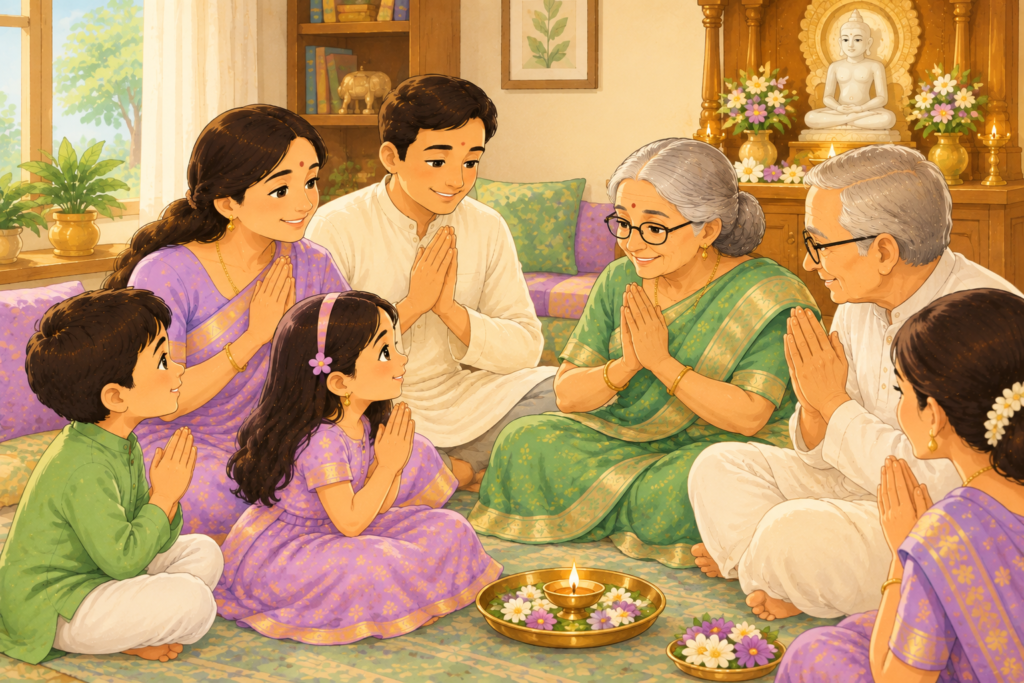
People take time to reflect on the past year and think about whether their thoughts, words or actions may have hurt someone.
A special form of Pratikraman is traditionally performed, and people seek forgiveness from others.
They may say:
“Micchami Dukkadam.” 🙏
The phrase is traditionally used when asking forgiveness for harm caused knowingly or unknowingly.
The beautiful message is simple:
“If I have hurt you, please forgive me.”
Paryushana Around the Jain Community
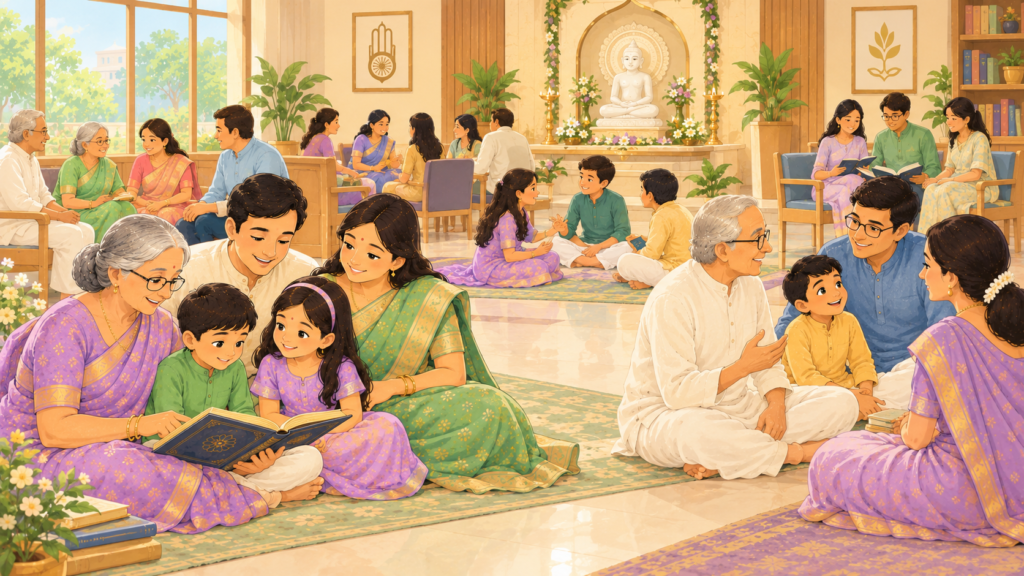
Paryushana is observed by Jain communities in India and around the world.
The way it is observed can differ between Jain traditions and individual families.
Shvetambara Tradition
Shvetambara Jains traditionally observe eight days of Paryushana.
The final day is Samvatsari, when forgiveness and Pratikraman have a particularly important place.
Digambara Tradition
Digambara Jains observe Das Lakshana Parva, a ten-day festival connected with ten important virtues.
The ten virtues include qualities such as forgiveness, humility, truthfulness, self-restraint, simplicity and non-possessiveness.
Although the traditions have differences, both observances place importance on spiritual practice, self-discipline and reflection.
Fun Activity – My Paryushana Forgiveness Card
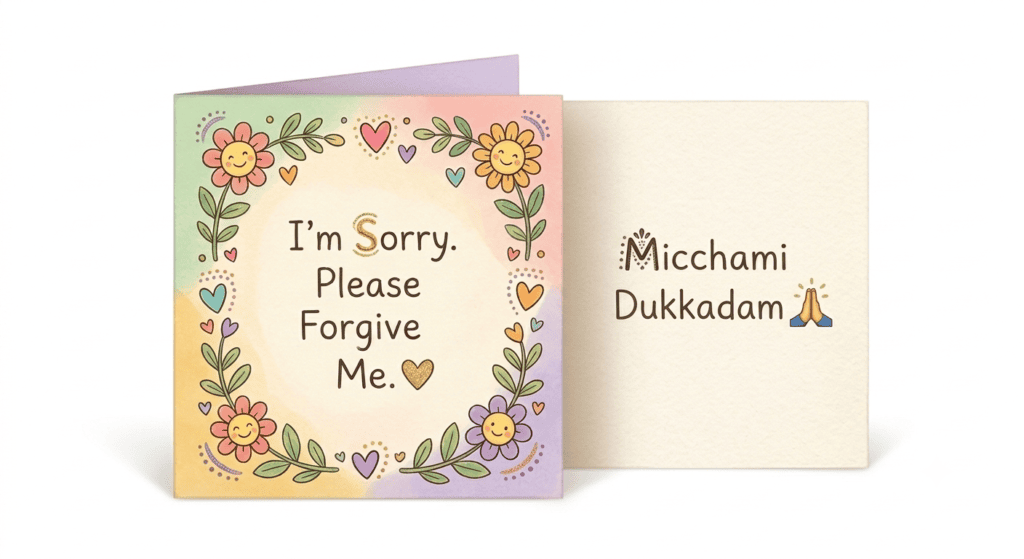
Let’s make a little card inspired by the spirit of Samvatsari!
You will need:
📄 One sheet of paper
✏️ Pencil or crayons
🖍️ Colour pencils or sketch pens
How to make it:
Step 1: Fold the paper in half.
Step 2: Decorate the front with flowers, hearts or simple Jain-inspired patterns.
Step 3: Inside, write the name of someone you would like to thank or apologise to.
Step 4: Write a simple message such as:
“I’m sorry if I hurt you. Please forgive me.”
Step 5: Give the card to that person.
Did You Know?
🌿 1. Paryushana is an important annual Jain religious observance.
🪷 2. Shvetambara Jains traditionally observe Paryushana for eight days.
🌸 3. The final day is called Samvatsari in the Shvetambara tradition.
🙏 4. Pratikraman is a practice of reflecting on one’s actions and seeking forgiveness.
📖 5. Reading and listening to Jain religious teachings are important parts of Paryushana.
💛 6. Asking for and offering forgiveness is especially important during Samvatsari.
A Festival of Forgiveness
Paryushana may be a quieter festival, but it carries a beautiful message.
It gives families time to pray, learn, reflect, practise self-discipline and ask for forgiveness.
And on Samvatsari, the simple words “Micchami Dukkadam” remind people that saying sorry, forgiving others and making peace can help us begin again. 💛
Think About It:
💡 Is there someone you would like to say sorry to today?