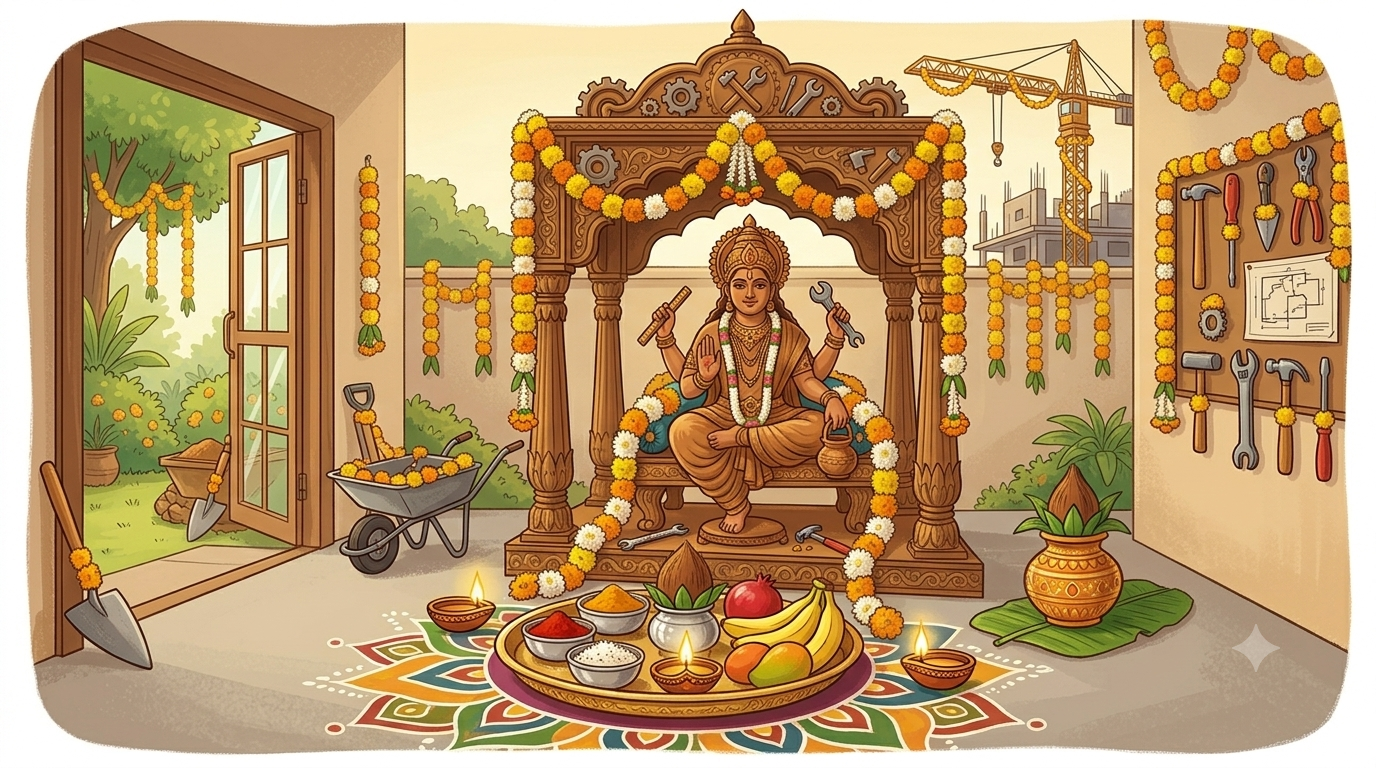
Imagine a world without builders, mechanics, engineers, carpenters, weavers, artists, or people who make and fix things.
Pretty difficult, right?
Vishwakarma Puja is a special Indian festival that celebrates making, building, creating and skilled work. On this day, people honour Lord Vishwakarma, who is traditionally known as the divine architect and engineer.
It is also a day to appreciate the people – and the tools – that help us create wonderful things every day
Who Is Vishwakarma?
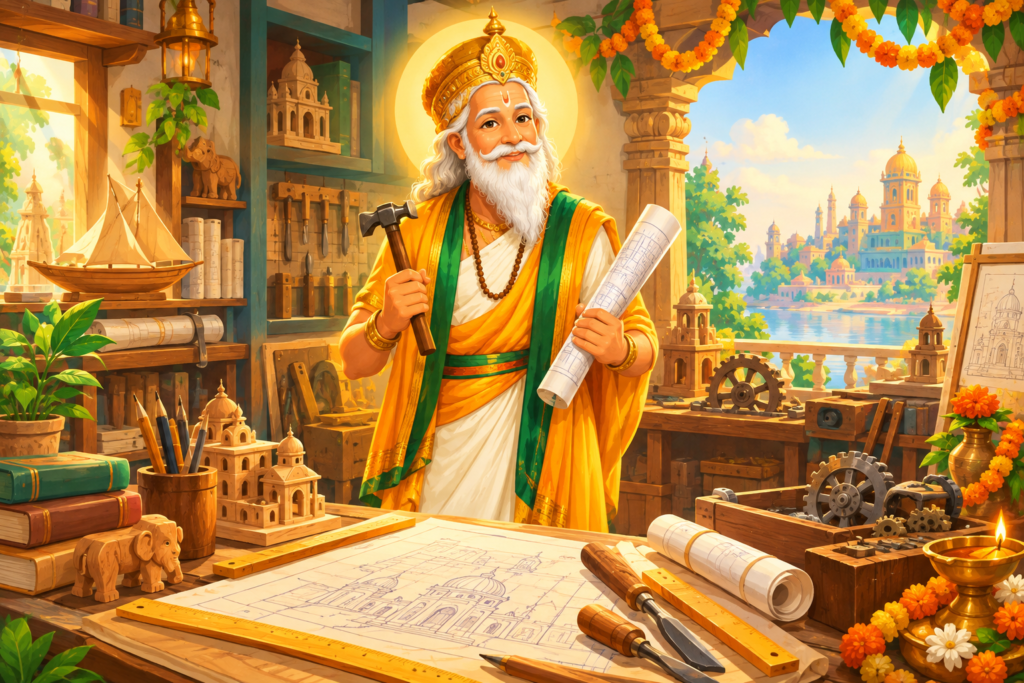
In Indian tradition, Vishwakarma is described as the divine architect, engineer and master craftsman.
Stories about him describe him as someone with extraordinary skill in designing and building amazing things.
He is associated with architecture, craftsmanship, tools, machines and creative work.
That is why Vishwakarma Puja is especially important for people who work with their hands, tools, machines and ideas.
💡 What would you like to build if you had Vishwakarma’s amazing skills? A robot? A spaceship? A treehouse? Maybe even a flying bicycle!
Amazing Things Vishwakarma Is Said to Have Built
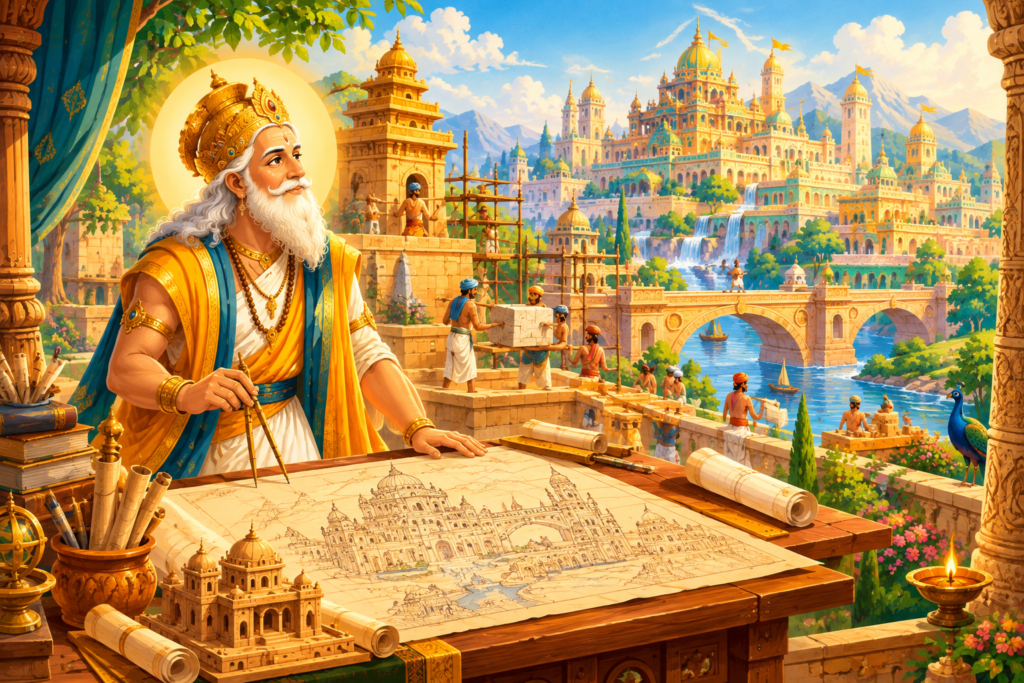
Indian stories and traditions describe Vishwakarma as the builder of many extraordinary places.
Some legends connect him with magnificent cities and heavenly buildings, including Lanka, Indraprastha and Dwarka.
These stories are part of India’s rich mythology and have been told for generations.
Whether building a palace in a story or designing a bridge in real life, the idea is the same:
Great things begin with imagination, skill and careful work.
Why Do People Worship Their Tools?
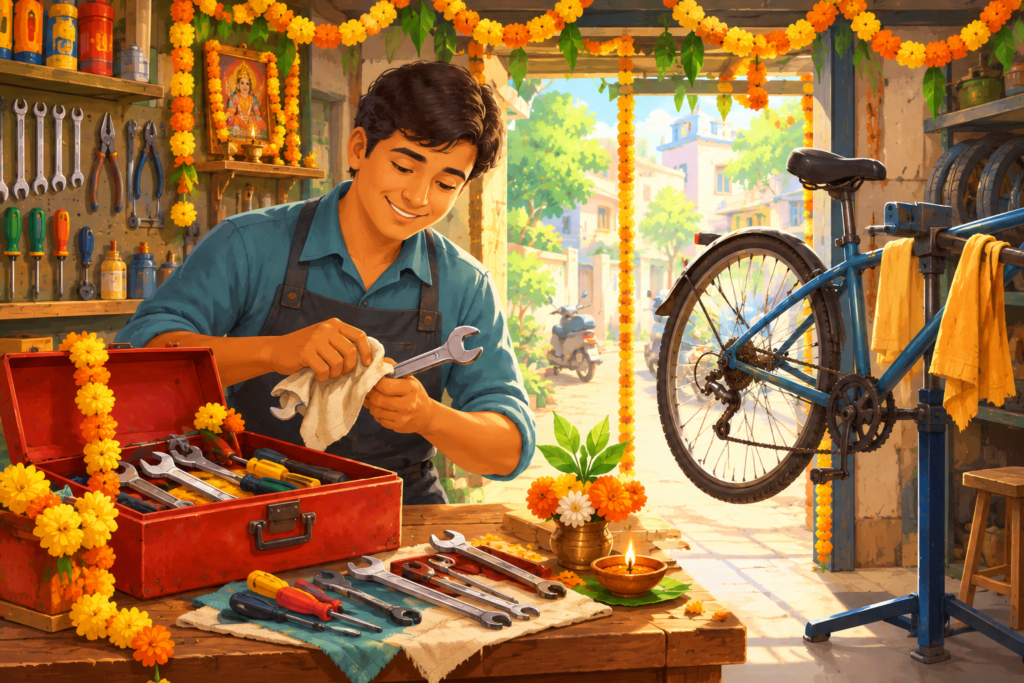
Think about all the things we use every day.
A carpenter has a hammer.
A tailor has a sewing machine.
A mechanic has tools.
A photographer has a camera.
An engineer has computers and measuring equipment.
A chef has cooking tools.
A craftsperson may have needles, brushes, chisels or looms.
These tools help people turn ideas into something real.
During Vishwakarma Puja, people clean their tools, machines and workplaces and offer prayers for safety, skill and successful work.
It is a beautiful way of saying:
“Thank you for helping us create.”
What Happens on Vishwakarma Puja?
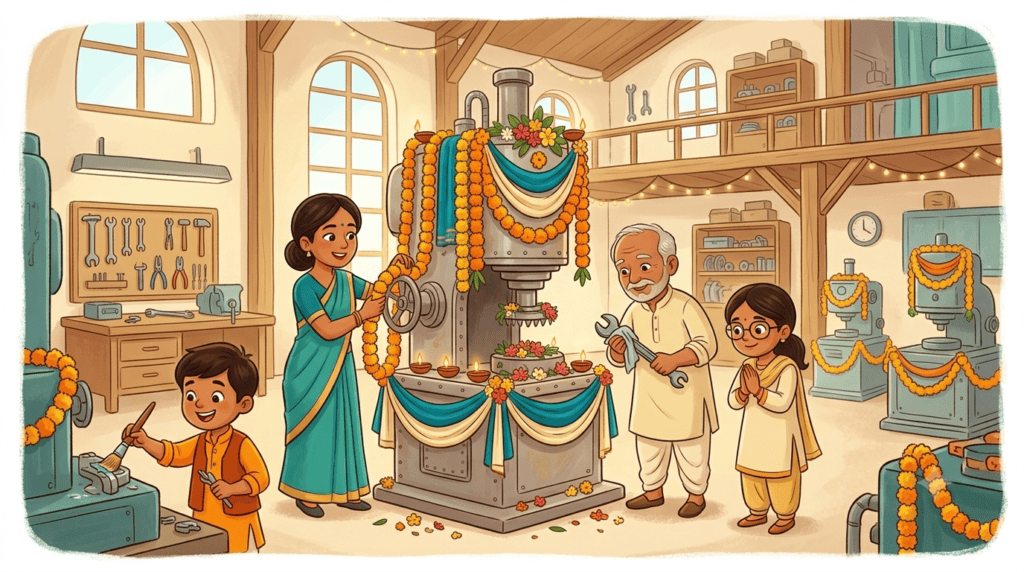
Different workplaces celebrate in different ways, but some common traditions include:
- Cleaning tools, machines and equipment
- Decorating workplaces with flowers and garlands
- Offering prayers to Vishwakarma
- Placing tools and machines neatly for the puja
- Sharing food and sweets with colleagues, family or neighbours
- Taking a break to appreciate the work people do
Factories, workshops, garages, construction sites, offices and small businesses may all have their own traditions.
The celebration reminds everyone that good work deserves respect.
Vishwakarma Puja Across India
Vishwakarma Puja is celebrated in different parts of India, with local traditions adding their own special flavour.
West Bengal
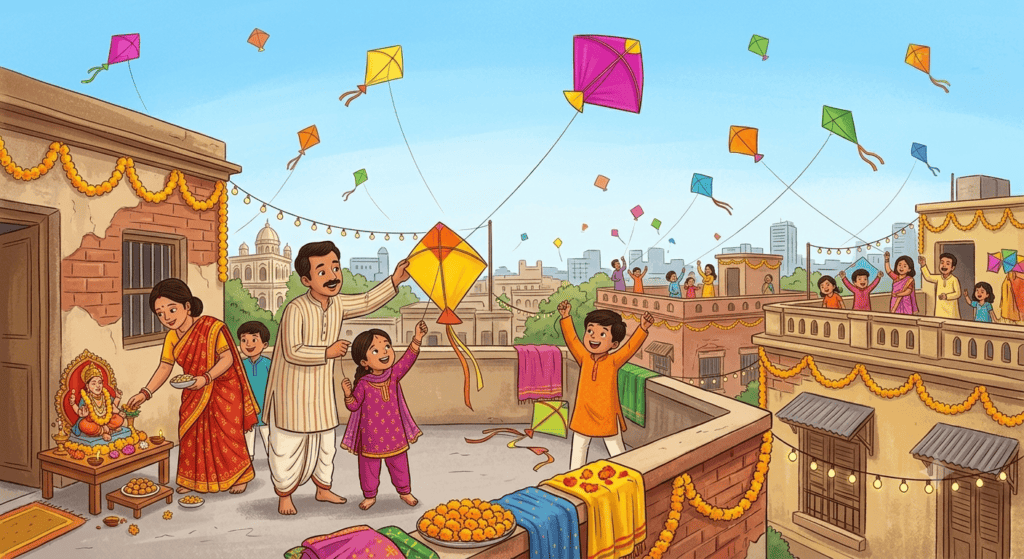
In West Bengal, Vishwakarma Puja is especially popular in factories, workshops and workplaces.
One fun tradition associated with the festival is kite flying.
The sky can become filled with colourful kites as families and children enjoy the day.
Odisha and Assam
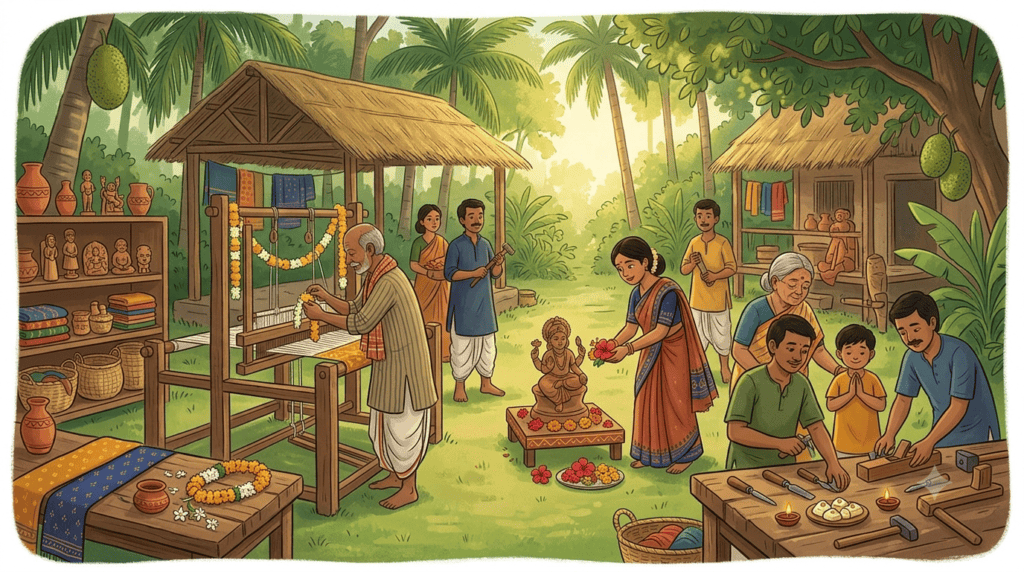
In Odisha and Assam, Vishwakarma Puja is also observed in many workplaces and among people connected with crafts, machines and skilled work.
Local communities may have their own foods, decorations and ways of celebrating.
Bihar and Jharkhand
In parts of Bihar and Jharkhand, Vishwakarma Puja is celebrated by workers, artisans, mechanics, businesses and people connected with machines and tools.
Workplaces may be cleaned and decorated before the puja.
The festival brings together an important idea:
Skill + effort + good tools = wonderful things!
A Festival That Teaches Us to Respect Work
Vishwakarma Puja is not only about machines and tools.
It is also about people.
The person repairing your bicycle.
The carpenter making your furniture.
The person stitching your clothes.
The engineer designing a building.
The electrician fixing a wire.
The artist creating something beautiful.
The person maintaining the machines in a factory.
Every kind of skilled work helps our communities function.
Vishwakarma Puja gives us a chance to stop and say:
“Thank you to the people who make, build, repair and create.”
What Do People Eat?
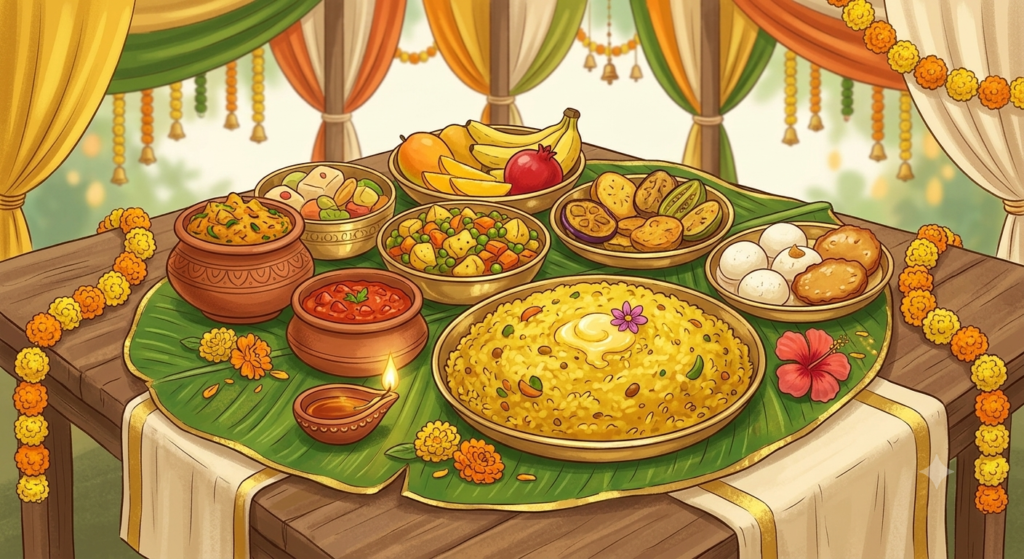
Food varies from place to place and family to family.
In eastern parts of India, festive meals may include dishes such as khichuri, vegetables, fried snacks, chutney and sweets.
Families and workplaces may also prepare their own favourite festive foods.
And, of course, sweets are often part of the celebration!
Easy Recipe for Kids: Sweet Coconut Laddoo
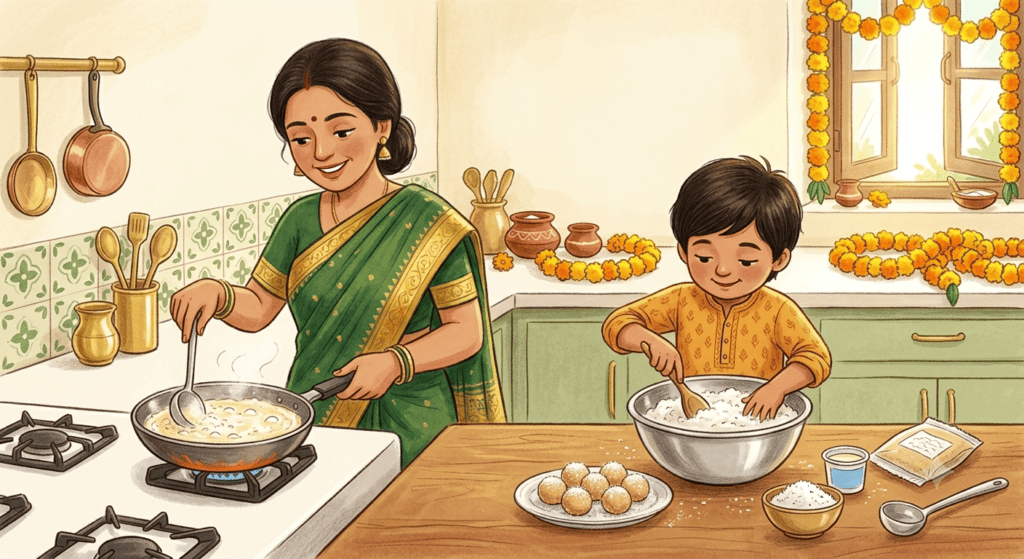
Ingredients
- 1 cup desiccated or freshly grated coconut
- ½ cup condensed milk
- ¼ teaspoon cardamom powder
- A few chopped nuts (optional)
- Extra coconut for rolling
Steps
- Add coconut and condensed milk to a pan.
- Ask an adult to cook the mixture over low heat until it becomes thick.
- Let the mixture cool enough to handle.
- Add cardamom powder and mix.
- Take a small amount and roll it into a ball.
- Roll each laddoo in grated coconut.
- Enjoy!
Remember: Children should have an adult help with the stove and hot mixture.
Fun Activity – Design Your Dream Machine!
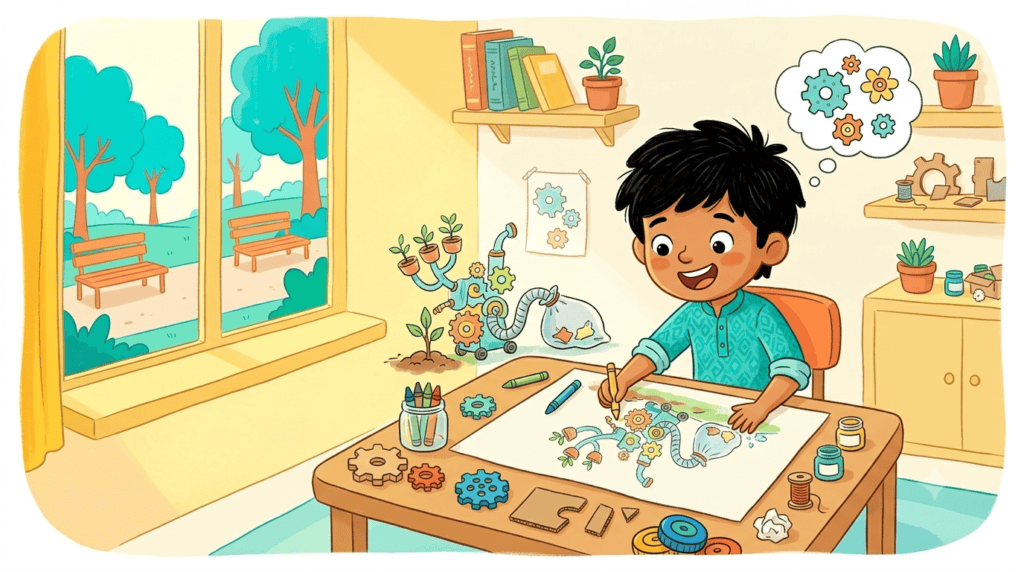
Your Challenge
Imagine you could invent any machine in the world.
What would it do?
Would it:
🌱 Plant trees?
🧹 Clean beaches?
💧 Save water?
🤖 Help people?
🚀 Travel to space?
🐾 Take care of animals?
Draw your machine and give it three special features.
Then ask yourself:
“What problem does my machine solve?”
That’s exactly how many great inventions begin – with a simple idea!
Did You Know?
1. Vishwakarma is known as a divine architect
Indian traditions describe Vishwakarma as a master builder and craftsman.
2. Tools are an important part of the festival
People clean, decorate and honour the tools and equipment they use for their work.
3. Factories celebrate too
Many factories, workshops, garages and businesses observe Vishwakarma Puja.
4. Kites are part of some celebrations
Kite flying is especially associated with Vishwakarma Puja in parts of West Bengal.
5. The festival celebrates skilled workers
Mechanics, engineers, builders, artisans, technicians and many other workers may take part.
6. Making starts with an idea
Before something is built, someone usually has to imagine it first!
What Can We Learn from Vishwakarma Puja?
Vishwakarma Puja reminds us that making things takes imagination, patience and skill.
It teaches us to respect the people who build, repair and create the things around us.
And perhaps the most exciting lesson for children is this:
You don’t have to wait until you grow up to become a maker.
You can start today.
Draw something.
Build something.
Fix something with an adult’s help.
Ask questions.
Try again when it doesn’t work.
Because every great maker starts with one small idea. 🔨✨